
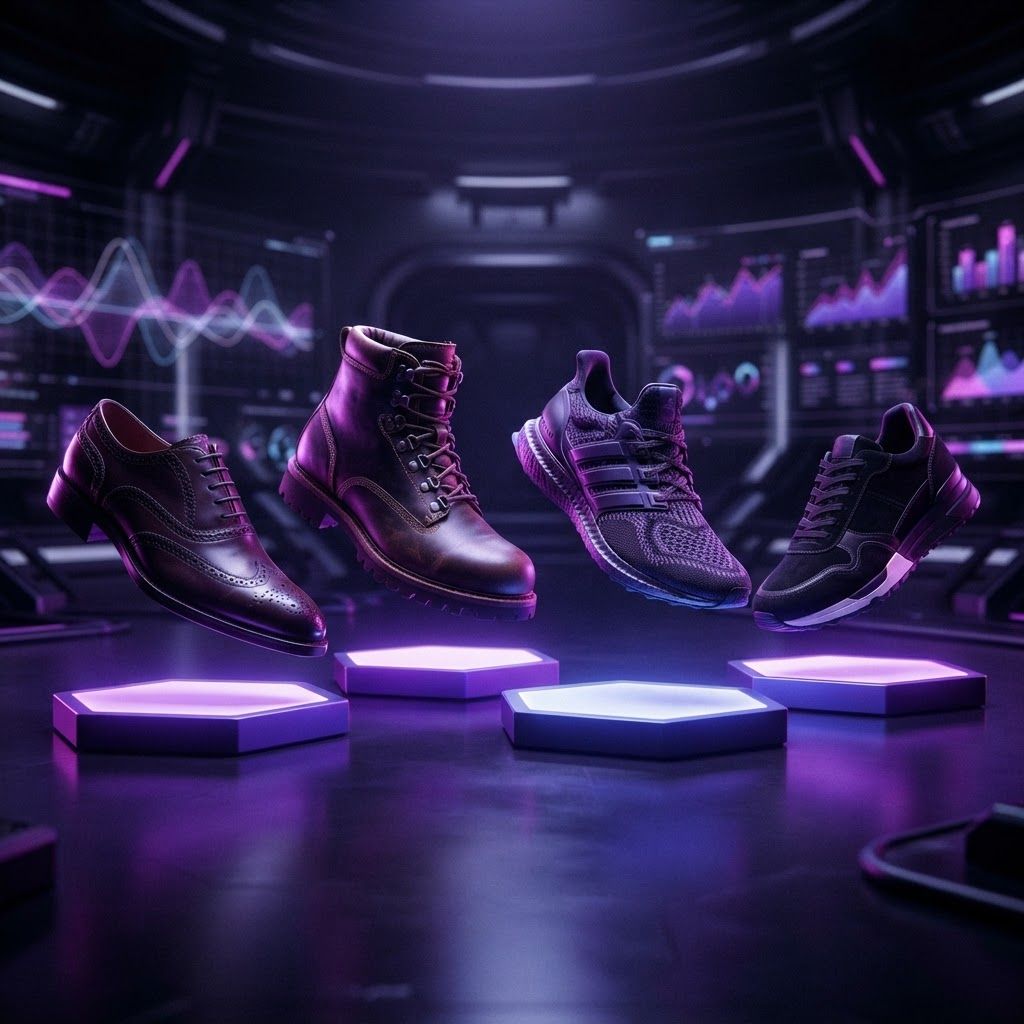
Why Footwear Choice Matters in North Texas
Garland residents put serious mileage on their shoes. Summer heat radiating off asphalt and concrete makes ventilation and sole insulation genuinely functional concerns rather than comfort preferences. The metroplex is spread out and car-oriented, but parking lots, warehouse floors, job sites and trails still add up to substantial daily walking. Sudden spring downpours and occasional winter ice require at least one pair with reliable traction and water resistance.
Employment patterns matter too. Garland has a strong industrial and manufacturing base alongside logistics, healthcare and retail. Workers standing on hard floors for ten or twelve hours need supportive footwear, and many roles require safety toe protection or slip-resistant outsoles. Footwear in this context is protective equipment.
Ten Footwear Brands Worth Considering
1. Nike
Nike remains the most broadly relevant athletic brand locally, with running, training and lifestyle options across every price tier. Its breathable knit uppers suit hot conditions well, and the range of cushioning platforms means most foot types can find a workable match.
2. Adidas
Adidas competes strongly on cushioning technology and everyday comfort, with lifestyle silhouettes that have durable cultural appeal. Runners often favor its energy-return midsoles for longer distances, while its casual lines serve as reliable daily shoes.
3. Brooks
Brooks focuses almost entirely on running and walking, and that specialization shows. Its stability and neutral cushioning models are frequently recommended by specialty running retailers for people with specific gait needs, and the brand's consistency between model updates is unusually good.
4. New Balance
New Balance is notable for offering genuine width options, which solves a real problem for wide and narrow feet that standard sizing ignores. Its walking and running lines have strong reputations for support, and its lifestyle models have become widely popular.
5. Ariat
Ariat brings athletic footwear technology to western boots and work footwear, delivering support that traditional cowboy boot construction lacks. In a region where western boots are worn for both work and social occasions, that engineering difference is meaningful over long days.
6. Justin Boots
A Texas heritage brand with deep regional credibility, Justin produces western and work boots with dependable construction and resoleable options on higher lines. Many customers value the ability to repair rather than replace, improving long-term economics.
7. Red Wing Shoes
Red Wing serves the work boot market with heavy-duty leather construction, safety toe options and genuine repairability. For trades and industrial roles common around Garland, the higher purchase price often produces lower cost per year of service.
8. Timberland
Timberland spans work boots, hiking footwear and lifestyle styles with strong waterproofing and outsole durability. Its Pro line specifically addresses jobsite requirements including electrical hazard and slip resistance ratings.
9. Skechers
Skechers has captured substantial share in comfort and occupational footwear, with slip-resistant styles widely used in food service, healthcare and retail. Lightweight construction and easy-on designs suit workers on their feet all day who prioritize immediate comfort.
10. Hoka
Hoka's maximal cushioning has gained a strong following among runners, walkers and healthcare workers alike. The generous midsole reduces impact on hard surfaces, which many long-shift workers find noticeably beneficial despite the distinctive appearance.
Choosing the Right Shoe for the Right Job
Start with the dominant use case. Running shoes are designed for forward motion and should be replaced based on mileage, generally after several hundred miles, because midsole foam compresses long before the upper looks worn. Training shoes for gym use need lateral stability that running shoes deliberately lack.
Work footwear should be selected against actual hazards. Composite safety toes weigh less than steel and do not conduct temperature, an advantage in Texas heat. Slip resistance ratings matter enormously in kitchens and wet industrial areas. Metatarsal guards, puncture-resistant plates and electrical hazard ratings apply to specific environments and should not be guessed at.
For everyday wear, prioritize breathability and outsole quality. Mesh and knit uppers stay far cooler than leather in summer, and a well-designed outsole handles the transition between hot dry pavement and sudden rain.
Fit Fundamentals People Get Wrong
Measure feet periodically, since size changes over adulthood, particularly after weight change, pregnancy or injury. Shop late in the day when feet are naturally slightly larger. Leave roughly a thumb's width of space in front of the longest toe, which is often the second toe rather than the first.
Width is as important as length. Persistent pressure on the sides of the foot causes bunion aggravation, neuromas and calluses. If a shoe requires a break-in period involving pain, it does not fit. Modern footwear should feel comfortable immediately, with only minor material softening expected.
Socks are part of the system. Moisture-wicking synthetic or wool blend socks dramatically reduce blistering in heat compared with cotton, which holds moisture against skin.
Practical Advice for the Local Climate
Rotate at least two pairs for daily wear so foam can decompress and interiors can dry fully between uses. This extends the life of both pairs and reduces odor and fungal issues in humid heat. Keep one water-resistant pair with aggressive tread for storm season, and consider a dedicated pair for yard work rather than degrading good shoes.
Heat degrades adhesives, so avoid leaving shoes in a closed car during summer, where interior temperatures easily damage midsole materials and glued seams. For leather boots, condition periodically to prevent cracking in dry heat.
Where the Market Is Heading
Comfort technology has become the primary competitive axis, with cushioning innovations spreading from running into work and casual categories. Slip-resistant occupational footwear has expanded into styles that no longer look industrial. Recycled materials are appearing across major brands. Specialty fitting, including gait analysis at running retailers, has become more accessible and is worth using at least once.
The right footwear is the pair that fits your foot shape and your actual daily demands. In a climate as demanding as North Texas, that decision affects comfort and health more than most people realize.