
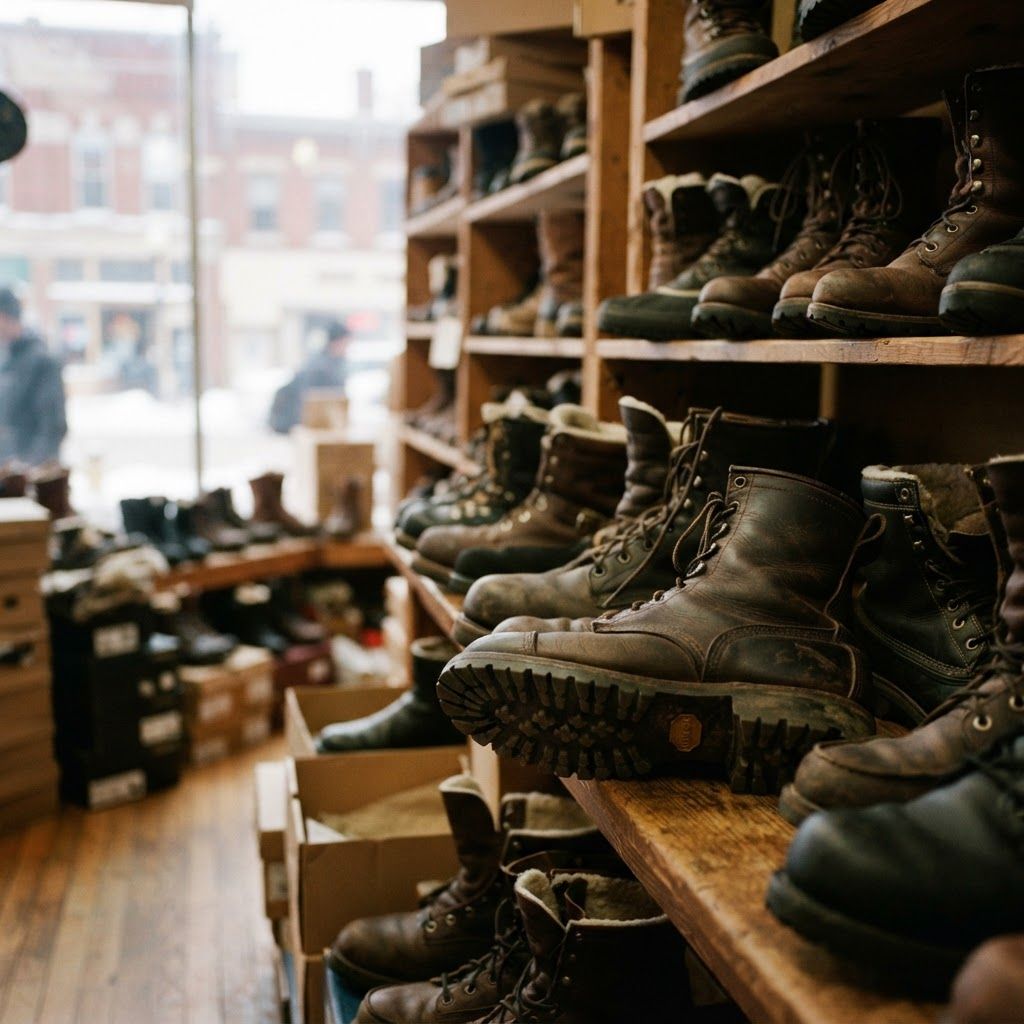
Why Footwear Is a Serious Purchase in Buffalo
In many cities footwear is primarily a style decision. In Buffalo it is an equipment decision. Between lake-effect snow, freeze-thaw cycles that turn sidewalks into ice sheets, and road salt that destroys leather and adhesives, a pair of shoes here faces conditions that would retire the same pair elsewhere in a single season. Local shoppers learn quickly to evaluate outsole traction, waterproofing method, insulation rating and how a shoe is constructed rather than how it looks in a photograph.
The other half of the equation is the long non-winter stretch. Buffalo summers are genuinely warm and humid, and spring and fall are wet. A functional footwear rotation therefore needs at least three categories: insulated winter boots, water-resistant transitional shoes, and breathable warm-weather options. Brands that understand this range tend to earn long-term local loyalty.
What Actually Matters in Cold-Weather Footwear
Four technical details determine performance. Outsole compound matters more than tread pattern, because many rubbers stiffen and lose grip below freezing while specialized winter compounds stay pliable. Waterproofing method matters next: a fully sealed membrane with taped seams behaves very differently from a water-repellent surface treatment that wears off. Insulation should be matched to activity, since heavily insulated boots overheat during active walking and cause damp feet, which is worse than cold feet. Finally, construction method governs lifespan, and resoleable footwear built with stitched rather than purely cemented soles can last many years with maintenance.
The Best Footwear Brands for Buffalo Conditions
1. Sorel remains the benchmark for deep-winter boots. Removable felt liners, high shafts and rubber shells handle heavy snow and standing slush better than almost anything else, and the removable liner design means boots actually dry overnight rather than staying damp.
2. Red Wing Heritage is a favorite for durability-minded buyers. Goodyear welted construction means the boots can be resoled repeatedly, and the heavy leather uppers age well provided they are conditioned regularly to resist salt damage.
3. Timberland covers the practical middle ground with waterproof leather boots that work for commuting, light work and everyday winter wear. The brand's wide availability and consistent sizing make it a reliable default for a first serious winter boot.
4. Merrell leads for people who stay active outdoors year-round. Its waterproof hiking shoes and boots balance traction, breathability and comfort straight out of the box, which suits trail use, dog walking and long urban days.
5. Blundstone has become extremely popular in Buffalo for shoulder-season wear. Pull-on convenience, weather-resistant leather and elastic side panels make them practical for wet spring and fall conditions, though they are not a substitute for insulated winter boots.
6. Keen is known for roomy toe boxes and strong waterproofing, making it a good match for wider feet and for anyone who prioritizes all-day comfort over a sleek profile. Their insulated winter models handle moderate cold well.
7. New Balance anchors the everyday and athletic category. Wide-width availability across many models is a genuine advantage, and it is the most common recommendation for people who need supportive footwear for long standing or walking days.
8. Danner serves the heavy-duty and work segment with recraftable boots, aggressive outsoles and reliable waterproof membranes. For trades workers and anyone on unstable outdoor surfaces, the additional ankle support and stitchdown construction justify the price.
9. Buffalo Bootworks represents the local repair and custom side of the market. Cobblers and small boot shops extend footwear lifespan dramatically through resoling, restitching, salt-damage restoration and orthotic accommodation, which is often better value than replacement.
10. Icebug closes the list as a specialist for ice traction. Studded outsole models address the specific hazard of glazed sidewalks and packed ice, which is a distinct problem from snow depth and is not solved by insulation.
Trends in the Footwear Market
Repairability is returning as a purchase criterion, with more shoppers checking whether a boot can be resoled before buying. Traction technology has advanced meaningfully, with cold-flexible rubber compounds and embedded grip particles now available at mainstream price points. Recycled materials appear more often in uppers and linings, though buyers should confirm that recycled content has not compromised waterproofing. Width-inclusive sizing has also expanded, which matters because a boot that is too narrow restricts circulation and feels colder regardless of insulation.
How to Buy and Care for Footwear in Western New York
Build a rotation rather than searching for one perfect pair. A dedicated deep-winter boot, a waterproof everyday shoe and a breathable summer option will collectively outlast and outperform any single compromise purchase. Try boots on with the socks you will actually wear and leave room for a thicker sock without the foot sliding.
Maintenance determines lifespan more than initial price. Rinse road salt off leather and rubber promptly, because salt draws moisture out of leather and leaves permanent white damage. Condition leather several times per winter, re-apply water-repellent treatment on membrane footwear, and dry boots at room temperature rather than near a radiator, since direct heat cracks leather and separates adhesives. Rotating two pairs gives each a full day to dry internally, which improves both comfort and durability. Finally, replace worn outsoles before the tread is gone, since traction loss is a genuine injury risk on ice.
Final Thoughts
The best footwear brands in Buffalo are the ones engineered for real winter conditions and honest about their limits. Sorel and Icebug solve extreme snow and ice, Red Wing and Danner deliver longevity, Merrell and Keen cover active comfort, and local cobblers extend the life of everything. Buying for construction quality and traction, then maintaining diligently through salt season, produces footwear that stays safe and comfortable for years.