
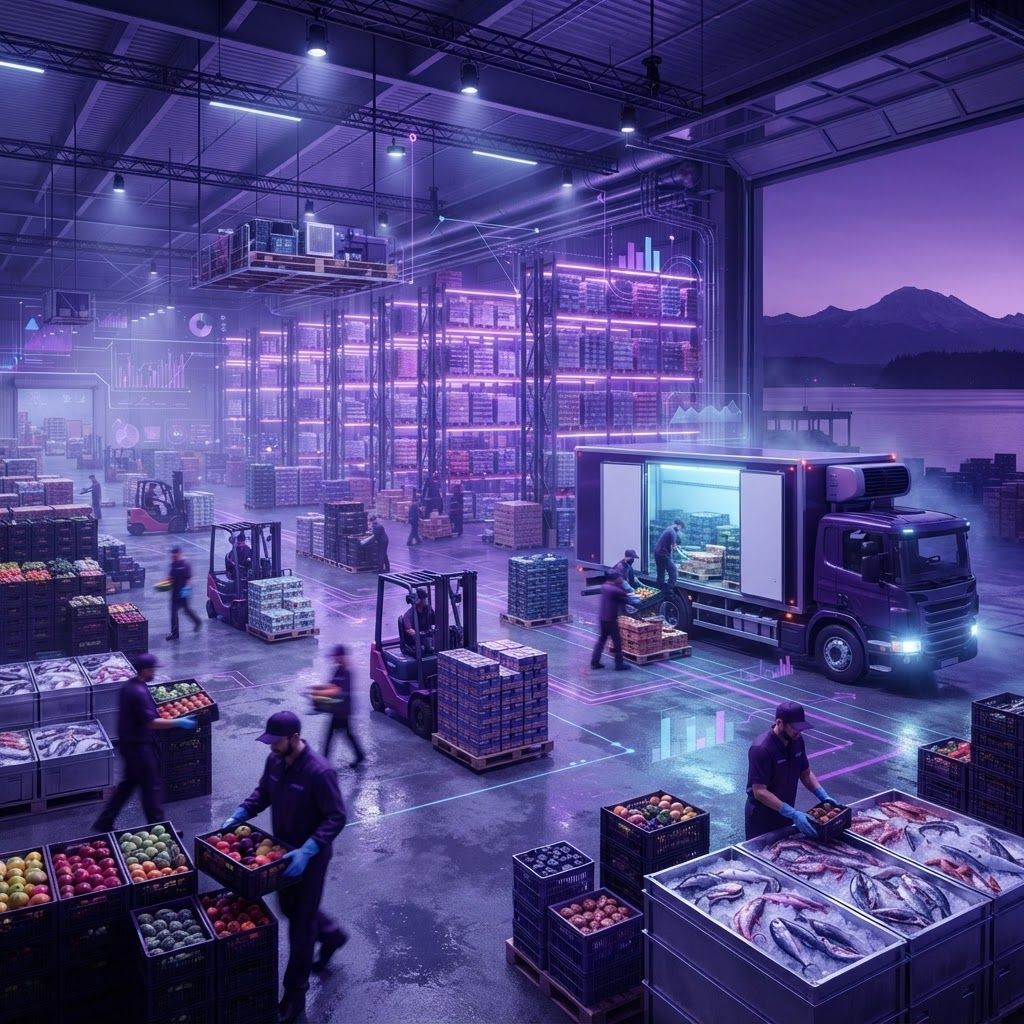
Feeding the South Sound
Food distribution rarely gets attention until something goes wrong, yet it underpins every restaurant, school cafeteria, hospital kitchen, grocery store, and coffee shop in Tacoma. The city's position makes it a natural distribution hub. The Port of Tacoma handles refrigerated container traffic, the Puyallup Valley and broader Washington agricultural regions supply produce within a short haul, Puget Sound and Alaska fisheries feed a substantial seafood trade, and the I-5 corridor connects distributors to customers from Olympia to Everett.
Local demand is diverse and demanding. Tacoma's restaurant scene spans Vietnamese, Korean, Filipino, Mexican, Ethiopian, Pacific Northwest seafood, barbecue, and fine dining, which means distributors must carry ingredient depth well beyond a standard broadline catalog. Add school districts feeding tens of thousands of students, healthcare systems with therapeutic diet requirements, military installations, senior living communities, breweries and taprooms, and a strong food truck culture, and the result is a wholesale market that rewards specialization.
The Structure of Food Wholesale
Broadline distributors carry everything from frozen proteins to paper goods and chemicals, offering one-stop convenience with weekly delivery schedules. Produce specialists focus on fresh fruit and vegetables with daily or near-daily delivery, since quality degrades by the hour. Seafood wholesalers occupy a particularly important niche here, handling fresh and frozen finfish and shellfish, often with direct relationships to Northwest and Alaskan harvesters. Meat and protein purveyors provide custom cutting, portion control, and aging programs that broadliners typically cannot match. Dairy and beverage distributors run high-frequency routes. Specialty and ethnic food importers supply the ingredients that make Tacoma's diverse restaurant scene possible, from specific chile varieties to imported noodles, spices, and sauces. Cash-and-carry and restaurant supply stores serve small operators and caterers who need flexibility rather than scheduled delivery. Organic and natural food distributors serve co-ops, natural grocers, and health-focused menus.
Most successful kitchens use a blend: a broadline for staples and paper, a produce house for fresh, a protein purveyor for center-of-plate items, and specialty suppliers for signature ingredients.
Food Safety Is the Non-Negotiable Layer
Nothing else matters if a distributor cannot maintain safety and cold chain integrity. Buyers should verify that a wholesaler operates under a HACCP plan and complies with the Food Safety Modernization Act, including its preventive controls and sanitary transportation requirements. Third-party audit certifications such as SQF, BRCGS, or comparable GFSI-benchmarked schemes indicate that an independent auditor has verified those systems.
Cold chain performance is measurable and should be discussed concretely. Ask how temperature is monitored in warehouses and trucks, whether data loggers accompany sensitive shipments, what the receiving temperature standard is, and how a load is handled if it arrives out of specification. Distributors serving healthcare and school customers usually have the most rigorous documentation because their customers are audited too.
Traceability has become equally important. In a recall, a distributor must identify affected lots and every customer who received them within hours. Ask directly how lot-level traceability works and how quickly the supplier can produce a distribution list. Seafood adds species verification and, for certain fisheries, catch documentation requirements.
Local Sourcing and Sustainability
Washington's agricultural abundance gives Tacoma distributors an advantage that many markets lack. Apples, berries, potatoes, onions, tree fruit, hops, dairy, and a wide range of vegetables are available regionally in season, and Puyallup Valley farms sit close enough for genuinely short supply chains. Distributors who maintain direct grower relationships can offer freshness and provenance storytelling that restaurants use on menus.
Seafood sustainability carries particular weight in this region. Marine Stewardship Council certification, responsible aquaculture standards, and transparent sourcing information matter to both chefs and consumers here more than in most markets. Reputable seafood wholesalers can name the fishery, the vessel type, and the harvest method.
Operational sustainability is improving as well. Route optimization reduces fuel consumption, refrigeration upgrades cut energy use, reusable totes replace single-use packaging, and food donation partnerships divert edible surplus from landfill. Distributors who track and report waste diversion offer their customers something useful for their own sustainability reporting.
How to Select a Food Wholesaler
Start with delivery logistics, because they constrain everything. Confirm delivery days and time windows, order cutoff times, minimum order values, and whether the supplier can accommodate a restaurant's receiving hours. A distributor delivering at three in the afternoon to a kitchen prepping for dinner service creates daily friction.
Evaluate fill rate and substitution policy. Ask what percentage of ordered lines arrive complete and how substitutions are communicated. A chef who discovers an unauthorized substitution during service has a menu problem, not a purchasing problem.
Compare pricing structures carefully. Food distribution uses varied models including cost-plus, fixed pricing for a term, and market pricing on volatile categories like produce and seafood. Cost-plus arrangements offer transparency but require attention to the base cost. For volatile items, ask how often pricing updates and whether market reports are shared.
Assess the sales representative. In food distribution, a knowledgeable rep who understands a kitchen's menu, suggests seasonal opportunities, and resolves credits quickly delivers real value. Frequent rep turnover at a distributor is a warning sign.
Tour the warehouse if possible. Look at cooler and freezer organization, temperature displays, product rotation practice, dock discipline, and general sanitation. Warehouses tell the truth about a distributor's standards.
Finally, clarify credit and claims handling. Damaged, short, or out-of-temperature deliveries happen. A supplier who issues credits promptly and without argument protects the relationship; one who disputes every claim consumes management time that a restaurant does not have.
What Comes Next
Several developments are reshaping the sector. Digital ordering platforms with real-time inventory, order guides, and spend analytics have largely replaced phone and fax ordering. Labor scarcity in warehousing and driving continues to pressure service levels, accelerating investment in automation and route technology. Menu volatility and ingredient cost swings have made flexible sourcing and multiple approved suppliers a standard risk management practice. And demand for local, traceable, and sustainably harvested products keeps growing, particularly among Tacoma's independent restaurants.
For operators across Pierce County, the strongest approach is to build a small portfolio of complementary suppliers, hold each to measurable service standards, verify food safety credentials rather than assuming them, and maintain enough relationship depth that when a shipment fails, someone answers the phone and fixes it before service.