
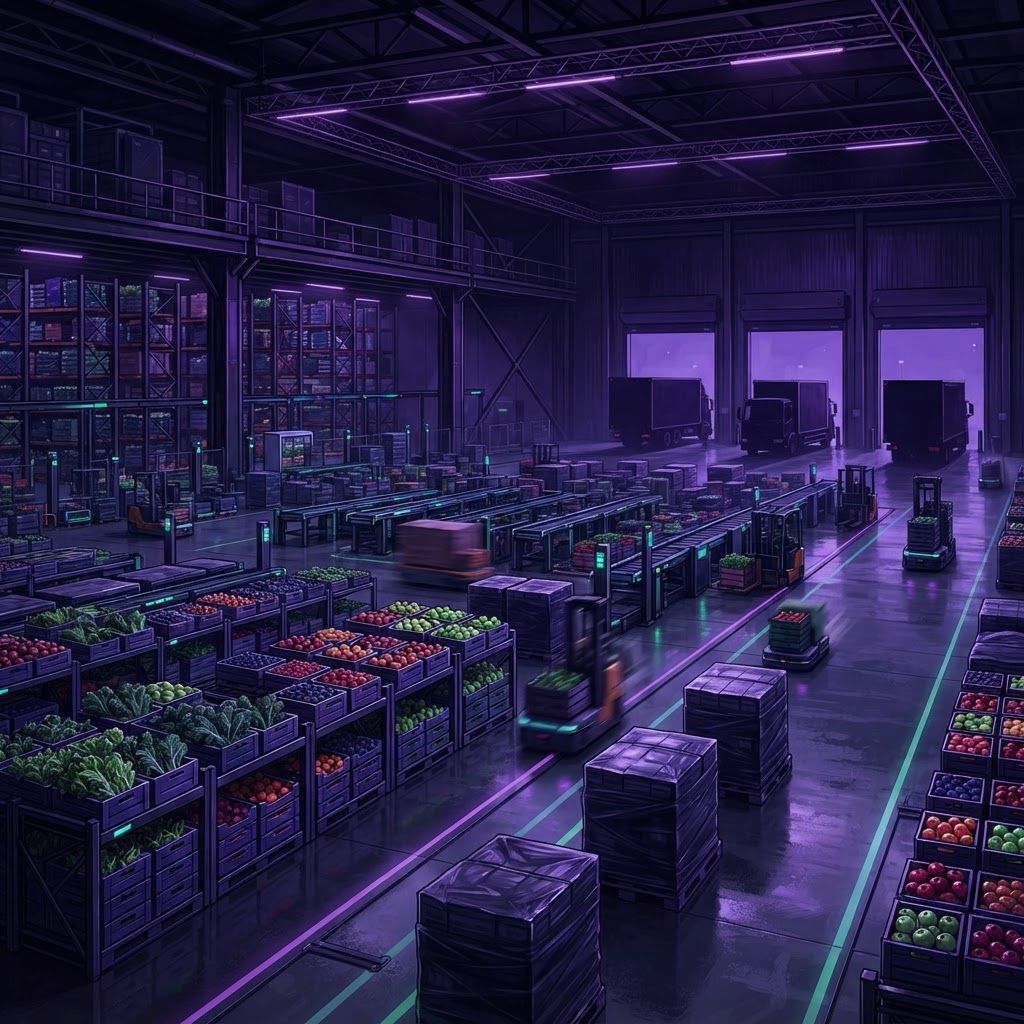
Feeding a Growing Valley
The Santa Clarita Valley supports a substantial and growing foodservice sector: independent restaurants along Main Street in Newhall, casual dining and fast-casual operators throughout Valencia, catering companies serving corporate campuses and studio productions, school and institutional kitchens, and a strong specialty grocery and bakery scene. Each of these depends on wholesalers who can deliver consistent product on a reliable schedule.
Distribution here benefits from position. The valley sits within easy reach of the Los Angeles wholesale produce and seafood markets, Central Valley agricultural production, and major national distribution centers along the Interstate 5 corridor. That means an operator in Santa Clarita can realistically receive produce harvested a day earlier, seafood landed that morning at a coastal port, and dry goods from a national distributor — all in the same delivery window.
Types of Food Wholesalers
Broadline distributors carry a full catalog spanning frozen, refrigerated, dry, disposables, and cleaning supplies, simplifying ordering into a single relationship. Produce specialists focus on fresh fruit and vegetables with daily or near-daily delivery and superior quality control. Protein specialists handle beef, poultry, pork, and seafood, often offering custom cutting and portioning. Specialty and ethnic distributors supply ingredients that broadliners do not stock. Beverage distributors handle coffee, tea, soft drinks, and related equipment. Bakery and dairy distributors round out the ecosystem with high-frequency perishable delivery.
Ten Food Wholesalers Serving Santa Clarita
1. Valencia Foodservice Distributors — A broadline distributor covering frozen, chilled, and dry categories plus disposables, with scheduled route delivery and an online ordering platform that shows real-time availability.
2. Santa Clarita Produce Company — Fresh produce distribution with early-morning delivery, sourcing from Central Valley and coastal growers, and offering pre-cut and value-added options for high-volume kitchens.
3. Newhall Meat & Provisions — Protein specialists providing custom cuts, portion control, and dry-aged programs for steakhouses and independent restaurants, with full cold chain documentation.
4. Canyon Country Seafood Supply — Fresh and frozen seafood distribution emphasizing traceable sourcing and species availability guidance, serving restaurants and specialty retailers.
5. Soledad Specialty Foods — Importers and distributors of specialty ingredients including oils, vinegars, cheeses, cured meats, and international pantry staples for chefs and gourmet grocers.
6. Placerita Bakery Ingredients — Flour, leavening, chocolate, and finished frozen bakery products, supporting both artisan bakeries and foodservice operations that finish in house.
7. Bouquet Canyon Beverage Distributors — Coffee, tea, juice, and soft drink distribution with equipment placement, service, and staff training for cafes and offices.
8. Rye Canyon Organic & Natural Foods — Certified organic and natural product distribution serving health-focused restaurants, juice bars, and independent grocers.
9. Golden Valley Restaurant Supply — Non-food essentials alongside pantry staples: disposables, packaging, sanitation chemicals, and smallwares, useful for consolidating secondary purchases.
10. Sierra Highway Cash & Carry — A wholesale club format for operators who prefer to buy as needed without minimum order commitments, valuable for small caterers and food trucks.
Food Safety and Regulatory Considerations
Food distribution is heavily regulated, and operators inherit risk from their suppliers. Confirm that wholesalers maintain documented food safety programs, third-party audit certification, and functioning cold chain monitoring with temperature logging on delivery vehicles. Ask how recalls are communicated and how quickly affected lots can be identified — traceability is the core capability that separates professional distributors from opportunistic ones.
California-specific requirements add further layers. Organic claims require certification documentation. Seafood sourcing increasingly requires chain-of-custody records. Allergen handling and labeling must be reliable, particularly for prepared and value-added items. And local health department expectations around receiving temperatures mean operators should reject deliveries that arrive outside safe ranges rather than accepting them to avoid inconvenience.
Negotiating and Managing Distributor Relationships
Pricing in foodservice distribution is rarely a single number. Understand whether you are on cost-plus pricing, fixed pricing for a contract period, or market pricing that fluctuates weekly on commodities. Review invoices against quoted prices regularly, since discrepancies are common and rarely corrected proactively. Clarify minimum order thresholds, delivery day windows, fuel surcharges, and the process for credits on short or damaged product.
Diversification is wise. Many successful operators use a broadline distributor for the bulk of their order and supplement with produce and protein specialists where quality differences are most visible to guests. This approach preserves purchasing leverage and provides a fallback if one supplier experiences a service failure.
Trends in Food Distribution
Several forces are reshaping the sector. Local and regional sourcing continues to grow as operators feature provenance on menus. Technology adoption has accelerated, with ordering platforms, inventory integration, and predictive purchasing reducing waste. Sustainability pressure is driving reusable packaging pilots, food donation programs, and route optimization to cut emissions. Labor constraints in kitchens are increasing demand for value-added and pre-prepped products that reduce prep time without sacrificing quality.
For Santa Clarita operators, the fundamentals remain unchanged: consistency, communication, and cold chain integrity determine whether a distributor relationship helps or hurts your operation. Choose partners who answer the phone when something goes wrong, and the rest of the relationship tends to work itself out.