
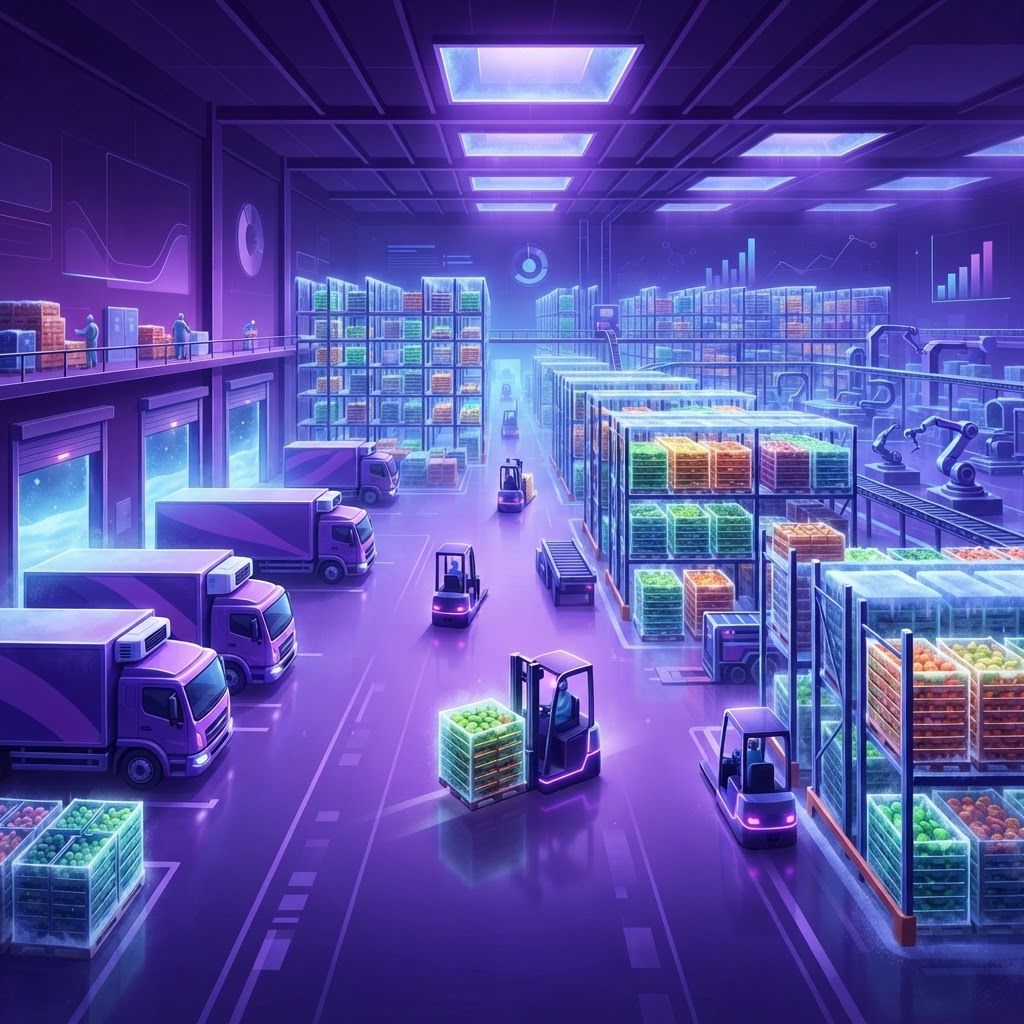
Food Distribution in San Bernardino
Food wholesaling is one of the most demanding forms of distribution because the product is perishable, the regulations are strict and the customers operate on schedules that leave no room for a late delivery. A restaurant that does not receive its produce before service does not simply lose an order; it loses a night. San Bernardino has developed a strong food distribution sector precisely because the region combines proximity to California's enormous agricultural production with the warehouse space and freeway access needed to serve millions of consumers across the Inland Empire and the desert communities beyond.
The wholesalers here fall into several categories. Broadline distributors carry everything a kitchen needs, from produce and protein to paper goods and cleaning supplies, in a single weekly delivery. Specialty distributors focus on one category and go deeper than any broadliner can, whether that means seafood, cheese, produce or particular ethnic cuisines. Cash and carry operations let small operators buy what they need without minimums or delivery schedules. And ingredient suppliers serve food manufacturers with bulk commodities.
What Distinguishes an Excellent Food Wholesaler
Food safety comes before everything else. Ask about the distributor's food safety certification, cold chain monitoring, temperature logging on delivery vehicles, recall procedures and traceability capability. California requires licensed food facilities to maintain documentation, and in a recall situation the ability to identify affected lots quickly protects both public health and your business. A distributor who cannot describe these systems clearly should not be handling your food.
Product quality and consistency are the second consideration. For produce especially, quality varies enormously by supplier and season, and the best distributors grade carefully, rotate inventory rigorously and reject substandard material before it reaches you. Ask whether you can inspect at their facility, and evaluate the first several deliveries closely rather than assuming.
Third, examine delivery reliability. Ask about delivery windows, fill rates, how substitutions are handled and what happens when a truck breaks down. A distributor who communicates proactively about shortages allows a chef to adjust a menu; one who simply short-ships creates chaos at service. Fourth, consider ordering technology, since online and mobile ordering with real-time availability saves considerable time. Fifth, evaluate the account representative, because in food service the relationship with a knowledgeable representative who understands your menu is genuinely valuable.
Ten Leading Food Wholesalers Serving the Region
Inland Broadline Food Service supplies restaurants and institutions with a full range of frozen, refrigerated and dry products plus disposables and cleaning supplies on scheduled weekly deliveries.
Arrowhead Produce Company distributes fresh fruits and vegetables sourced from California growers, with daily deliveries and staff who advise on seasonality and pricing to help chefs plan menus.
Cajon Meat and Protein Distributors provides beef, pork, poultry and custom cutting services, offering the portion control and specification consistency that volume kitchens require.
Summit Seafood Wholesale handles fresh and frozen seafood with careful cold chain management and sourcing documentation, serving restaurants and markets throughout the Inland Empire.
Valley Bakery Ingredients supplies flour, sugar, chocolate, yeast, fillings and specialty baking ingredients in bulk to commercial bakeries, dessert producers and pastry programs.
Foothill Specialty and Ethnic Foods carries authentic ingredients across Latin, Asian, Mediterranean and Middle Eastern cuisines, an essential resource in a region as diverse as San Bernardino.
Mojave Beverage Distribution supplies juices, coffee, tea, syrups and non-alcoholic beverages along with the dispensing equipment and service that beverage programs require.
Redlands Cash and Carry operates a warehouse where small restaurants, caterers and food trucks buy exactly what they need without minimum orders or delivery scheduling.
Pacific Crest Organic Foods distributes certified organic produce, dairy and packaged goods with the certification documentation that organic claims legally require.
Sierra Verde Food Ingredients serves food manufacturers with bulk commodities, functional ingredients and packaging, including the specification sheets and certificates of analysis that production requires.
Trends in Food Wholesaling
Supply chain transparency has moved from a marketing theme to an operational requirement. Customers and regulators alike expect to know where food originated, and distributors have invested in traceability systems that follow product from grower to kitchen. This capability also shortens recall response dramatically.
Labor and cost pressure in food service has changed buying patterns. Operators facing higher wages and thinner margins increasingly buy prepared and portioned items that reduce kitchen labor, and distributors have expanded those offerings substantially. At the same time, price sensitivity has grown, making distributors who provide honest cost guidance and menu engineering advice more valuable.
Local and sustainable sourcing continues to expand, supported by California's agricultural abundance. Distributors who can connect kitchens with nearby growers meet real demand. Finally, technology has transformed ordering and inventory, with mobile platforms, usage analytics and automated par-level suggestions now common among leading distributors.
How to Buy Food Wholesale Effectively
Specify products precisely, including grade, size, pack, brand and any preparation requirements, because vague orders produce inconsistent deliveries. Establish par levels for staple items and order against actual usage rather than guesswork. Inspect deliveries at receipt while the driver is present, checking temperature, count and condition, and document any problems immediately since claims made later are difficult to support.
Track price movement on your highest-volume items and discuss it with your representative, since many commodities move seasonally and planning around that saves real money. Maintain a secondary supplier for critical categories so a single disruption does not close your kitchen. Keep your food safety documentation current and organized for health inspections. And communicate menu changes to your distributor ahead of time so inventory can be positioned accordingly.
Final Thoughts
Food wholesalers in San Bernardino operate at the intersection of California agriculture and one of the fastest-growing consumer markets in the state. The best of them combine rigorous food safety practice with genuine product knowledge and delivery reliability that kitchens can build a service around. Choose partners on those criteria, receive carefully and maintain honest communication, and food purchasing becomes a stable foundation rather than a daily worry.