
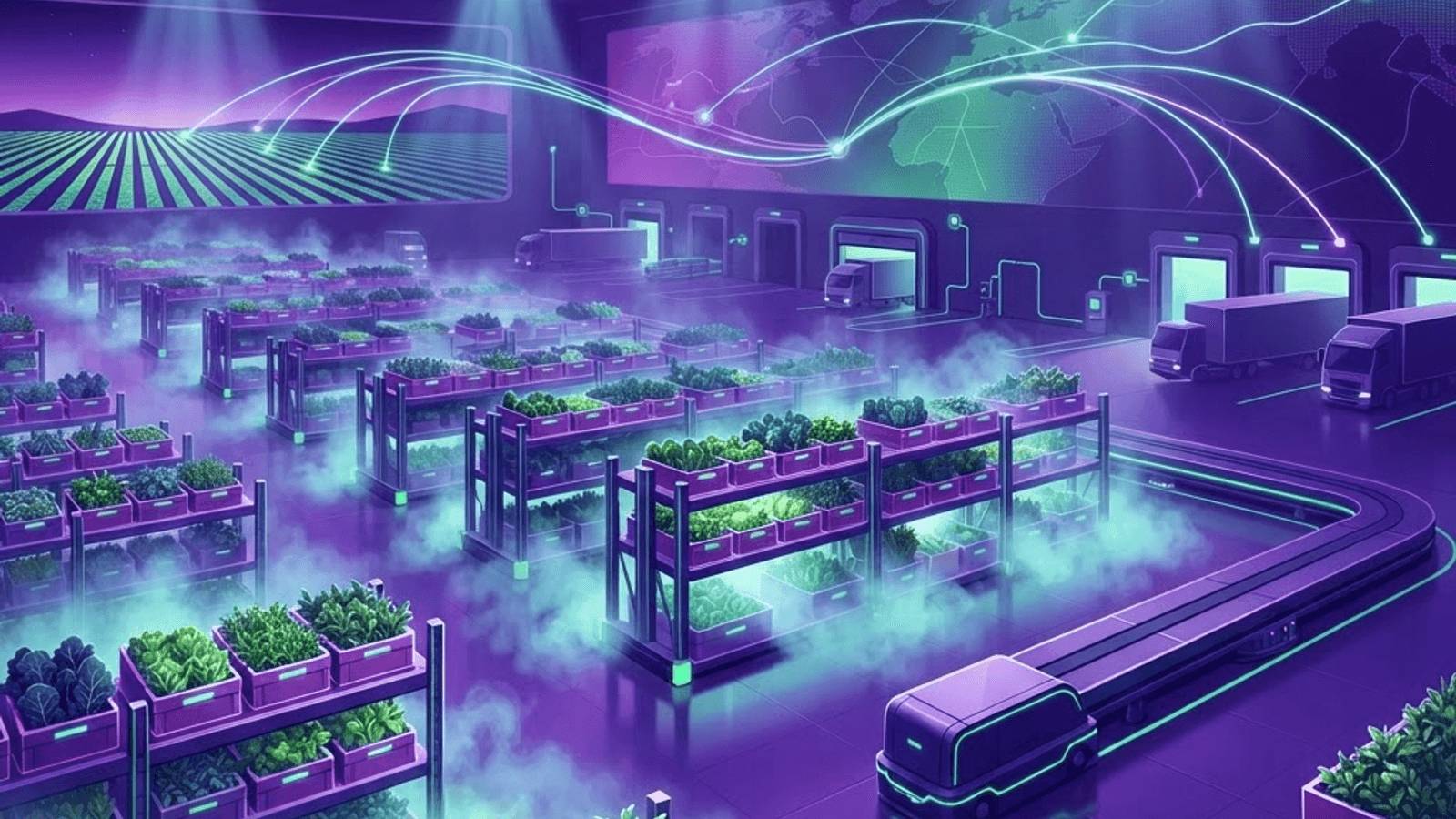
Distribution at the Center of the Salad Bowl
Salinas occupies a rare position in food distribution. Most wholesale markets move product toward a region; Salinas moves product out of one. The valley produces an extraordinary share of the country's leafy greens, and the distribution infrastructure built around that output is sophisticated, fast, and unforgiving of error.
At the same time, the region's own restaurants, schools, hospitals, hotels, and retailers need supply. That creates a two-directional market: wholesalers shipping valley produce outward and distributors bringing in the broad range of products a local food service sector requires.
What unites both sides is cold chain discipline. Fresh produce begins losing quality the moment it is harvested, and every hour and every degree matters.
The Top 10 Food Wholesalers Serving Salinas
1. Valley Fresh Produce Distribution. The largest produce wholesaler in the region, Valley Fresh Produce Distribution handles leafy greens, vegetables, and specialty crops for regional and national customers. Its cooling and cold storage infrastructure maintains temperature from receiving through shipping, and its quality inspection at intake prevents problems from moving downstream.
2. Gabilan Foodservice Supply. A broadline distributor serving restaurants, hotels, and institutions, Gabilan Foodservice Supply carries produce, proteins, dry goods, dairy, and non-food supplies. Its single-source convenience and scheduled delivery routes reduce the ordering burden for operators managing small kitchens.
3. Monterey Bay Organic Distributors. Specializing in certified organic products, this wholesaler serves natural food retailers, restaurants, and institutional buyers with organic commitments. It maintains certification documentation and segregation practices that organic handling requires.
4. Central Coast Cold Storage and Logistics. Providing refrigerated warehousing, cross-docking, and transportation coordination, this company serves shippers needing temperature-controlled handling. Its facilities offer multiple temperature zones, and its monitoring systems document conditions continuously for compliance purposes.
5. Alisal Specialty Foods. Distributing specialty, ethnic, and artisan products, Alisal Specialty Foods serves restaurants and retailers seeking items broadline distributors do not carry. Its buyers source regionally and internationally, and its smaller minimums suit independent operators.
6. Harvest Direct Farm Distribution. Connecting smaller regional growers with buyers, this distributor aggregates product from farms too small to serve large accounts individually. Its model supports local sourcing programs at restaurants, schools, and retailers that want traceable regional supply.
7. Steinbeck Meat and Seafood Supply. Specializing in proteins, this wholesaler supplies fresh and frozen meat, poultry, and seafood to food service and retail customers. Its cutting capability allows custom portioning to specification, which improves kitchen consistency and reduces labor.
8. Oldtown Bakery and Dairy Distribution. Handling bakery products, dairy, and refrigerated goods on daily delivery schedules, this distributor serves operators needing frequent replenishment of short shelf life items. Route reliability is its central commitment.
9. Pacific Institutional Food Service. Serving schools, healthcare facilities, and correctional institutions, this distributor understands the nutritional requirements, documentation, and procurement processes that institutional buyers must satisfy. Its bid support and compliance reporting are as important as its product range.
10. Salinas Food Recovery Network. Operating at the intersection of distribution and community service, this organization recovers surplus edible food from growers, packers, and distributors and channels it to food assistance programs. Its logistics prevent waste while addressing local food insecurity.
Cold Chain Management
Cold chain refers to maintaining temperature control continuously from harvest through consumption, and it is the single most important technical discipline in fresh food distribution.
It begins with rapid cooling. Field heat must be removed quickly using vacuum cooling, hydrocooling, or forced-air cooling depending on the commodity, and delay at this stage costs shelf life that can never be recovered.
Storage must then hold appropriate temperature and humidity, which vary by product. Some commodities suffer chilling injury below certain temperatures, and others require high humidity to prevent moisture loss. Ethylene management matters too, since some products emit it and others are damaged by exposure.
Transport requires properly functioning refrigeration, correct loading patterns that allow airflow, and pre-cooled trailers. Loading warm trailers or blocking air circulation undoes careful upstream work.
Monitoring documents the whole chain. Temperature recorders traveling with shipments provide the evidence receivers increasingly require before accepting delivery.
Food Safety and Compliance
Food distribution operates under comprehensive regulation covering preventive controls, sanitary transportation, and traceability. Facilities maintain food safety plans identifying hazards and documenting controls, with verification and recordkeeping throughout.
Traceability requirements have tightened considerably for high-risk foods, and leafy greens are squarely in scope. Distributors must be able to identify the source and destination of product quickly, which requires disciplined lot tracking rather than approximate records.
Third-party audits have become a practical requirement regardless of regulation, since major buyers impose their own standards and audit against them. Recall readiness is part of this: distributors should be able to execute a mock recall and account for affected product within hours.
Industry Trends
Traceability technology is advancing quickly, with digital systems tracking product from field to receiver and reducing the time required to trace a problem from days to minutes.
Local sourcing programs continue growing as institutions and restaurants commit to regional purchasing, and distributors able to aggregate from smaller farms while meeting food safety requirements are well positioned.
Food waste reduction has become both an economic and environmental priority, driving investment in better forecasting, improved handling, secondary markets for cosmetically imperfect product, and recovery programs.
Labor constraints are pushing automation into warehousing, with automated picking, palletizing, and inventory systems appearing in distribution centers that were entirely manual a decade ago.
Choosing a Food Distribution Partner
Verify food safety credentials first, including certification, audit results, and traceability capability. This is not an area for assumptions.
Evaluate cold chain infrastructure directly if fresh product is involved, including cooling capacity, storage zones, monitoring systems, and transport equipment.
Assess reliability, since delivery consistency matters enormously to operations planning around it. Ask about fill rates and on-time performance, and request references from comparable customers.
Consider product range against your needs, weighing the convenience of a broadline supplier against the depth a specialist provides, recognizing that many operators use both.
Finally, discuss communication and problem resolution. Shortages and quality issues happen, and what distinguishes a good partner is how quickly they tell you and how they fix it.
Final Thoughts
Food wholesalers in Salinas operate at the center of one of the most productive agricultural regions anywhere, and the standards are correspondingly high. The distributors profiled here have earned their reputations through cold chain discipline, food safety rigor, and consistent execution. For any buyer, the right distribution partner protects product quality, supports compliance, and ultimately determines what reaches the plate.