
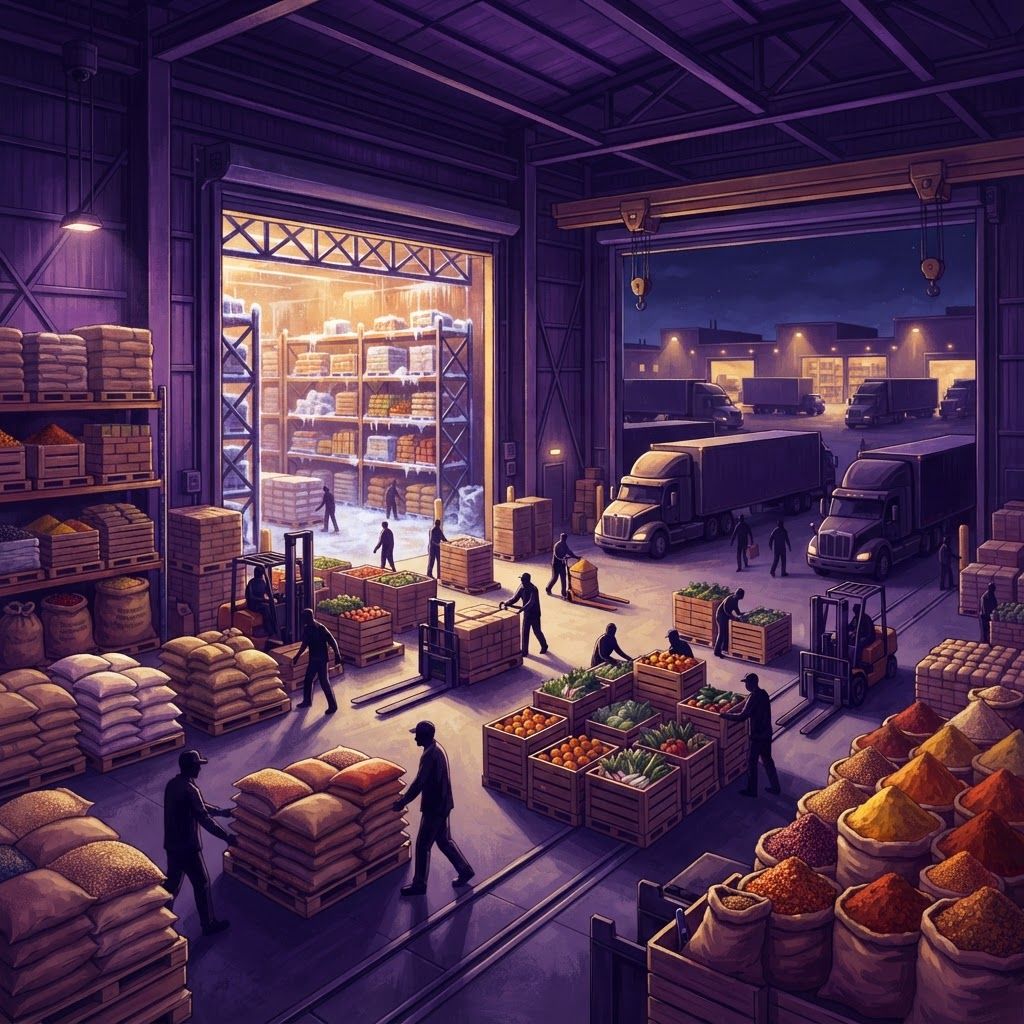
Salem's Food Trade Ecosystem
Salem is one of Tamil Nadu's significant agricultural and food processing districts. The surrounding region produces sago and tapioca starch on a scale that makes Salem nationally important in that category, alongside mangoes, turmeric, tamarind, pulses, groundnut and a range of vegetables. This agricultural output feeds a substantial wholesale trade that supplies not only the district but markets well beyond it.
The food wholesale trade serves three distinct customer groups with different needs. Retail grocers need consistent supply, competitive pricing and credit. Hotels, restaurants and caterers need reliable delivery schedules, bulk packaging and stable quality that will not disrupt standardised recipes. Institutions such as hostels, hospitals and industrial canteens need documented food safety compliance and dependable volume supply. The best wholesalers understand which group they serve and organise accordingly.
Food Safety and Quality Considerations
Food wholesale carries responsibilities that other categories do not. FSSAI licensing is mandatory, and a legitimate wholesaler will display a valid licence number. Beyond the licence, buyers should examine actual practice: are dry goods stored off the floor and away from walls, is there evident pest control, is cold storage maintained at correct temperatures with monitoring records, and is stock rotated on a first-expired-first-out basis?
Product-specific quality markers matter too. For rice, the variety, ageing, broken percentage and moisture content determine cooking behaviour. For pulses, sorting quality and absence of insect damage are key. For edible oils, packaging integrity and batch dating protect against rancidity. For spices, colour, aroma and the absence of adulteration are essential, and reputable wholesalers can produce test reports for these.
The Top 10 Food Wholesalers in Salem
1. Salem Grains and Provisions Wholesale
A cornerstone of the local trade, Salem Grains and Provisions Wholesale supplies rice, wheat, pulses, sugar and staple groceries in bulk. Clean warehousing, systematic stock rotation and consistent grading across repeat orders make it a dependable source for both grocers and institutional kitchens.
2. Kongu Spices and Masala Wholesale
Kongu Spices and Masala Wholesale trades in whole and ground spices, including the turmeric, chilli, coriander and tamarind central to South Indian cooking. Sourcing directly from growing regions and testing for adulteration allow it to guarantee purity, a claim many spice traders make but fewer can substantiate.
3. Mettur Edible Oils Distribution
Covering groundnut, gingelly, sunflower, coconut and refined oils, Mettur Edible Oils Distribution supplies retail and bulk buyers in packs from pouches to tins and barrels. Careful attention to storage conditions and batch freshness protects oil quality, which degrades quickly under poor handling.
4. Yercaud Fresh Produce Wholesale
Yercaud Fresh Produce Wholesale handles fruits and vegetables, including produce from the hill slopes near the city. Rapid turnover, cold chain handling for sensitive items and early-morning delivery schedules serve restaurants and retailers who need produce at its freshest.
5. Sona Dairy Products Wholesale
Milk, curd, butter, ghee, paneer and cheese require an unbroken cold chain, and Sona Dairy Products Wholesale has invested in refrigerated storage and transport to maintain it. Temperature logging and short delivery cycles protect product safety, making it a preferred supplier for bakeries, sweet shops and food service businesses.
6. Aadhi Frozen and Processed Foods
Aadhi Frozen and Processed Foods distributes frozen vegetables, ready-to-cook items, frozen snacks and processed food products. Maintaining deep-freeze integrity through storage and transport is the operational core of this business, and the company monitors it systematically.
7. Bharathi Bakery and Confectionery Supplies
Serving bakeries, hotels and home bakers, Bharathi Bakery and Confectionery Supplies stocks flour, baking agents, chocolate, essences, decorations and packaging. Its product knowledge helps customers select the right flour protein content or fat type for a specific application, which improves their output quality directly.
8. Thirumani Sago and Starch Trading
Reflecting a signature Salem industry, Thirumani Sago and Starch Trading deals in sago, tapioca starch and derived products supplied to food manufacturers, textile units and industrial users. Deep knowledge of grades and applications makes it a specialist resource rather than a general trader.
9. Vaigai Beverages and Packaged Foods
Vaigai Beverages and Packaged Foods distributes soft drinks, juices, packaged snacks, biscuits and branded FMCG products to retailers across the district. Route-based delivery, scheme management and dependable replenishment define its service to a large network of small shops.
10. Salem HORECA Food Supplies
Completing the list, Salem HORECA Food Supplies is built specifically around hotels, restaurants and catering. Bulk pack formats, consolidated single-invoice ordering across categories and scheduled delivery windows solve the operational headaches that food service businesses face when managing many separate suppliers.
Trends in Food Wholesale
Food safety enforcement has tightened considerably, and buyers increasingly ask for documentation rather than assurances. Traceability from farm to shelf is becoming an expectation in institutional supply. Health-oriented products — millets, organic grains, low-oil snacks and fortified staples — are growing faster than traditional categories, reflecting genuine shifts in consumer preference.
Cold chain infrastructure continues to expand, enabling wider distribution of dairy, frozen and fresh products. Digital ordering is spreading through the trade, with restaurants in particular adopting app-based ordering that reduces phone coordination and produces better purchase records.
Buying Recommendations
Always verify the FSSAI licence and visit the warehouse before establishing a supply relationship. Inspect storage conditions personally, particularly for cold chain items. Agree on quality specifications for staples in measurable terms — broken percentage for rice, moisture content for pulses — rather than vague descriptions. Establish clear procedures for rejecting substandard deliveries. Above all, prioritise consistency over marginal price savings; in food businesses, a supplier whose quality varies will cost you far more in customer complaints and recipe failures than you ever save on the invoice.