
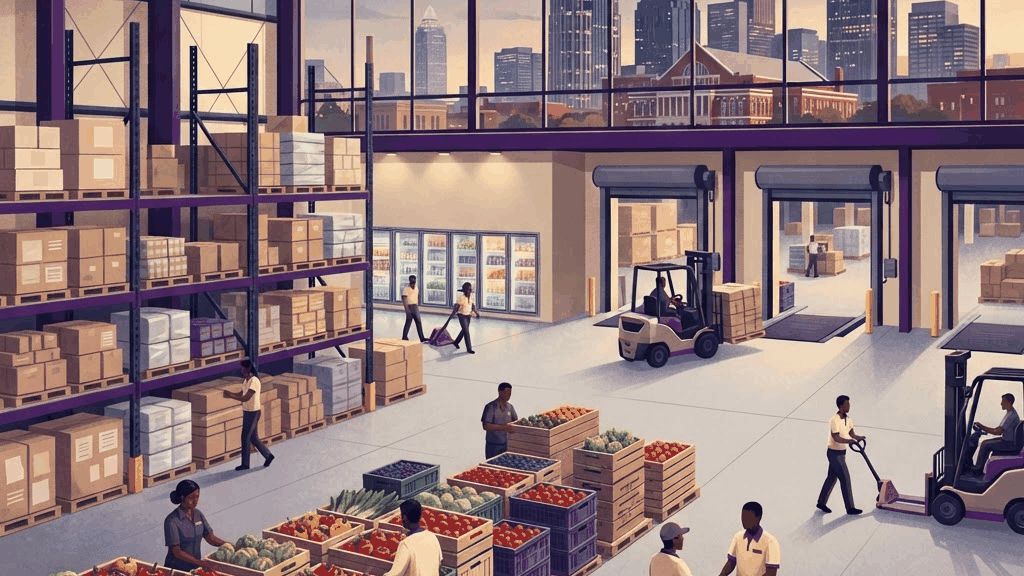
Food Distribution in a Restaurant-Driven City
Nashville’s dining, hotel, healthcare, education, and entertainment sectors require a dependable flow of fresh, frozen, refrigerated, and shelf-stable products. Broadline distributors offer convenience and scale, while specialists can provide stronger category expertise, local sourcing, or distinctive ingredients. The best choice depends on menu, volume, storage, delivery windows, food-safety requirements, and desired service level. These ten companies are prominent local or regional suppliers serving Middle Tennessee. Buyers should verify delivery areas, account minimums, product origins, and current availability.
1. Sysco Nashville
Sysco Nashville is a major broadline distributor serving restaurants, hospitality groups, and institutions. Its extensive catalog can consolidate proteins, produce, dairy, dry goods, disposables, and kitchen supplies into fewer deliveries. Menu and business resources may add value for operators that need costing or product alternatives. Customers get the best results by maintaining accurate pars, reviewing substitutions, and communicating forecast changes around large Nashville events.
2. US Foods
US Foods provides broadline foodservice distribution with national purchasing power and tools for independent restaurants and multiunit operators. Its range supports menu development across price points, from commodity staples to differentiated products. Nashville buyers should compare delivery consistency, split-case options, online ordering, credit terms, and sales support in addition to case price. A dependable rep can help address shortages before they disrupt service.
3. Performance Foodservice
Performance Foodservice serves restaurants and foodservice operations with food, beverages, disposables, and equipment-related products. The distributor is particularly relevant to independent operators seeking a broad assortment and category guidance. Product consistency matters: a lower-cost substitute can alter portion, cook time, and guest experience. Kitchens should test alternatives and update recipes and cost cards before accepting permanent changes.
4. Gordon Food Service
Gordon Food Service supplies restaurants, caterers, institutions, and other professional kitchens. Its combination of delivery and accessible product formats can support operators with varying volumes. Nashville caterers may value flexible pack sizes and dependable staples for events, while institutions prioritize nutrition, consistency, and compliance. Buyers should coordinate delivery timing with receiving labor and available cold storage.
5. Creation Gardens
Creation Gardens is a specialty foodservice distributor serving Nashville with produce, meat, seafood, dairy, and artisan products. Its chef-oriented assortment is useful for restaurants that compete through ingredient quality and menu distinction. Specialty sourcing works best when chefs share menu plans and acceptable seasonal substitutions. Close communication can turn changing availability into creative opportunity rather than a last-minute problem.
6. What Chefs Want
What Chefs Want supplies chefs with produce and specialty foods through a service model built around culinary needs. Fresh categories reward frequent ordering and careful receiving. Nashville kitchens should inspect temperature, condition, count, and ripeness immediately, then rotate stock using disciplined first-in, first-out practices. A produce partner’s ability to communicate seasonality and weather-related changes is as valuable as a long item list.
7. FreshPoint
FreshPoint specializes in fresh produce and related foodservice products. Its scale supports sourcing, quality systems, and regular distribution, while category focus can provide better produce expertise than a generalist alone. Nashville operators can improve value by specifying intended use and maturity rather than buying only by item name. A tomato for same-day slicing may need a different stage than one intended for later service.
8. Inland Seafood
Inland Seafood distributes seafood, meats, and specialty products across the Southeast. Seafood requires rigorous temperature control, traceability, and accurate species and origin information. Nashville chefs should discuss fresh versus frozen formats, portioning, yields, seasonality, and delivery frequency. Properly frozen products can sometimes provide better consistency and lower waste than a fresh item traveling through a volatile supply chain.
9. Porter Road
Porter Road is a Nashville-rooted meat company known for whole-animal sourcing and butcher-driven cuts. Its local identity and emphasis on sourcing appeal to restaurants that want a more specific protein story. Working with a specialist can introduce underused cuts that deliver flavor and value, but kitchen teams must understand fabrication and cooking. Clear menu communication helps guests appreciate why the product differs.
10. Nashville Grown
Nashville Grown connects area farms with restaurants and community buyers. Local aggregation can make regional produce more accessible while supporting smaller growers. Availability follows seasons and harvest realities, so flexible menu planning is important. Buyers should understand ordering deadlines, pack sizes, farm identification, and delivery schedules. Local does not eliminate the need for food-safety controls, receiving standards, or careful storage.
Choosing a Food Wholesaler
Compare landed cost and usable yield, not simply case price. Review minimums, delivery days, cutoff times, fuel charges, returns, substitutions, traceability, recall procedures, and emergency support. Inspect every delivery promptly and document recurring issues. Many Nashville operations use a broadline distributor for efficiency plus specialists for produce, proteins, or signature ingredients. This diversified approach can improve menu quality and resilience without making purchasing unmanageable.
Trends Shaping Nashville Foodservice
Operators are seeking labor-saving formats, smaller inventories, transparent sourcing, plant-forward choices, and packaging that reduces waste. Inflation keeps menu engineering and portion control central, while guests still expect memorable quality. Technology is improving ordering and price visibility, but strong relationships remain essential when weather, transportation, or events shift demand. The best distributor helps a kitchen protect food safety, control waste, and maintain consistency through both routine weeks and Nashville’s busiest weekends.