
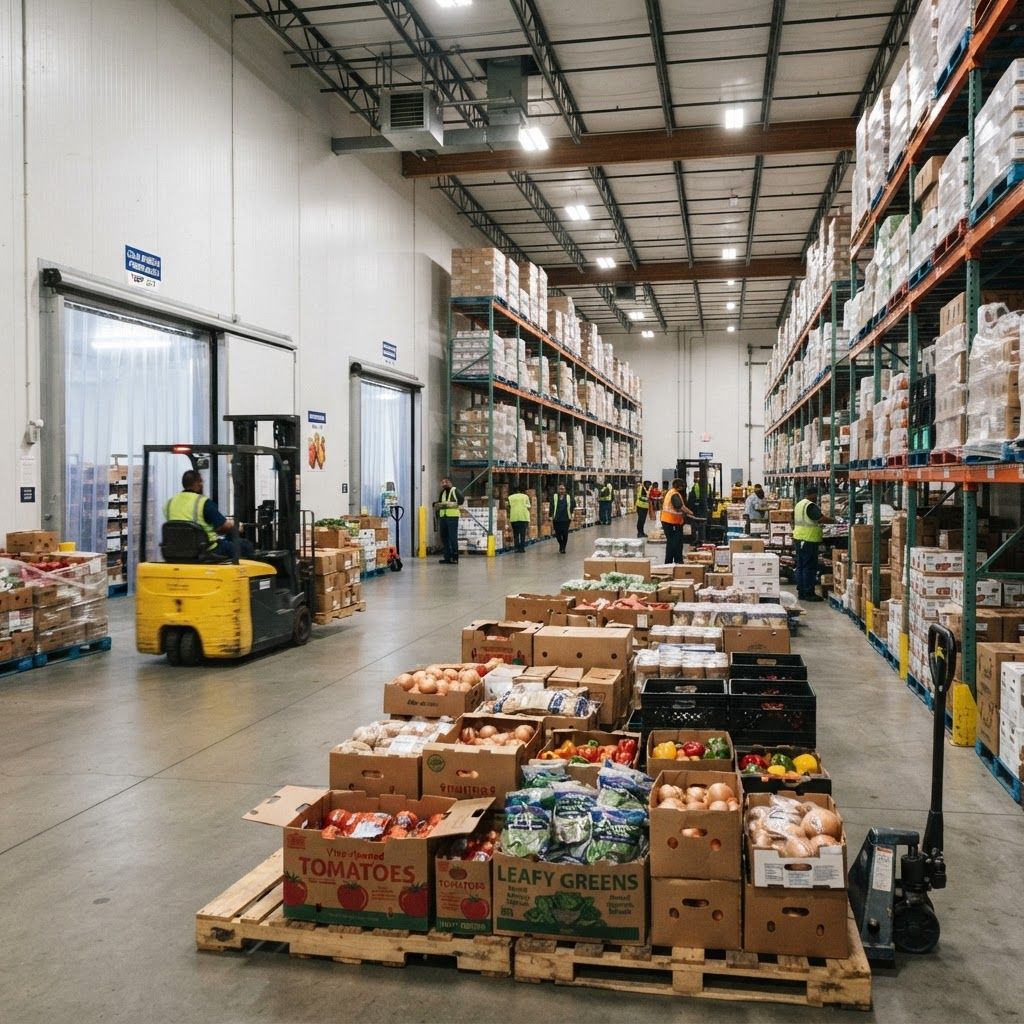
Feeding a Region from a Central Hub
Lubbock's position as the commercial center of the South Plains makes it a natural food distribution hub. Restaurants, school districts, hospitals, university dining programs, convenience stores, independent grocers and food trucks across a wide rural territory depend on distributors based here. The economics are straightforward: consolidating deliveries through a central warehouse network reduces cost and improves reliability compared with shipping directly to dispersed small accounts.
The region also produces significant food inputs of its own, including beef, dairy, grain, peanuts, cotton byproducts and seasonal produce. That creates opportunities for distributors who can connect local supply with local kitchens, a capability that has grown more valuable as operators emphasize regional sourcing on their menus.
The Top 10 Best Food Wholesalers in Lubbock
1. Caprock Foodservice Distribution
A broadline distributor supplying frozen, refrigerated, dry goods, disposables and cleaning supplies to restaurants and institutions. Consistent delivery windows, order guides and menu costing support make them a primary supplier for many independent operators.
2. Llano Produce Company
Fresh fruit and vegetable distribution with daily deliveries and seasonal local sourcing where available. Their quality inspection process and willingness to handle split cases suit smaller kitchens that cannot absorb full-case waste.
3. Hub City Meat and Protein Supply
Distributors of beef, pork, poultry and processed proteins, with custom cutting and portioning services. In cattle country, access to consistent grading and yield specifications matters greatly for menu costing.
4. South Plains Dairy Distribution
Milk, cheese, butter, cream and refrigerated dairy products supported by a well-managed cold chain. They serve schools, coffee shops, bakeries and restaurants, with delivery frequency matched to shelf-life realities.
5. Red Raider Beverage Wholesale
Distribution of soft drinks, juices, coffee, tea, energy drinks and bottled water, plus dispensing equipment support. Convenience stores and campus-adjacent retailers rely on their high-turn product knowledge.
6. Panhandle Bakery Ingredients
Suppliers of flour, sugar, mixes, fillings, frozen dough and decorating supplies for bakeries, restaurants and institutional kitchens. Technical support on formulation and scaling is a genuine differentiator.
7. Yellowhouse Specialty and Ethnic Foods
Importers and distributors of regional and international ingredients, spices, sauces and specialty goods. Their catalog supports the growing diversity of the local restaurant scene and independent grocers serving specific communities.
8. Texas Plains Convenience Store Distribution
Snacks, candy, tobacco alternatives, packaged foods and store supplies delivered to convenience and grocery accounts across a wide rural area. Route consistency to small towns is their core strength.
9. Monarch Frozen Foods
Frozen entrees, vegetables, appetizers, seafood and dessert products with strict temperature documentation. They serve schools, healthcare foodservice and restaurants where labor savings from prepared items are essential.
10. Cotton Belt Local Food Aggregation
A distributor connecting regional farms and ranches with restaurants, schools and retailers. By aggregating small producers, they make local sourcing practical for buyers who need reliable volume and single invoicing.
Trends in Food Distribution
Cost pressure and labor scarcity are driving two visible shifts. Operators are buying more prepared and portioned items to reduce kitchen labor, and they are watching case costs closely enough that distributors now compete on data and menu engineering support rather than price alone. Transparency has also become important, with buyers asking for country of origin, allergen documentation and traceability records as standard practice.
Technology has improved the experience considerably. Online ordering, real-time inventory, substitution suggestions and delivery tracking reduce the friction that once defined foodservice purchasing. Food safety expectations continue to tighten as well, with temperature logging and recall readiness now baseline requirements.
How to Choose a Food Wholesaler
Reliability outranks price in foodservice. A missed delivery can cost a restaurant an entire service period, which dwarfs the savings from a marginally cheaper case.
- Confirm delivery days, cutoff times and minimum order thresholds.
- Ask about fill rates and how substitutions are handled.
- Verify food safety certifications and cold chain documentation.
- Request pricing structure clarity, including fuel and delivery fees.
- Maintain a secondary supplier for critical items to protect against outages.
Final Thoughts
Food distribution is the invisible backbone of every restaurant, cafeteria and grocery shelf in the region. Lubbock's wholesalers offer broadline convenience, specialized categories and increasingly credible local sourcing options, which gives operators real flexibility in building a supply strategy. Match your volume and menu to the right mix of suppliers, hold them accountable on fill rates and temperature compliance, and review pricing regularly. In an industry where margins are measured in single digits, disciplined purchasing is often the difference between a good year and a difficult one.