
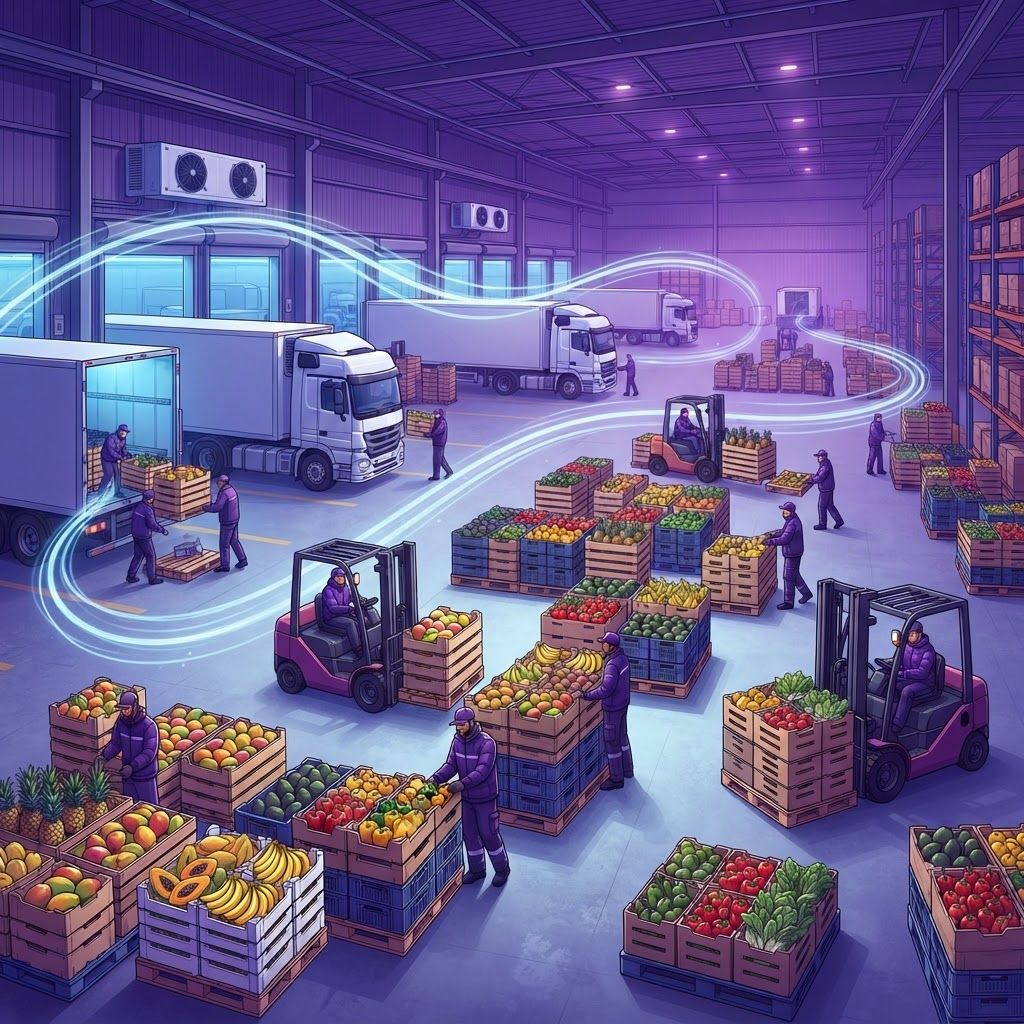
A Food Distribution Hub With Regional Reach
Hialeah occupies a strategic position in food distribution. It sits beside the produce and refrigerated warehouse corridor that channels imported fruit and vegetables from Latin America into the United States, and it borders one of the densest concentrations of independent restaurants, cafeterias, bakeries and neighborhood markets in the Southeast. Wholesalers based here serve both directions at once, moving imported product inland while supplying local operators daily.
The customer base is unusually diverse. A single distributor may deliver to a fine-dining kitchen, a hospital cafeteria, a chain of bakeries, a food truck operator and a bodega on the same route. That diversity has shaped a wholesale sector comfortable with mixed pallets, small drop sizes and frequent delivery schedules rather than the large, uniform orders that national broadline distributors prefer.
Categories Within Local Food Wholesale
The sector organizes into recognizable segments. Produce distributors handle fresh fruit and vegetables, often with ripening rooms and repacking capability. Protein specialists cover beef, poultry, pork and seafood, frequently offering custom cutting and portioning. Broadline distributors carry a wide catalog spanning dry goods, frozen items, dairy and disposables so an operator can consolidate orders. Latin and Caribbean specialty wholesalers supply the ingredients that define much of the region's cooking, from plantains and yuca to specific bean varieties, seasonings and cheeses. Bakery and pastry suppliers provide flour, fats, fillings and finished frozen dough. Beverage distributors handle coffee, juices, waters and mixers. Cold-chain and warehousing operators provide storage and freight for companies that need refrigerated space without owning it.
Ten Food Wholesalers Serving Hialeah
Biscayne Fresh Produce Distributors supplies fruit and vegetables with early-morning delivery windows built around restaurant prep schedules, and maintains ripening and repack capability for bananas, avocados and tropical fruit.
Flagler Meat and Seafood Company provides beef, poultry, pork and fresh seafood with in-house cutting to customer specifications, allowing kitchens to control portion cost precisely rather than trimming in the back of house.
Everglade Broadline Food Service carries a full catalog of dry, frozen, refrigerated and disposable items, functioning as a primary supplier for operators who prefer consolidating most purchases with one distributor.
Tropic Latin Food Imports specializes in Latin American and Caribbean staples, including root vegetables, tropical frozen pulps, specialty beans, seasonings and regional cheeses that mainstream distributors rarely stock in depth.
Miami Bakery Ingredients Supply distributes flours, fats, chocolate, fillings and frozen dough to bakeries, cafes and hotel pastry kitchens, with technical support on formulation adjustments for humid conditions.
Palm Coast Dairy and Refrigerated Distribution handles milk, cheese, eggs, yogurt and refrigerated prepared foods with temperature-monitored delivery and short order lead times.
Hialeah Coffee and Beverage Wholesale supplies roasted coffee, espresso, juices, bottled water and beverage equipment, serving cafeterias, restaurants and offices across the region.
Okeechobee Frozen Foods Warehouse operates frozen storage and distribution for proteins, vegetables, appetizers and desserts, offering third-party cold storage alongside its own distribution program.
Sunstate Restaurant Supply and Disposables combines packaging, takeout containers, cleaning chemicals and smallwares with a limited food catalog, filling the operational gaps between food deliveries.
Coral Way Export Food Consolidators assembles mixed food containers for Caribbean and Latin American buyers, managing export documentation, temperature-controlled consolidation and freight coordination.
Food Safety Is the First Screening Question
Before price or catalog breadth, verify food safety practices. Ask which third-party food safety audit the distributor maintains, when it was last conducted and whether the score is available. Confirm that refrigerated trucks are temperature-monitored with recorded data, not simply set to a dial, and ask what happens when a delivery arrives outside its temperature range.
Traceability is equally important. In a recall, a distributor should be able to identify which lots went to which customers within hours. Ask how lot tracking works and whether the company has managed a recall before. Operators should also confirm that they will receive product specification sheets and allergen information, which are increasingly required for menu labeling and for institutional contracts.
Finally, inspect deliveries consistently on your own end. Check temperatures at receiving, reject product that arrives out of spec, and document rejections. Suppliers respond to customers who verify rather than assume.
Terms, Delivery Windows and Cost Control
Delivery reliability is often the deciding factor for restaurant operators. Clarify the order cutoff time, the delivery window, what happens with substitutions, and whether the driver waits for a count. Establish whether shorted items are credited automatically or require a claim, since chasing credits consumes management time.
On cost, focus on the categories that dominate spend. Protein and produce typically drive food cost more than dry goods, and both fluctuate with market conditions. Ask whether the distributor offers market reports, fixed pricing on contracted items or advance notice of expected increases. Comparing invoices line by line across suppliers is more useful than comparing overall impressions, because a distributor with competitive protein pricing may be expensive on paper goods and vice versa.
Trends Affecting Local Food Wholesale
Several developments are shaping the market. Ghost kitchens and delivery-first concepts have increased demand for smaller, more frequent drops and for packaging that survives transit. Interest in locally grown produce has grown, though South Florida's growing season constrains what can be sourced locally in summer. Labor pressure in kitchens has raised demand for value-added products such as pre-cut vegetables and portioned proteins, shifting labor from the restaurant to the distributor. Digital ordering platforms with real-time inventory and order-guide management have become standard among stronger distributors, reducing phone orders and ordering errors.
Building a Reliable Supplier Mix
Most successful operators use a primary broadline distributor for the bulk of the catalog and two or three specialists for produce, protein and specialty items. That structure balances consolidation savings against quality in the categories that matter most on the plate. It also provides redundancy: if one supplier misses a delivery, an alternate account already exists. Reviewing the supplier mix once or twice a year, with actual invoice data in hand, tends to reveal both savings and quality improvements.
Final Thoughts
Hialeah's food wholesalers combine broad catalogs, genuine specialty depth in Latin and Caribbean products, and cold-chain infrastructure serving both local kitchens and export buyers. Screen suppliers on food safety and traceability first, evaluate delivery reliability seriously, compare pricing category by category rather than in aggregate, and maintain a primary-plus-specialist mix. Those practices protect food cost, product quality and operational continuity at the same time.