
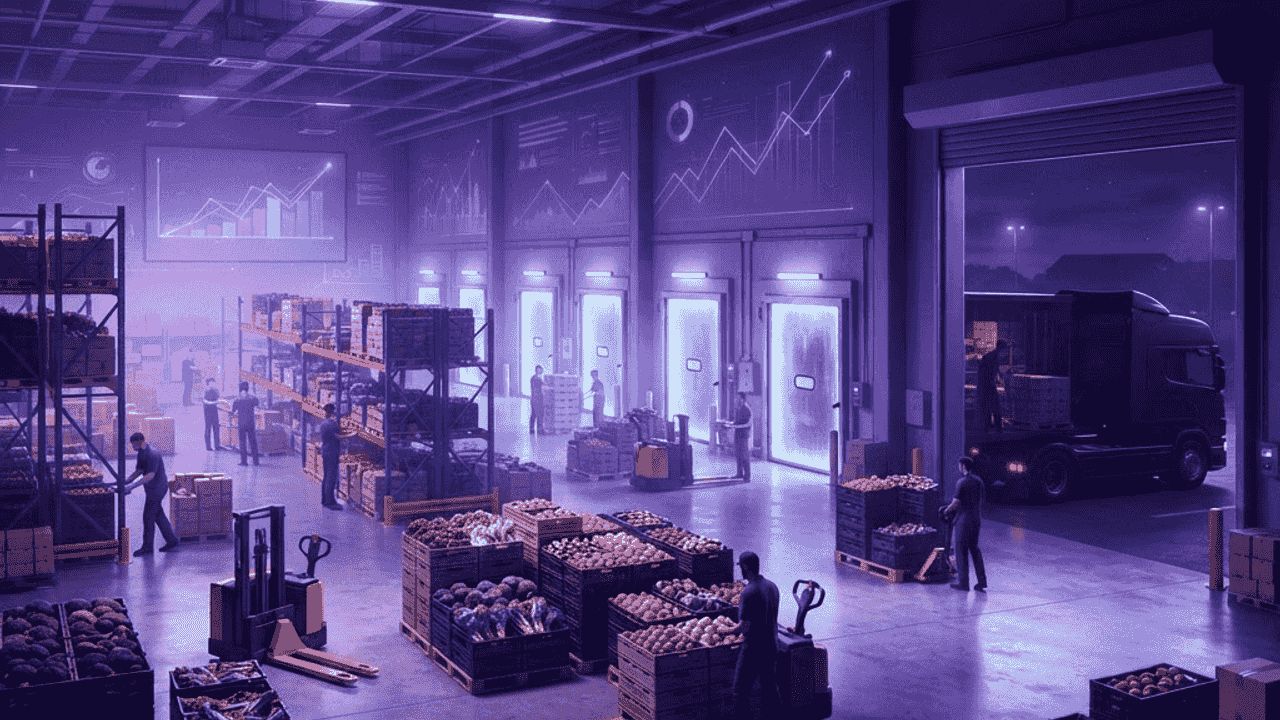
Feeding the Triad: Greensboro's Food Distribution Landscape
Food distribution is the least visible and most consequential part of the restaurant business. A kitchen can have brilliant cooks and a full dining room, yet fail because deliveries arrive late, produce shows up bruised, or a key ingredient is substituted without warning. Greensboro's advantage is a distribution network that combines broadline national reach with a genuinely strong bench of regional and specialty suppliers.
Location again plays a role. Greensboro sits within a few hours of coastal seafood, mountain produce, Piedmont farmland, and major poultry and pork operations. Interstate access makes it practical for distributors to run daily routes across the Triad while still reaching Charlotte, Raleigh, and the Triangle. For chefs, that means shorter cold chains and fresher product than many inland markets can offer.
What Operators Should Demand from a Food Wholesaler
Cold chain integrity comes first. Buyers should ask how trucks are monitored, how multi temperature loads are separated, and what happens when a delivery arrives outside specification. A distributor with a clear, documented answer is a distributor that takes food safety seriously.
Consistency is second. Pack size, grade, trim specification, and brand substitution policy all affect plate cost and guest experience. A wholesaler who substitutes silently will eventually damage a menu. One who calls before substituting becomes a trusted partner.
Third is order flexibility. Independent restaurants rarely have the volume to hit large minimums, so drop size thresholds, delivery frequency, and split case availability determine whether a supplier is realistically usable. Finally, traceability matters more each year, both for recall response and for menus that make sourcing claims.
The Top 10 Food Wholesalers in Greensboro
1. Gate City Foodservice. A broadline distributor carrying produce, protein, dairy, dry goods, frozen items, and disposables. Gate City serves independents and small chains with consistent weekly routes and a reputation for honest communication when items are short.
2. Piedmont Produce Company. A fresh produce specialist blending regional farm sourcing with national programs for year round availability. Piedmont's buyers walk the market daily, and chefs credit them with flagging seasonal peaks early enough to build menus around them.
3. Carolina Meat and Protein Supply. A protein house offering custom cutting, portion control, dry aging, and case ready programs across beef, pork, and poultry. Its ability to cut to a chef's exact specification helps restaurants control plate cost precisely.
4. Triad Seafood Distributors. Running coastal routes to bring in fresh finfish and shellfish alongside frozen and value added items. Triad Seafood publishes catch and landing information, which supports the sourcing transparency many diners now expect.
5. Battleground Bakery Supply. Supplying flours, yeasts, chocolate, fillings, frozen doughs, and packaging to bakeries, cafes, and pastry programs. Battleground's technical support on hydration, proofing, and scaling is a genuine asset for growing bakeries.
6. Summit International Foods. A specialty importer serving Greensboro's diverse restaurant community with Latin American, Asian, South Asian, African, and Mediterranean ingredients. Summit reflects the city's demographic growth and supplies many family owned restaurants and markets.
7. Guilford Dairy and Beverage. Distributing milk, cream, cheese, cultured products, coffee, juices, and beverage systems. Guilford handles equipment placement and service alongside product, which simplifies life for cafes and quick service operators.
8. Revolution Natural and Organic Foods. Focused on certified organic, plant based, gluten free, and clean label products for groceries, cooperatives, and health oriented menus. Revolution has grown with consumer demand for transparent ingredient decks.
9. Bessemer Institutional Food Service. Serving schools, universities, hospitals, and senior living facilities with bid compliant products, nutritional documentation, and volume packaging. Bessemer's strength is navigating procurement rules that intimidate smaller distributors.
10. Cornwallis Farm Collective. An aggregator connecting Piedmont growers and small producers with restaurants and retailers. Cornwallis handles ordering, cold storage, and delivery so that a chef can buy from a dozen local farms through a single invoice.
Trends Shaping Food Wholesale
Local sourcing has moved past marketing language into operational practice, largely because aggregators solved the logistics problem. A restaurant can now source regionally without managing relationships with fifteen individual farms, which makes seasonal menus far more practical.
Labor pressure is reshaping product mix. Value added items such as pre portioned proteins, washed and cut produce, and par baked breads continue to grow because kitchens are running with smaller crews. Distributors that offer credible value added lines help operators protect quality while reducing prep hours.
Technology adoption is accelerating as well. Online ordering with live inventory, order guides that flag price changes, and usage analytics that highlight cost creep are increasingly standard. Operators who use these tools well can spot a rising food cost within days instead of at month end.
Waste reduction is the final major theme. Rising ingredient costs and sustainability commitments have pushed distributors toward tighter forecasting, smaller more frequent drops, and packaging changes that reduce spoilage and landfill volume.
Getting the Most from Your Suppliers
Bid competitive categories periodically, but avoid switching primary distributors constantly. Route stability and driver familiarity have real value. Write specifications down, including grade, pack, and acceptable substitutes, and hold suppliers to them consistently.
Inspect deliveries at the dock rather than after service, log discrepancies immediately, and review credits monthly. Build a genuine relationship with your sales representative, because during shortages that relationship determines who gets the last case. And always maintain a backup source for your three most critical items.
Final Thoughts
Greensboro's food wholesalers cover broadline needs, regional produce, custom protein, seafood, bakery, international specialty, dairy, natural foods, institutional programs, and local farm aggregation. Operators who thoughtfully combine two or three of these partners, rather than defaulting to a single vendor, typically achieve better freshness, better cost control, and fewer service failures.