
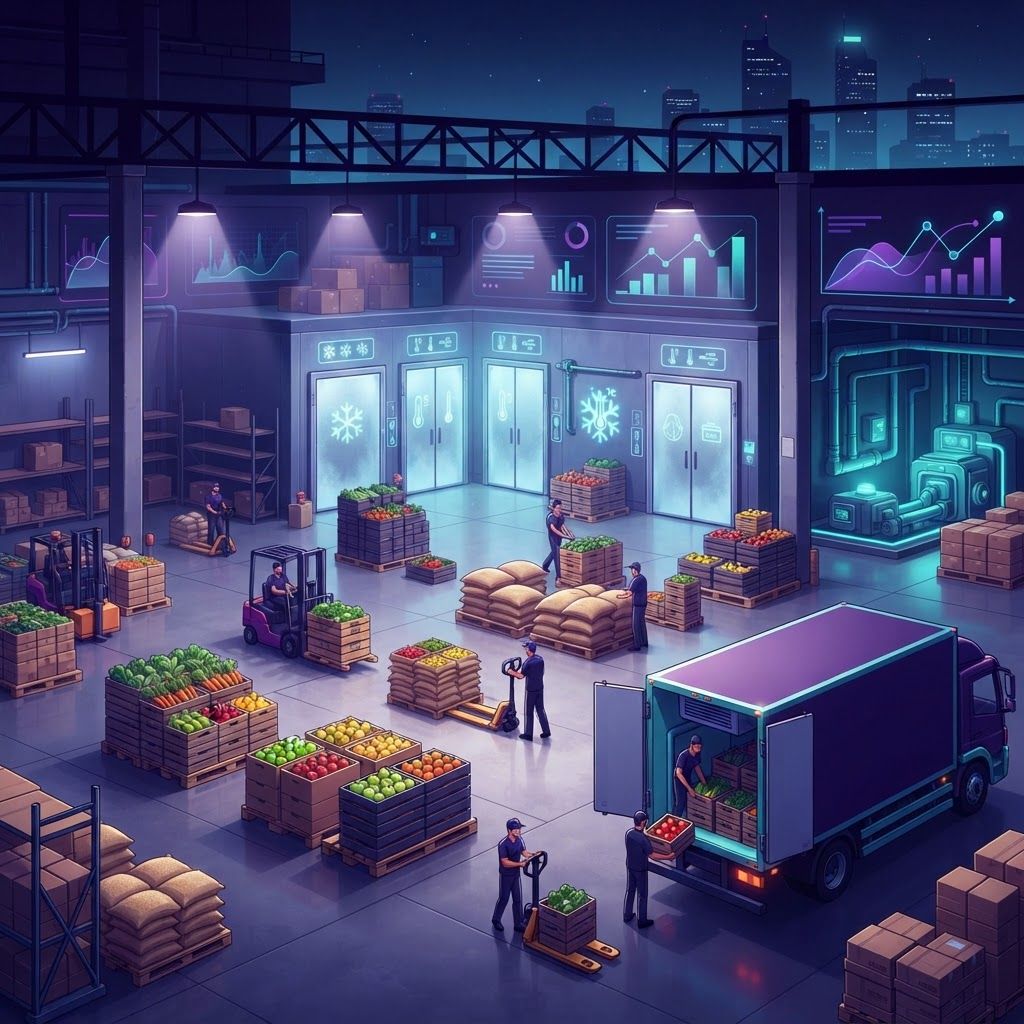
Food Distribution in Enterprise: An Operation Built on Timing
Food wholesale is the least forgiving segment of distribution. A late pallet of building materials delays a project, but a late produce delivery empties a menu and turns customers away. Food wholesalers in Enterprise operate on daily and multi-weekly delivery cycles, moving fresh produce, proteins, dairy, frozen goods, bakery items, beverages and dry groceries into restaurants, institutional kitchens, grocers, convenience stores and catering operations across the city.
The local market has grown more sophisticated as the dining scene has expanded. Broadline distributors that once dominated now compete alongside specialists in produce, meat, seafood, ethnic ingredients and organic products. That fragmentation benefits operators, who can assemble a purchasing mix suited to their concept rather than accepting whatever a single supplier happens to stock.
How These Distributors Were Evaluated
Assessment focused on cold chain control and food safety certification, delivery frequency and on-time performance, product quality and consistency, order accuracy and fill rates, breadth of catalog relative to specialization, pricing transparency and contract structure, and the quality of ordering technology and customer support. Distributors with documented HACCP programs, third-party audits and full traceability received the strongest consideration, since compliance failures create liability no discount can offset.
The Top 10 Food Wholesalers in Enterprise
1. Enterprise Food Service Distribution
The broadline anchor of the local market, carrying produce, proteins, dairy, frozen, dry goods, disposables and cleaning supplies in a single catalog. Enterprise Food Service Distribution runs a temperature-controlled fleet with multi-zone trucks and provides an online ordering platform with real-time availability, which reduces the substitution surprises that disrupt kitchen prep.
2. Harrowgate Produce Company
Harrowgate specializes in fresh fruits and vegetables with daily delivery and direct grower relationships. Its buyers grade incoming product rather than accepting shipments on paper, and the company's seasonal availability guidance helps chefs plan menus around what will actually be good and reasonably priced in a given week.
3. Coldrun Protein Purveyors
Coldrun supplies beef, pork, poultry and custom-cut portions to restaurants and institutions. Its in-house cutting room allows precise specification by weight and trim, which gives operators the portion control that protects food cost, and full lot traceability supports recall readiness.
4. Tidewater Seafood Supply
Tidewater manages fresh and frozen seafood with tight cold chain discipline and rapid turnover. The company sources across multiple regions to maintain availability through seasonal gaps, and provides sustainability and origin documentation that increasingly matters to both diners and institutional buyers.
5. Meadowbrook Dairy Distribution
Meadowbrook delivers milk, cream, butter, cheese and cultured products on frequent routes designed around short shelf life. Its refrigerated logistics are built for reliability rather than volume alone, and it carries both commodity and artisan cheese lines that let operators build cheese programs without a separate specialty supplier.
6. Granary Point Dry Goods
Granary Point focuses on shelf-stable groceries, flour, rice, oils, canned goods, spices and baking ingredients in bulk foodservice sizes. Predictable pricing on staples and the ability to hold contracted pricing through volatile periods make it a stabilizing element in many kitchens' food cost planning.
7. Casa Verde Specialty Imports
Casa Verde imports and distributes Latin, Asian, Mediterranean and Middle Eastern ingredients that broadline suppliers stock only shallowly. For the city's independent ethnic restaurants and for chefs building authentic dishes, access to correct chiles, noodles, vinegars, spices and specialty flours is the difference between a dish that works and one that approximates.
8. Sunrise Bakery Wholesale
Sunrise produces and distributes breads, rolls, pastries and par-baked products to restaurants, cafes and grocery bakery departments. Early-morning delivery windows and consistent product specifications allow foodservice operators to offer fresh baked goods without staffing a bakery shift.
9. Pinewell Beverage Distribution
Pinewell handles non-alcoholic beverages including juices, waters, coffee, tea and dispensed drink systems, along with equipment service. Because beverages carry strong margins, its programs around equipment placement, product mix and menu integration have measurable impact on operator profitability.
10. Fieldmark Organic and Natural Foods
Fieldmark concentrates on organic, natural and specialty diet products including plant-based proteins and allergen-conscious items. Rigorous certification documentation and clearly labeled specifications help both grocers and restaurants make accurate claims to their own customers without regulatory exposure.
Cold Chain Integrity and Food Safety
Temperature control is the central technical discipline in food distribution. Product must remain within specified ranges from the point of receipt through warehousing, loading, transit and delivery, and each transfer point introduces risk. Leading distributors in Enterprise monitor temperatures continuously, maintain dock seals and staging discipline, and document conditions so that a buyer can verify compliance rather than assume it.
Buyers should ask specific questions: What certifications does the facility hold, and when was the last third-party audit? How are temperatures logged during transit, and can records be produced on request? What is the traceability process if a recall is issued? A distributor that answers these confidently and in detail is demonstrating operational maturity that protects your business as much as its own.
Controlling Food Cost Through Purchasing
Food cost is managed at the purchase order as much as in the kitchen. Operators who track price movement on their highest-volume items, understand which categories are commodity-driven and which are contractable, and consolidate enough volume to earn tier pricing consistently outperform those who simply order what they need each week. Specification discipline matters too, since accepting a lower grade or an inconsistent portion size quietly erodes both margin and guest experience.
Order guides deserve regular review. Items accumulate on them over years, and unused or duplicated products create waste and complexity. Working with a distributor representative to audit the guide annually often reveals consolidation opportunities that reduce both cost and storage pressure.
Trends Reshaping Food Wholesale
Several forces are changing the sector. Traceability expectations have tightened, pushing distributors toward lot-level tracking across more categories. Demand for local and regionally sourced product continues to rise, creating hybrid models where broadline distributors carry regional lines alongside national brands. Plant-based and allergen-conscious products have moved from niche to standard catalog inclusion. Labor scarcity has increased demand for value-added preparation such as pre-cut produce and portioned proteins. Ordering technology has improved substantially, with inventory integration and usage analytics helping operators reduce over-ordering and spoilage.
Choosing the Right Food Wholesaler
Most successful operations in Enterprise use a primary broadline distributor supported by two or three specialists. Begin by mapping your menu against category needs, then evaluate candidates on delivery windows that fit your prep schedule, minimum order thresholds, fill rate history and the responsiveness of your assigned representative. Request references from operations of similar size and type. Then test performance with real orders over several weeks, tracking substitutions, credits and delivery timing. In food distribution, consistent execution is the product, and the suppliers that deliver it reliably become genuine operating partners rather than interchangeable vendors.