
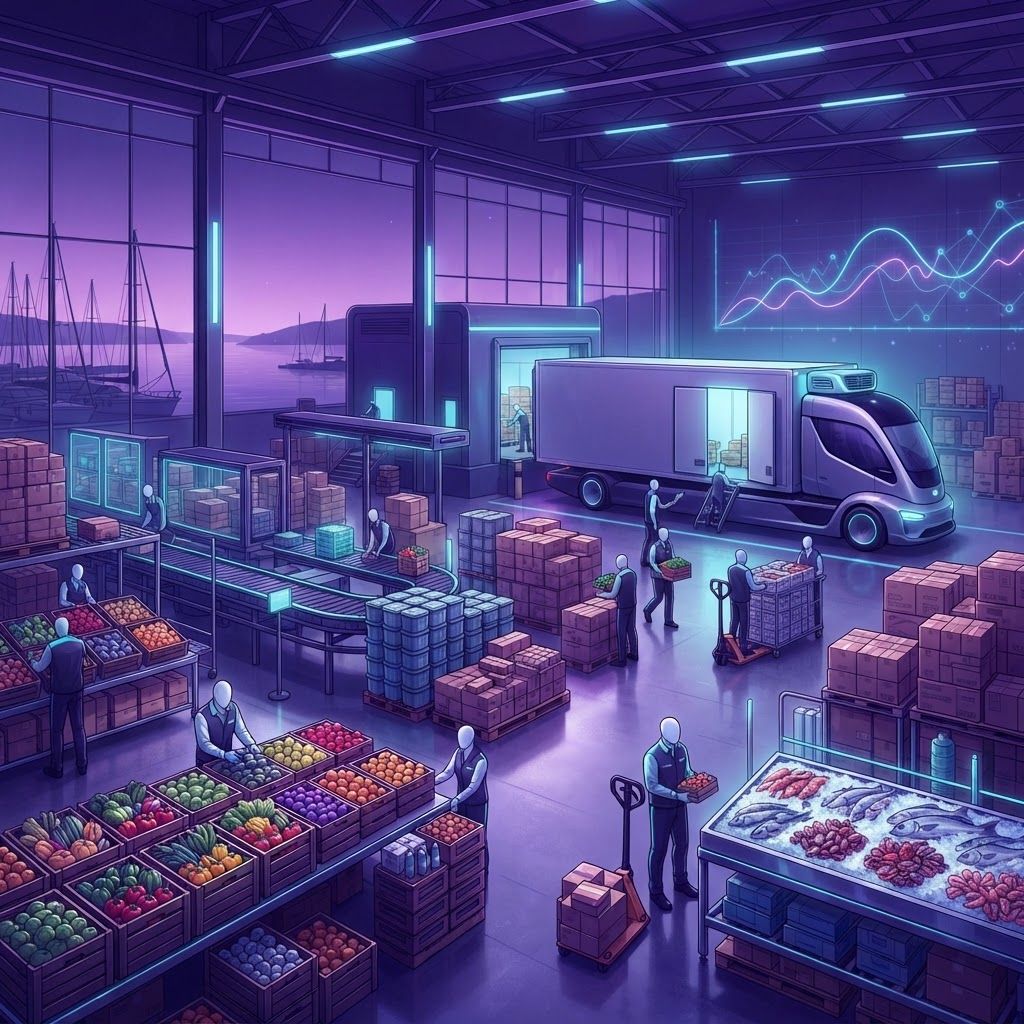
Feeding a Seasonal Town Year Round
Babylon's food service demand swings dramatically. Summer brings crowded waterfront restaurants, catering trucks, and beach concessions, while winter narrows the market to neighborhood delis, pizzerias, schools, and care facilities. Food wholesalers serving the town have adapted to that rhythm with flexible delivery schedules, seasonal contracts, and the ability to scale a restaurant's order sheet up or down without penalty.
Proximity to the Great South Bay and to regional produce farms gives local operators a genuine advantage. Chefs can build menus around ingredients that traveled a short distance, and distributors can promise delivery windows measured in hours rather than days.
What Restaurants Actually Need From a Distributor
Price per case matters, but it rarely decides who keeps an account. Consistency of fill rate is more important, because a missing case of proteins on a Friday afternoon can cost a kitchen an entire service. Cold chain integrity, accurate invoicing, credit terms, and a responsive sales representative who answers the phone during a rush all weigh heavily. Increasingly, buyers also want traceability documentation and allergen data available digitally rather than on a printed sheet in a binder.
1. Great South Bay Seafood Distributors
Seafood is the signature category here, and specialists in this space handle daily landings, shellfish tags, and temperature-controlled transport. Restaurants value suppliers who can describe exactly where and when a product was harvested, and who will call a chef when something exceptional comes in rather than waiting for an order.
2. Babylon Broadline Food Service
A full-line distributor carrying proteins, dairy, dry goods, frozen items, disposables, and cleaning supplies. Broadliners simplify life for independent operators by consolidating dozens of purchase orders into one or two weekly deliveries, and they usually offer menu costing support as part of the relationship.
3. Suffolk Produce Exchange
Sources regional vegetables and fruit in season and supplements with national supply in winter. Produce specialists live and die by quality control, and the better ones inspect at receiving rather than passing problems downstream to kitchens.
4. Long Island Dairy & Cheese Co.
Handles fluid milk, butter, eggs, and a curated cheese program. Specialty cheese distribution requires real product knowledge, and distributors in this niche often run tastings for chefs building new boards or menus.
5. Sunrise Meat & Provisions
A butcher-led operation offering custom cuts, portion control, and dry-aged programs. For steakhouses and gastropubs, the ability to specify exact weights and trim reduces waste and stabilizes plate cost far more effectively than chasing commodity pricing.
6. Amityville Bakery Supply
Serves bakeries, pizzerias, and dessert programs with flour, yeast, chocolate, and frozen doughs. Consistency in flour protein content and yeast performance is critical here, since bakers build formulas around specific ingredient behavior.
7. Coastal Beverage Distributors
Covers non-alcoholic beverages, coffee, syrups, and dispensing equipment. Beverage margins are among the strongest in food service, so distributors that also service equipment and train staff on drink builds deliver outsized value.
8. Mediterranean & Global Pantry Imports
Specialty importer stocking olive oils, spices, pasta, rice varieties, and regional condiments. Independent restaurants differentiate themselves through pantry ingredients, and importers give chefs access to items broadliners will not carry in small volumes.
9. Babylon Organic & Natural Supply
Focused on certified organic, non-GMO, and allergen-conscious products. As menu labeling and dietary requests grow more detailed, distributors that maintain complete certification records save operators significant compliance work.
10. Island Frozen & Cold Storage Partners
Provides frozen inventory alongside third-party cold storage, useful for caterers and seasonal concessions that need overflow freezer capacity during peak months without investing in equipment.
Trends Reshaping Food Distribution
Several forces are changing how food moves through Babylon. Order guides are going digital, with mobile apps replacing phone orders and giving chefs real-time price visibility. Local sourcing has moved from marketing language to purchasing policy for many restaurants, prompting distributors to formalize farm and dock relationships. Labor pressure in kitchens has increased demand for value-added products such as pre-portioned proteins and washed produce. And waste reduction is now a shared conversation, with distributors offering smaller pack sizes to reduce spoilage rather than pushing volume.
Practical Advice for Buyers
Run at least two suppliers in your highest-volume categories so pricing stays honest and a delivery failure never closes your kitchen. Review invoices against quoted prices weekly, since unnoticed market-price drift is the most common source of margin erosion. Ask about delivery windows in writing before signing, especially if your receiving area cannot accommodate a truck at certain hours. And treat your sales representative as a partner: sharing forecasts for a busy holiday weekend usually secures allocation when supply tightens.
Final Thoughts
The strength of Babylon's food wholesale market lies in its mix. Broadline distributors handle the predictable backbone of an order guide, while seafood, produce, and specialty importers supply the details that make a menu memorable. Operators who combine both approaches, and who invest in the relationship rather than treating every order as a price negotiation, end up with more reliable supply and better food on the plate.