
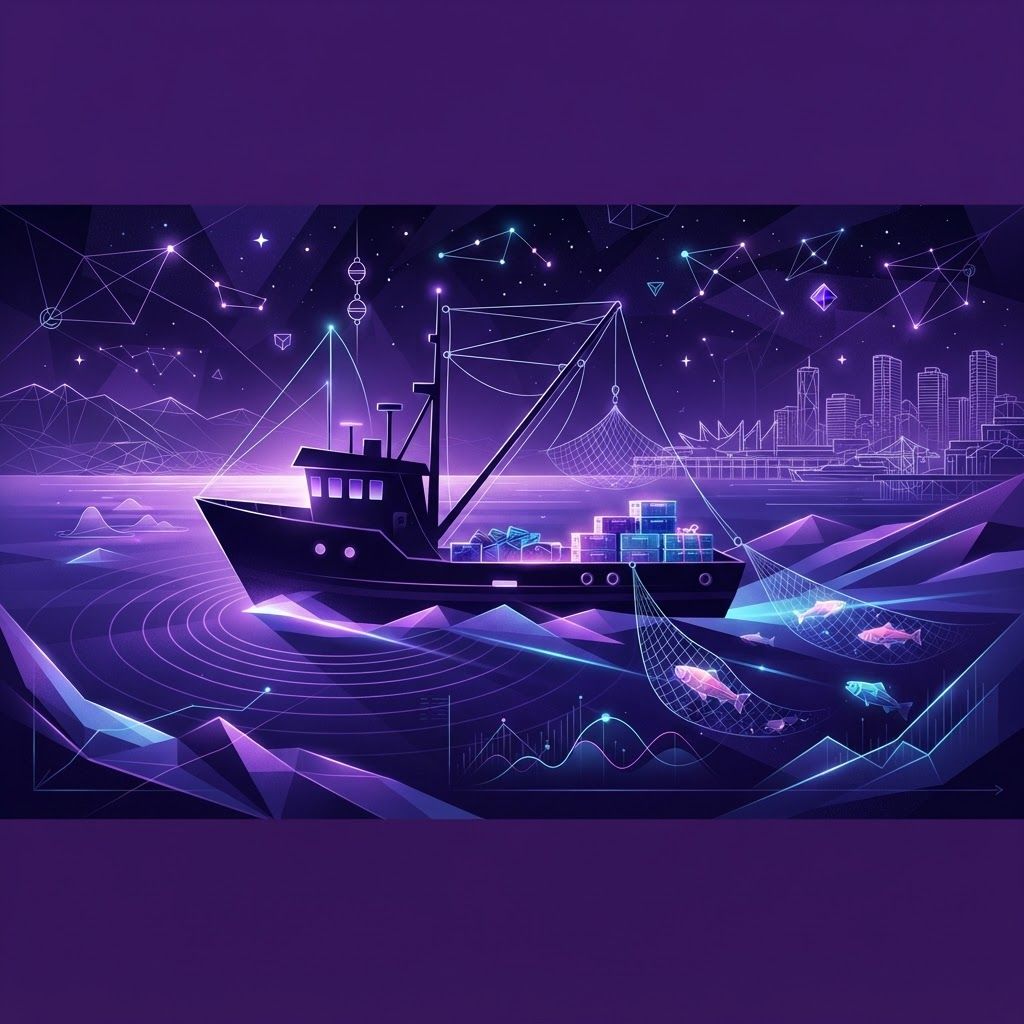
Few industries are as woven into Vancouver's identity as fishing. The Pacific coast has supported fishing communities for thousands of years, and today the sector operates as a sophisticated blend of traditional harvesting, modern aquaculture, high volume processing, and international trade. It is also one of the most heavily regulated and closely scrutinised industries in the province, which has pushed the strongest companies toward transparency and technical rigour.
The Structure of the Pacific Seafood Industry
British Columbia's fishery economy rests on several distinct pillars. Wild capture fisheries target salmon, halibut, sablefish, herring, and groundfish under quota systems designed to prevent overexploitation. Shellfish operations produce oysters, clams, geoduck, and scallops along the coast. Aquaculture, primarily Atlantic and Pacific salmon, contributes substantial volume and remains the subject of ongoing environmental debate and policy change.
Vancouver itself functions primarily as the commercial and logistics centre rather than the harvesting base. Head offices, processing facilities, cold storage, customs brokerage, and export operations concentrate here because of port access and air freight connectivity, which allows fresh product to reach Asian and American markets within a day of leaving the water.
The Top 10 Fishery Companies Connected to Vancouver
1. Canfisco
Part of the Jim Pattison Group, Canfisco is one of the largest integrated seafood companies on the Pacific coast, operating harvesting vessels, processing plants, and distribution networks. Vertical integration allows tight control over quality from catch through packaging, which matters enormously for canned and frozen salmon products sold internationally.
2. Ocean Fisheries
A long established British Columbia harvesting and processing company with deep roots in the salmon and herring fisheries. Companies of this type manage fleets, quota holdings, and processing capacity simultaneously, requiring operational discipline across highly seasonal and weather dependent activities.
3. Albion Fisheries
One of Western Canada's most recognised seafood distributors, Albion supplies restaurants, retailers, and food service operators with fresh and frozen product sourced globally and locally. Its strength is breadth and cold chain reliability, allowing chefs to order unusual species with confidence in freshness and arrival timing.
4. Organic Ocean Seafood
A fisherman owned company focused on sustainably harvested, fully traceable premium seafood. It has built its reputation on direct relationships with individual harvesters, careful handling, and transparency about where each product originated, which appeals strongly to fine dining and discerning retail customers.
5. Mowi Canada West
A major salmon aquaculture operator with significant British Columbia presence, Mowi manages hatcheries, marine sites, and processing. Aquaculture companies now invest heavily in fish health monitoring, sea lice management, and environmental reporting, reflecting the intense regulatory and public attention the sector receives.
6. Cermaq Canada
Another substantial salmon farming operator on the coast, Cermaq focuses on production efficiency alongside environmental performance measures including site fallowing, feed traceability, and third party certification. Its operations illustrate how modern aquaculture has become as much a data and biology discipline as a farming one.
7. Pacific Seafood Group Canada
Large regional processors and distributors bridge harvesters and buyers, providing the cold storage, grading, portioning, and packaging that turn raw catch into market ready product. Their infrastructure investment is what allows small independent harvesters to reach large retail customers.
8. Fanny Bay Oysters
Shellfish aquaculture along the British Columbia coast produces oysters and clams with distinctive regional character, and Fanny Bay is among the best known names supplying Vancouver restaurants. Tide dependent harvesting, water quality monitoring, and careful handling define quality in this niche.
9. Skipper Otto Community Supported Fishery
An innovative model where members buy shares directly from a collective of independent fishing families and receive seafood throughout the season. It restores margin to harvesters, provides consumers with full traceability, and demonstrates that alternative distribution models can succeed commercially.
10. Seven Seas Fish Company
Retail and wholesale fishmongers serving Vancouver neighbourhoods maintain daily relationships with harvesters and processors. Their contribution is expertise: advising customers on species, seasonality, and preparation in a way that supermarket counters rarely match.
What Separates Leading Fishery Companies
Sustainability certification is now effectively a licence to trade. Recognised third party certifications and credible sourcing programmes determine access to major retailers and export markets, and buyers verify claims rather than accepting them. Companies without documented chain of custody find their addressable market shrinking each year.
Cold chain integrity is the second differentiator. Seafood quality degrades rapidly, and the temperature history between vessel and plate determines shelf life, texture, and safety. Leading operators monitor temperature continuously and can produce records on request.
Traceability technology increasingly separates leaders from followers. Systems that record vessel, harvest date, and location, and that carry this data through processing, allow companies to substantiate premium claims and respond quickly if any quality issue emerges.
Trends Shaping the Sector
Climate variability is altering species distribution and migration timing, forcing harvesters and quota planners to adapt continuously. Land based recirculating aquaculture systems are drawing investment as an alternative to open net pens, though economics remain challenging at scale. Value added processing, including portioned, marinated, and ready to cook products, is expanding as retailers seek convenience formats. Meanwhile, Indigenous owned and co managed fisheries are playing a growing role in both harvesting rights and business ownership across the coast.
Final Thoughts
Vancouver's fishery companies operate at the intersection of ecology, regulation, and global trade. For buyers, the practical guidance is straightforward: ask about species, harvest method, and certification, and favour suppliers who answer specifically rather than generally. The businesses investing in traceability and stewardship today are the ones most likely to still be supplying quality Pacific seafood a generation from now.