
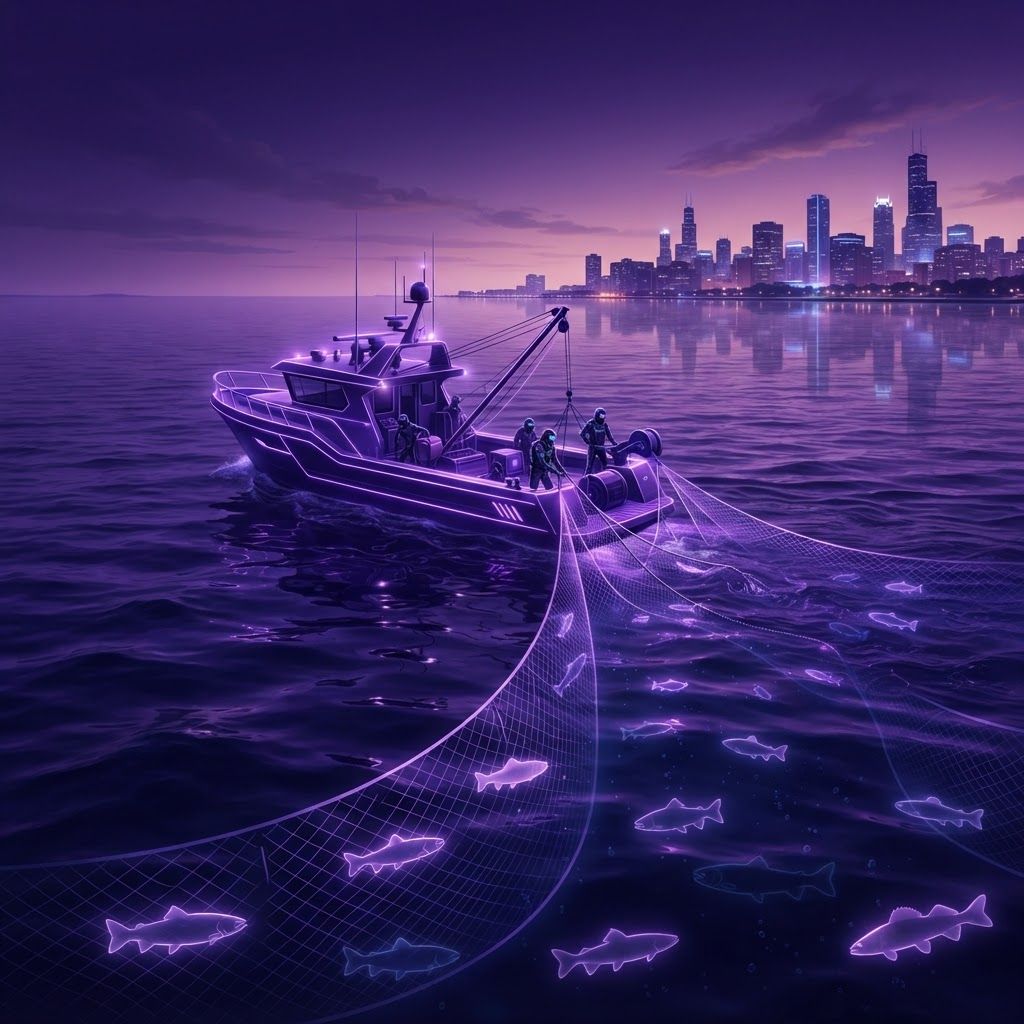
Toledo and the Walleye Capital of the World
Western Lake Erie is genuinely exceptional. Shallow, warm, and nutrient rich, it produces more fish per acre than any of the other Great Lakes, and its walleye population supports a recreational and commercial fishery of international reputation. Toledo's location at the southwestern corner of the lake, where the Maumee River enters, places it at the center of that activity, and the annual Maumee River walleye run draws anglers from across the country each spring.
The fishery economy around Toledo spans several distinct businesses. Commercial harvesters, more numerous on the Canadian side of the lake, supply wholesale markets. Charter operators serve recreational anglers. Processors and wholesalers handle, fillet, and distribute the catch. Bait and tackle retailers, marinas, and lodging operators capture the substantial economic activity that recreational fishing generates. Aquaculture producers raise fish in controlled systems for food and stocking.
Ten Fishery Companies and Business Categories
1. Commercial Fishing Operations
Licensed harvesters targeting yellow perch, walleye, and whitefish under strict quota management. Ohio's commercial fishery is limited in scope compared with Ontario's, and operators work within tightly regulated allocations.
2. Charter Fishing Fleets
Captains running guided trips for walleye, perch, and bass represent the largest employment segment of the regional fishery. Reputation, safety record, and consistent fish location determine which operators book solid seasons.
3. Fish Processing and Wholesale Operations
Processors receive, fillet, package, and distribute catch to restaurants, retailers, and distributors. Cold chain discipline and food safety documentation determine product quality and market access.
4. Bait and Tackle Suppliers
Live bait wholesalers and tackle retailers supply the recreational fishery. Live bait handling requires genuine expertise, and regulations around bait transport exist to limit invasive species spread.
5. Marina and Boat Service Operations
Dockage, launching, fuel, storage, and repair services support both charter fleets and private boaters, forming essential infrastructure for the entire recreational fishery.
6. Aquaculture and Fish Farming Operations
Recirculating aquaculture systems and pond operations raise yellow perch, tilapia, trout, and bait species for food markets and stocking programs, offering supply independent of wild harvest variability.
7. Fish Hatcheries and Stocking Services
Hatcheries produce fingerlings for private pond stocking and support fishery management efforts, requiring careful genetics and disease management.
8. Seafood Distributors and Retailers
Fresh fish markets and distributors combine local Lake Erie product with imported seafood, and those emphasizing local catch with clear sourcing information command premium interest.
9. Fishing Guide and Outfitting Services
River and shore-based guiding, particularly during the Maumee River spring run, serves anglers without boat access and provides local expertise on timing and technique.
10. Fishery Research and Consulting Organizations
University programs, agency biologists, and private consultants conduct stock assessment, habitat evaluation, and water quality monitoring that inform quota decisions and restoration projects.
Conservation Challenges Facing the Fishery
The productivity of western Lake Erie is inseparable from its vulnerability. Harmful algal blooms fueled by nutrient runoff create low-oxygen zones that stress fish populations and disrupt food webs. The same nutrient loading that historically boosted productivity now threatens it, along with drinking water for hundreds of thousands of residents.
Invasive species remain a persistent threat. Zebra and quagga mussels reshaped the lake's food web decades ago, and the potential arrival of invasive carp species through connected waterways represents an existential risk to the fishery that agencies actively work to prevent.
Habitat loss compounds these pressures. Coastal wetlands that once filtered runoff and provided spawning and nursery habitat were largely drained, and restoration projects along the Maumee River and lakeshore aim to rebuild some of that function.
Climate variability adds further uncertainty. Warming water temperatures, altered ice cover, and more intense precipitation events affect both fish reproduction and the runoff patterns that drive algal blooms.
Management and Sustainability
Lake Erie's fishery is managed cooperatively across Ohio, Michigan, Pennsylvania, New York, and Ontario, with quotas set annually based on joint stock assessment. This binational cooperation is a genuine success story, and walleye populations have shown strong year classes under it.
For businesses in the fishery, sustainability is commercial self-interest. Supporting nutrient reduction in the watershed, complying with harvest regulations, participating in habitat restoration, and educating customers about the connection between agriculture, water quality, and fishing all protect the resource the industry depends on.
Economic Significance
Recreational fishing generates substantial economic activity across northwest Ohio, supporting charter captains, marinas, tackle shops, restaurants, and hotels. The spring walleye run alone brings visitors who fill accommodations during what would otherwise be a slow season. That economic dependence gives the region a strong stake in water quality policy, and it explains why Toledo's civic conversation about Lake Erie extends well beyond environmental circles.
Conclusion
The fishery companies operating around Toledo depend on a lake that is both remarkably productive and genuinely fragile. Charter fleets, processors, and aquaculture operations that invest in sustainability and support watershed improvement are protecting the asset that makes their businesses possible in the first place.