
The Capital's Connection to the Gulf
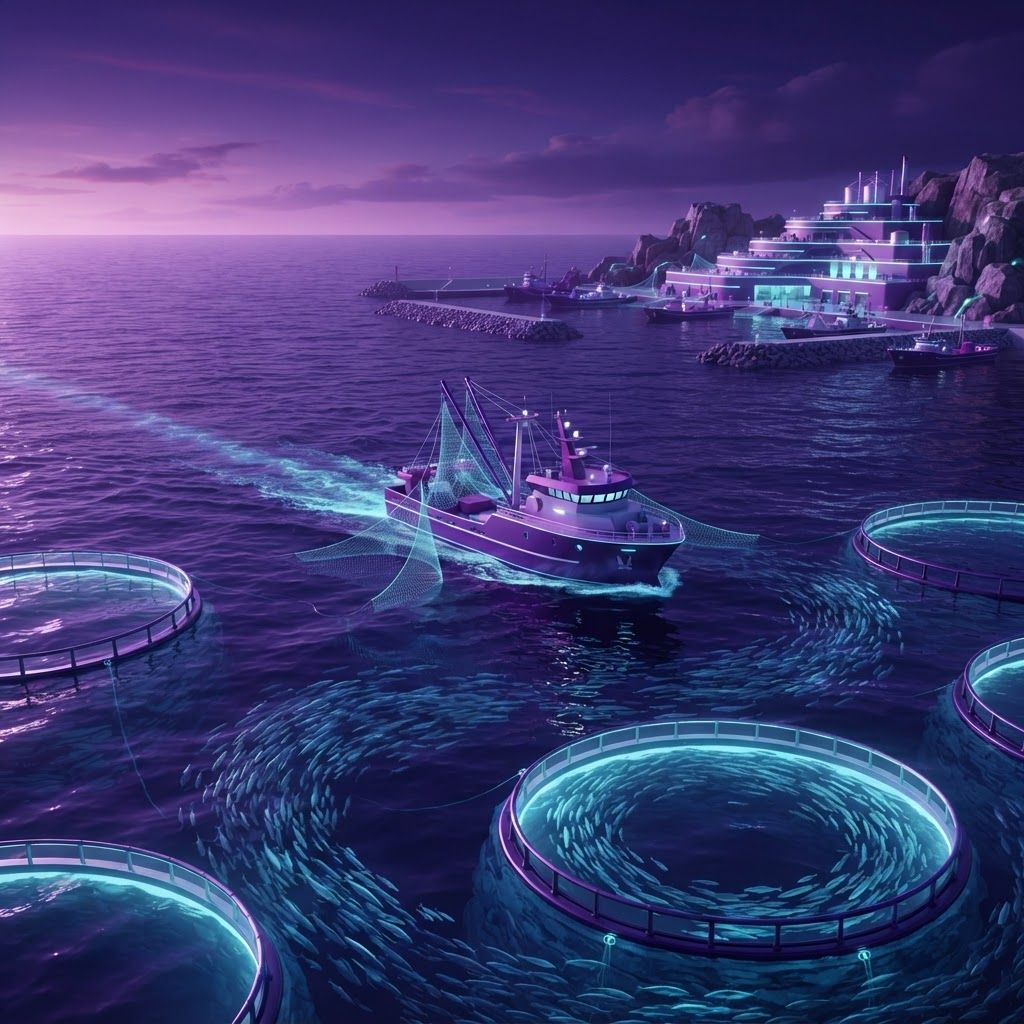
Tallahassee is an inland city, but only barely. Drive thirty minutes south and you reach the marshes and oyster bars of Wakulla County, and continuing west along the coast brings you to Apalachicola Bay, one of the most storied estuaries in the American seafood industry. That proximity gives the capital region a genuine fishery economy, encompassing commercial harvesters, wholesale processors, aquaculture farms, distribution companies and the restaurants and retailers they supply.
The sector has faced real difficulty in recent decades. Freshwater flow changes affected Apalachicola oyster populations severely, prompting harvest restrictions and an aggressive shift toward farmed shellfish. Fuel costs, regulatory quotas and imported competition have pressured margins throughout. Yet the companies that adapted, investing in aquaculture, traceability and value-added processing, have found durable positions. Below are ten operations that illustrate how the regional fishery economy works today.
Apalachee Bay Seafood Company
Apalachee Bay Seafood Company operates as a primary wholesale processor, receiving catch directly from commercial boats and preparing it for distribution. Grouper, snapper, mullet, mackerel and shrimp form the core of its volume. The company's cold chain discipline is its defining strength: rapid icing at the dock, controlled temperature holding, and refrigerated transport that preserves quality all the way to restaurant kitchens. Species and harvest area documentation accompanies product, which matters increasingly to chefs and informed consumers.
Wakulla Oyster Aquaculture Farms
Wakulla Oyster Aquaculture Farms represents the most significant structural change in the regional industry. Rather than harvesting wild bars, the company grows oysters in floating and bottom cages, controlling density, tumbling shells for uniform shape, and harvesting on a predictable schedule. Farmed oysters deliver consistent size and deep cups that command premium prices in raw bars. The model also relieves pressure on wild populations while providing genuine water filtration benefits to the estuary.
Gulf Coast Shrimp and Trawling Enterprises
Gulf Coast Shrimp and Trawling Enterprises runs a commercial shrimping fleet working Gulf waters for white, brown and pink shrimp. Turtle excluder devices and bycatch reduction gear are standard across its vessels, reflecting both regulation and genuine operational commitment. The company processes, grades, sizes and freezes at sea or immediately dockside, which preserves texture in a way that extended holding cannot. Domestic wild shrimp remains its central marketing message against imported farmed product.
Big Bend Fish and Seafood Distribution
Big Bend Fish and Seafood Distribution focuses on the logistics layer rather than harvesting. It aggregates product from local harvesters and national suppliers, then delivers to restaurants, institutional kitchens, grocers and caterers throughout the Tallahassee area. Daily availability reporting lets chefs plan specials around what actually landed. Its ability to supply both premium local catch and reliably priced imported staples makes it practical for kitchens balancing quality against food cost targets.
St Marks Commercial Fisheries
St Marks Commercial Fisheries is a multigenerational operation combining harvesting with retail and wholesale sales. Its boats target mullet, sheepshead, flounder and blue crab, and the company operates a smoking facility that adds meaningful value to lower-priced species. Smoked mullet dip, a genuine regional specialty, has become a signature product distributed well beyond the local market. Direct dockside sales connect the company to customers who want same-day fish.
Magnolia Clam and Shellfish Farms
Magnolia Clam and Shellfish Farms cultivates hard clams in leased water bottoms, planting seed clams and harvesting after roughly eighteen months of growth. Shellfish aquaculture requires exacting water quality monitoring, and the company maintains testing protocols coordinated with state agencies to ensure harvest safety. Clams have proven a stable crop with strong demand from restaurants and retailers, and the operation's hatchery relationships secure reliable seed supply.
Seminole Aquaculture and Fish Hatchery
Seminole Aquaculture and Fish Hatchery produces freshwater fish including tilapia, catfish and bass fingerlings in recirculating and pond systems. Beyond food production, it stocks private ponds and supports fisheries research through the region's academic institutions. Recirculating technology dramatically reduces water use and allows year-round production regardless of weather. The company also supplies aquaponics operations, feeding a growing overlap between fish farming and controlled environment vegetable production.
Panhandle Seafood Market and Processing
Panhandle Seafood Market and Processing occupies the retail and light processing space, filleting, portioning, breading and packaging for both consumer and food service customers. Its counter operation gives Tallahassee households access to fresh Gulf product without driving to the coast. Value-added items such as stuffed flounder, crab cakes and marinated portions extend shelf appeal and improve margins on product that might otherwise be sold as commodity fillet.
Florida Capital Bait and Tackle Supply
Florida Capital Bait and Tackle Supply serves the recreational side of the fishery economy, which contributes substantially to the regional coastal economy. It wholesales live and frozen bait, rods, reels, tackle, ice and marine supplies to bait shops, marinas and charter operations. Its knowledge of seasonal patterns and regulation changes, including closures and size limits, makes it a genuine information resource for anglers as much as a product supplier.
Forgotten Coast Sustainable Fisheries Alliance
Forgotten Coast Sustainable Fisheries Alliance completes the list as a cooperative structure rather than a single company. It brings together small harvesters and shellfish farmers to share marketing, certification costs, cold storage and distribution access. Collective scale allows members to pursue sustainability certification and traceability programs that individual boats could never afford. The alliance also advocates on water management issues that determine estuary health, recognizing that the resource itself is the industry's core asset.
Trends Defining the Regional Fishery Sector
Aquaculture is the clearest trend, steadily replacing wild harvest in shellfish and expanding in finfish. Traceability technology now allows a consumer to identify harvest date and area, which supports premium pricing for genuinely local product. Value-added processing has become essential for profitability, since raw commodity fish competes directly against imports. Water quality and freshwater flow management remain the sector's existential concern, tying commercial viability directly to upstream policy decisions. Consumer interest in underutilized species is also growing, easing pressure on the handful of premium fish that dominate menus.
How to Choose a Seafood Supplier
Ask specifically about harvest date, not delivery date, since those can differ by many days. Request harvest area and species documentation, especially for shellfish where safety monitoring is mandatory. Evaluate cold chain practice by inspecting arrival temperatures and ice condition. Understand availability realities, because weather and quotas will interrupt supply and a supplier who admits that is more trustworthy than one who promises everything year-round. Finally, consider building relationships with two or three suppliers so a closure or storm does not empty your menu.
Final Thoughts
The fishery companies serving Tallahassee reflect an industry in genuine transition, moving from purely extractive wild harvest toward a mixed model that includes cultivation, certification and value-added production. That shift has been difficult but necessary. For restaurants, retailers and households in the capital region, it means access to Gulf seafood that is more traceable and more consistently available than it was a generation ago, provided buyers reward the operations doing the work.