
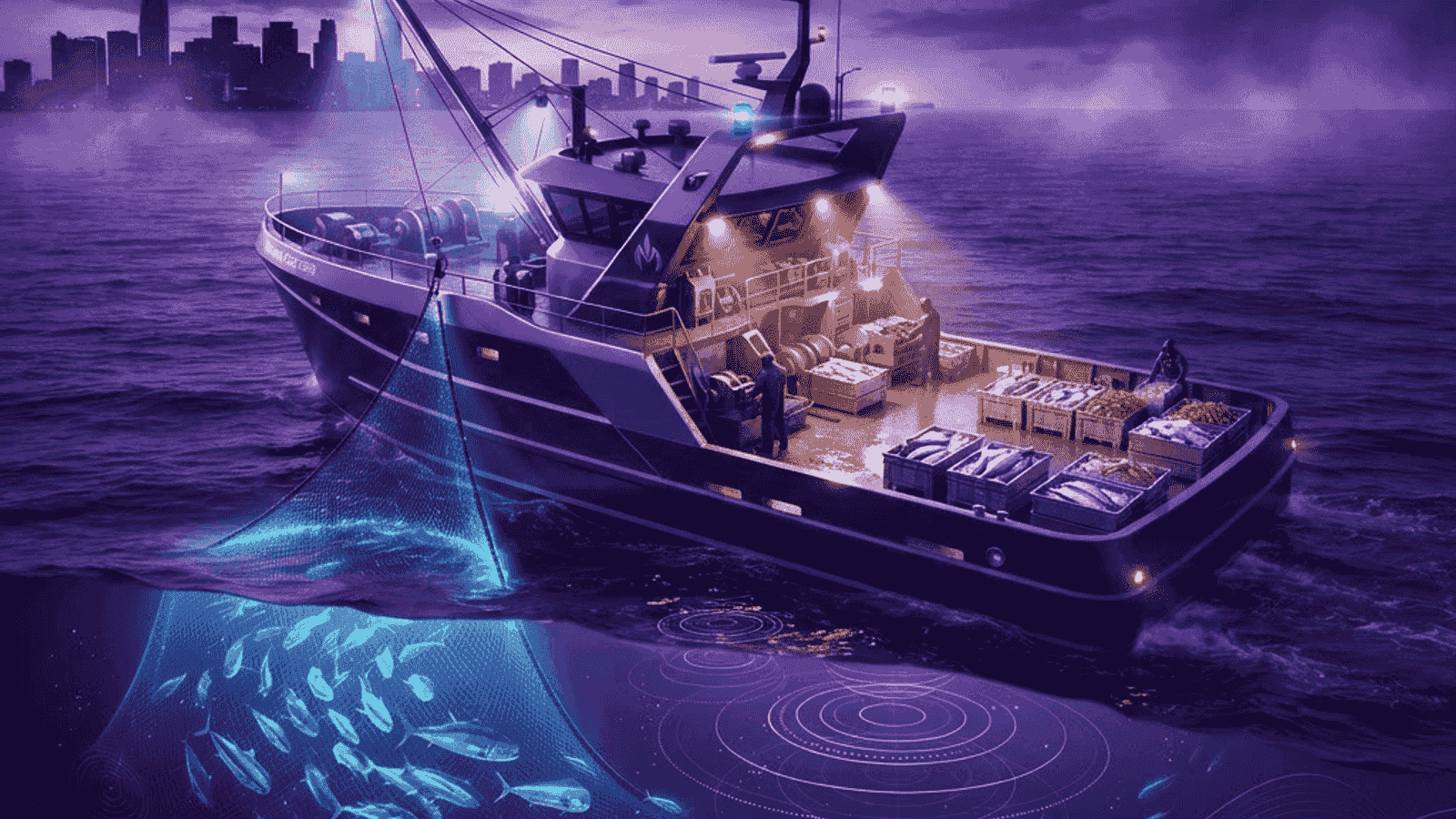
A City Built on the Water
Seafood is woven into Miami's identity in a way that few other industries are. The city sits at the junction of the Atlantic, the Straits of Florida and the Caribbean basin, giving its fishing fleets and importers access to an extraordinary diversity of species — snapper, grouper, mahi-mahi, swordfish, tuna, stone crab, spiny lobster, shrimp and conch among them. Add a major international airport capable of moving fresh product overnight, and Miami becomes not just a fishing port but one of the hemisphere's principal seafood trading centers.
The local industry divides into several overlapping businesses: commercial harvesting, wholesale distribution to restaurants and retail, importing and re-export, processing and value-added production, and specialty operations serving the charter and recreational sectors. Companies frequently span more than one of these, and the strongest ones treat cold chain integrity as their core competency regardless of where product originates.
What Separates Professional Fishery Operations
Temperature control is the first and most important distinction. Seafood quality degrades measurably with every hour spent outside optimal temperature range, and the difference between a premium supplier and an average one is usually visible in handling discipline rather than sourcing. Leading Miami operators use ice slurry chilling at the point of harvest, refrigerated transfer, blast chilling where appropriate, and continuous temperature logging through delivery.
Traceability follows closely. Regulatory frameworks and buyer expectations now require documentation of species identification, harvest area, vessel or farm of origin and chain of custody. This matters commercially as well as legally: species substitution has historically been a significant problem in seafood, and suppliers with verifiable documentation command trust and better pricing.
Sustainability certification has moved into the mainstream. Restaurant groups and retailers increasingly require third-party verified sourcing, and compliance with seasonal closures, size limits and gear restrictions is table stakes rather than a marketing point.
The Top 10 Fishery Companies Serving Miami
1. Casablanca Seafood Market and Fish House is among the most recognized names in Miami's seafood trade, combining wholesale supply with retail and restaurant operations on the Miami River. Its long-standing relationships with local fleets give it access to fresh domestic catch that pure importers cannot match.
2. Garcia's Seafood Grille and Fish Market represents a multigenerational Miami River fishing family, operating harvesting, retail market and restaurant activities together. The vertical structure gives it unusual control over freshness and species selection.
3. Triar Seafood Company operates in the wholesale and distribution segment, serving restaurants and institutional buyers across South Florida with a broad range of fresh and frozen products. Consistency of supply across a wide catalog is its defining strength.
4. Northern Fisheries Miami functions as a large-scale distributor connecting domestic and imported product with the region's foodservice sector. Its cold storage capacity and fulfillment infrastructure allow it to serve high-volume accounts with reliable delivery windows.
5. Key Largo Fisheries Distribution is closely associated with Florida Keys harvests, including spiny lobster and stone crab. Seasonal expertise matters enormously in these fisheries, where narrow legal windows and strict regulation govern availability.
6. Biscayne Bay Seafood Wholesalers concentrates on serving independent restaurants and neighborhood markets with smaller, more frequent deliveries. For chefs building menus around daily availability rather than fixed specifications, that flexibility is more valuable than volume pricing.
7. Atlantic Coast Shrimp and Shellfish specializes in shrimp, clams, oysters and other shellfish, an area requiring distinct handling protocols and food safety controls. Shellfish tagging compliance and live-product management are central to its operation.
8. Miami River Fish Processing Company focuses on the processing side — filleting, portioning, vacuum packing and freezing — serving buyers who need consistent portion control rather than whole fish. Value-added processing reduces labor for kitchens and improves yield predictability.
9. Caribbean Seafood Importers of Florida handles import and re-export flows across the Caribbean basin, managing the documentation, inspection coordination and logistics that international seafood trade demands.
10. Blue Water Charter and Commercial Fisheries bridges the commercial and recreational segments, operating vessels and supplying fresh pelagic species such as mahi-mahi, tuna and wahoo to local buyers seeking day-boat quality.
Trends Reshaping the Seafood Industry
Aquaculture continues to grow as a share of global supply, and Miami distributors increasingly blend wild-caught and farmed sourcing to stabilize availability and pricing. Traceability technology, including digital catch documentation and in some cases DNA verification, is becoming a competitive differentiator rather than a compliance burden. Demand for underutilized species has risen as chefs and buyers respond to pressure on traditional favorites, creating opportunities for suppliers who can educate customers. Cold chain monitoring has been transformed by inexpensive connected sensors, allowing continuous verification rather than spot checks. Finally, climate variability is shifting species distribution and altering the timing of established fishing seasons, requiring more adaptive procurement planning.
How to Choose a Seafood Supplier
Request documentation before requesting pricing. A supplier that cannot readily provide species identification, harvest origin and handling records is not a serious partner regardless of cost. Visit facilities if possible and observe ice management, drainage and storage organization. Understand which species the supplier genuinely specializes in versus resells, because depth of knowledge affects quality consistency. Build menus and specifications with seasonal substitution built in, particularly for regulated Florida fisheries. And align on delivery windows realistically, since seafood quality is far more sensitive to schedule slippage than most other food categories.
Final Thoughts
Miami's fishery companies operate in one of the most dynamic seafood markets in the world, balancing local harvest traditions with large-scale international trade. The best of them distinguish themselves through cold chain discipline, verifiable traceability and genuine species expertise rather than breadth of catalog alone. For buyers, learning to evaluate those qualities is the difference between reliably excellent seafood and a series of expensive disappointments.