
Fisheries in a Landlocked City
Lexington is roughly six hundred miles from the nearest ocean, which makes its fishery sector an interesting study in adaptation. Rather than harvesting wild marine stocks, the industry here is built on three pillars: controlled aquaculture producing freshwater species, distribution operations that move seafood into the region with cold-chain precision, and aquatic resource services that manage the thousands of farm ponds, lakes and recreational waters across central Kentucky.
Each pillar has genuine commercial logic. Kentucky's abundant groundwater and moderate climate suit species such as catfish, rainbow trout, tilapia, largemouth bass and freshwater prawn. Its central location and highway access make it an efficient distribution point for restaurants and grocers across a wide radius. And the region's agricultural landscape contains an enormous number of ponds that require stocking, aeration, vegetation control and fish population management.
Ten Fishery Companies Serving the Region
1. Bluegrass Aquaculture Farms operates recirculating and pond-based systems producing catfish and tilapia for regional wholesale markets. Its recirculating units allow year-round harvest independent of weather.
2. Elkhorn Creek Trout Company raises rainbow trout in spring-fed raceways, supplying restaurants and specialty grocers with a cold-water species that Kentucky's underground springs support unusually well.
3. Commonwealth Seafood Distributors handles fresh and frozen seafood logistics, receiving coastal shipments and delivering to restaurants, institutions and retailers under strict temperature control and traceability documentation.
4. Central Kentucky Pond Management provides stocking, electrofishing surveys, aeration installation, vegetation control and fish habitat improvement for landowners, golf courses and equine farms with water features.
5. Thoroughbred Fingerling Hatchery supplies juvenile fish to growers and pond owners, producing bass, bluegill, crappie and channel catfish fingerlings with attention to genetics and disease-free certification.
6. Signal Hill Prawn Farms raises freshwater prawn in seasonal pond production, a niche that has developed a loyal direct-sale market during autumn harvest periods.
7. Blue Line Aquatic Feed and Supply distributes formulated feeds, water quality testing equipment, aerators, nets and treatment products to growers and pond managers throughout the region.
8. Kentucky Ornamental Aquatics serves the aquarium and water garden trade with ornamental fish, aquatic plants and koi, supplying retailers and landscape contractors.
9. Keeneland Fish Processing and Packing offers custom processing, filleting, freezing and packaging for growers who need to reach retail-ready formats without building their own facilities.
10. Bourbon Trail Aquatic Consulting completes the list, advising on permitting, system design, water chemistry and biosecurity for new and expanding aquaculture ventures.
Industry Trends and Technology
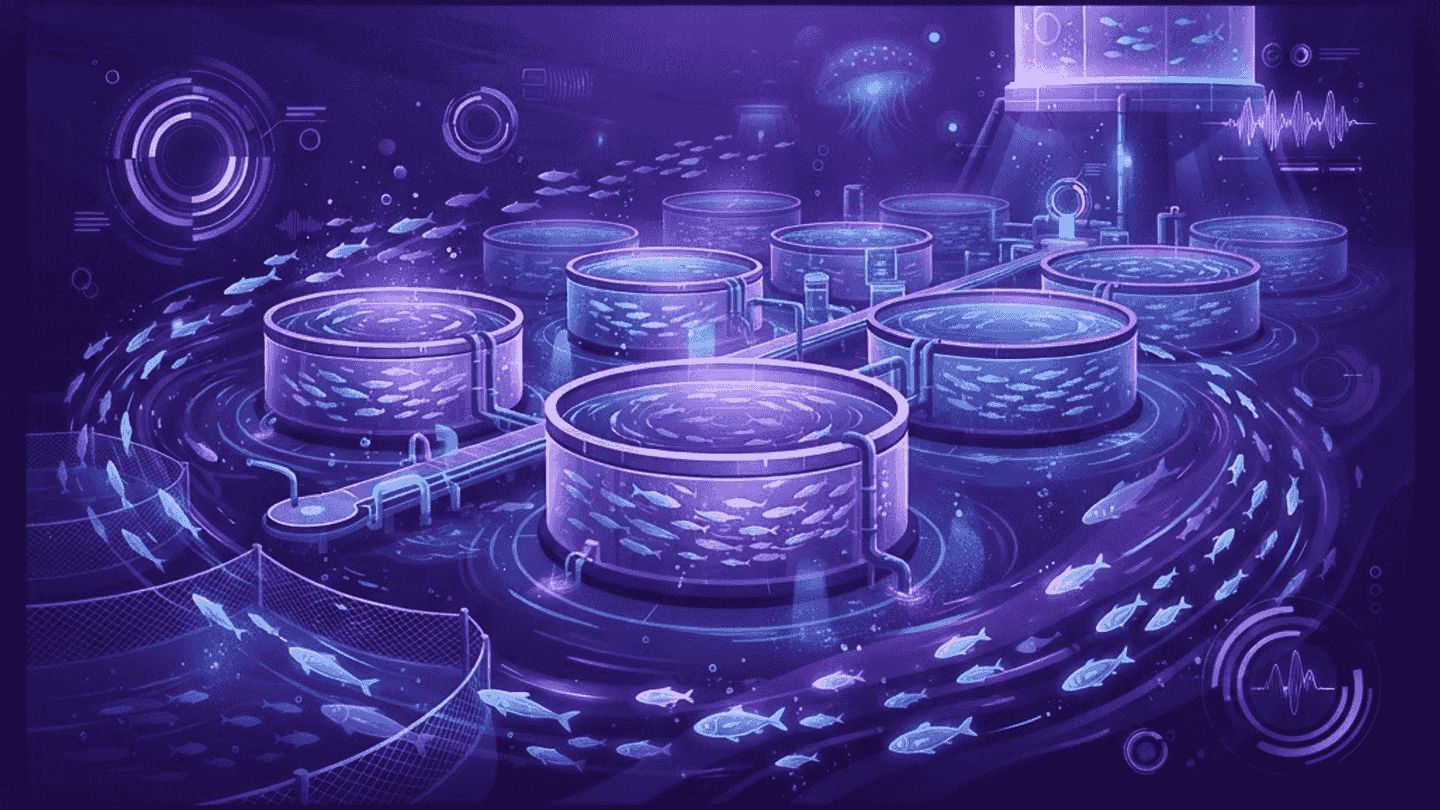
Recirculating aquaculture systems are the defining technology. By filtering, oxygenating and reusing water, they allow high-density production with a fraction of the water consumption of flow-through systems, and they insulate growers from seasonal temperature swings. The capital cost is significant, but the control over growth rate, feed conversion and harvest timing often justifies it.
Water quality monitoring has become continuous rather than periodic. Sensors tracking dissolved oxygen, temperature, ammonia and pH alert operators before a problem becomes a mortality event, and automated aeration responds without human intervention. Feed formulation has improved too, with reduced fishmeal inclusion lowering both cost and the environmental footprint of production.
On the demand side, consumers and chefs increasingly ask about origin, and locally raised freshwater fish benefit from a short, verifiable supply chain. Integrated approaches such as aquaponics, which pairs fish production with hydroponic vegetables, have also found a foothold among growers seeking two revenue streams from one nutrient cycle.
How to Evaluate a Fishery Partner
For buyers purchasing fish, freshness protocol is the key question. Ask how quickly product moves from harvest to chill, what temperature is maintained through delivery, and how lots are traced. For pond owners, the important signals are diagnostic rather than commercial: a competent manager surveys the existing fish population and water chemistry before recommending stocking, because adding fish to an unbalanced pond simply repeats the problem.
For prospective growers, biosecurity practice and permitting knowledge separate serious operators from optimistic ones. Disease introduction is the most common cause of catastrophic loss in aquaculture, and suppliers who certify health status protect their customers as well as themselves. Feed quality and storage conditions also deserve inspection, since degraded feed undermines growth rates invisibly.
The Future of Kentucky Fisheries
Inland aquaculture is likely to keep expanding as pressure on wild stocks grows and as controlled systems become more efficient. Kentucky's water availability, land costs and central location give it structural advantages over coastal competition for the domestic freshwater market. Meanwhile, pond and lake management services will remain steady work in a region where water features are part of both agricultural and recreational land.
The companies described above show a sector that has matured beyond hobby scale into a professional industry with real technical standards. For restaurants, retailers, landowners and investors in central Kentucky, understanding who does what within that sector is the first step toward a productive working relationship.