
An Inland City With a Real Seafood Economy
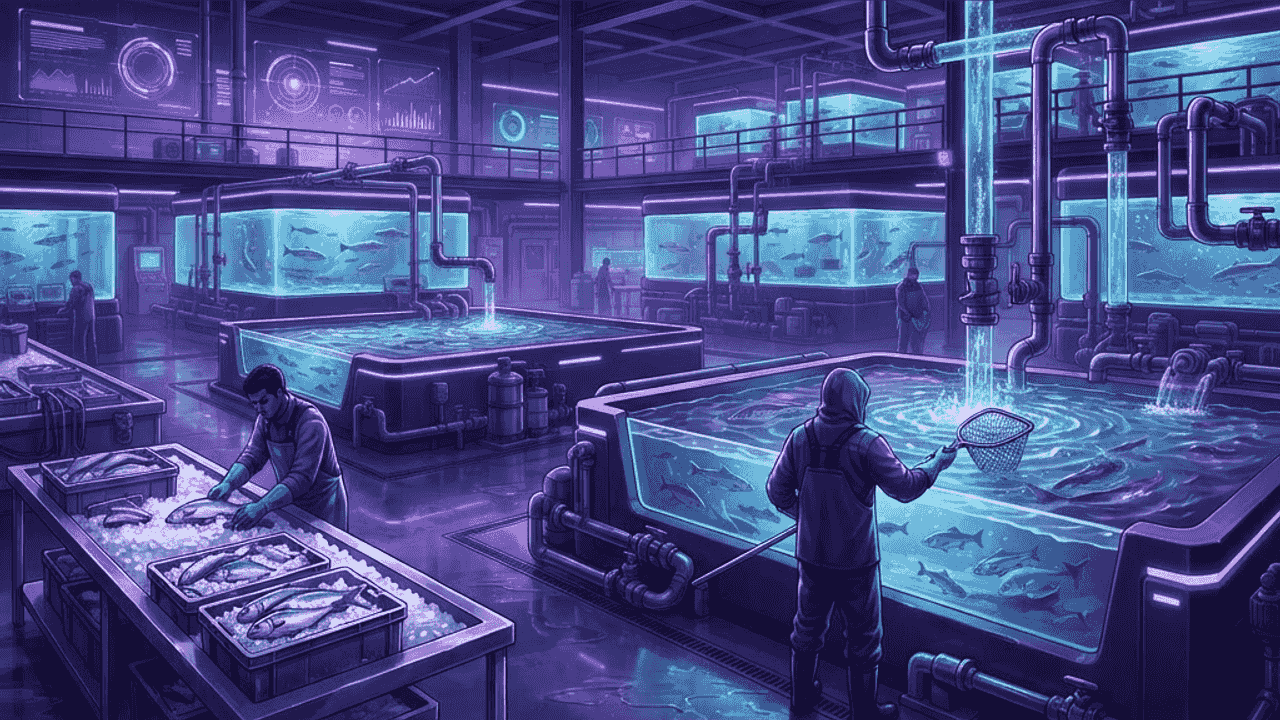
Greensboro sits roughly three hours from the North Carolina coast, which places it in an interesting position. It is not a fishing port, yet it functions as a distribution and processing hub for coastal catch moving inland, and it hosts a growing aquaculture sector that produces fish and shellfish without any reliance on the ocean at all.
North Carolina has a substantial commercial fishing industry, landing shrimp, blue crab, flounder, oysters, clams, and finfish from sounds and offshore waters. Getting that product inland while it is still excellent requires disciplined cold chain management, and Greensboro's interstate access makes it a natural staging point. Meanwhile, recirculating aquaculture systems and pond operations across the Piedmont produce tilapia, catfish, trout, and increasingly shrimp in controlled environments, supplying restaurants that want consistent year round availability.
What Defines Quality in the Fishery Business
Cold chain integrity is the entire game. Seafood quality degrades faster than almost any other food product, and temperature abuse is usually irreversible. Serious operators monitor temperature continuously from harvest through delivery, document it, and reject product that falls outside specification rather than passing it along.
Traceability is the second pillar. Buyers increasingly want to know the species, harvest area, gear type, and landing date. This information supports both sustainability claims and food safety response. Species substitution has been a persistent problem in seafood, so suppliers who document identity carefully protect their customers from serious reputational harm.
Sustainability certification and responsible sourcing matter to a growing share of buyers, particularly restaurants and retailers whose customers ask. For aquaculture specifically, water quality management, feed conversion efficiency, disease management without routine antibiotics, and effluent handling determine both product quality and environmental performance.
The Top 10 Fishery Companies Serving Greensboro
1. Gate City Seafood Company. A processor and distributor bringing fresh coastal catch inland with daily temperature monitored transport. Gate City Seafood is known among Triad chefs for consistent quality and for clearly communicating what is genuinely fresh on a given day.
2. Piedmont Aquaculture Farms. Operating recirculating aquaculture systems producing tilapia, catfish, and hybrid striped bass year round. Piedmont Aquaculture's controlled environment eliminates seasonality and allows precise harvest scheduling for restaurant customers.
3. Carolina Coastal Shellfish. Distributing oysters, clams, and mussels sourced from North Carolina sounds and other Atlantic growing areas. Carolina Coastal Shellfish maintains harvest tag documentation rigorously, which is both a legal requirement and a genuine safety practice.
4. Triad Fish Processing. Providing filleting, portioning, vacuum packing, and freezing services for wholesalers and restaurant groups. Triad Fish Processing's portion control accuracy helps kitchens manage plate cost precisely on an expensive protein.
5. Battleground Trout Company. A cold water operation raising rainbow trout in spring fed raceways, supplying whole fish and fillets to restaurants and specialty markets. Battleground Trout benefits from western North Carolina's trout tradition and clean water sources.
6. Summit Shrimp Systems. An inland shrimp producer using biofloc and recirculating technology to raise Pacific white shrimp without coastal access. Summit Shrimp Systems represents one of the more innovative segments of Piedmont aquaculture, offering never frozen local shrimp.
7. Guilford Live Fish and Aquatics Supply. Supplying live fish for pond stocking, aquaponics operations, ornamental applications, and live market demand. Guilford's transport oxygenation and acclimation guidance meaningfully improve survival rates for customers.
8. Revolution Sustainable Seafood. Curating certified and responsibly harvested seafood with full traceability documentation for restaurants and retailers making sourcing claims. Revolution Sustainable Seafood also educates chefs on underutilized species that reduce pressure on overfished stocks.
9. Bessemer Aquaponics. Integrating fish production with hydroponic vegetable growing so that nutrient rich water supports leafy greens and herbs. Bessemer Aquaponics sells both fish and produce, illustrating how closed loop systems can improve resource efficiency.
10. Cornwallis Frozen Seafood Distribution. Handling individually quick frozen fillets, shellfish, and value added seafood products for institutional kitchens, schools, and retail. Frozen at sea and flash frozen products often exceed the quality of poorly handled fresh product, and Cornwallis makes that case credibly.
Trends in Aquaculture and Seafood Distribution
Land based recirculating aquaculture continues to advance rapidly. Improved filtration, oxygenation, and monitoring technology have made inland production of higher value species commercially viable, reducing dependence on wild stocks and long distance shipping. For an inland market like Greensboro, this is transformative.
Traceability technology has become mainstream. Digital records following product from harvest to plate support both compliance and marketing, and buyers increasingly expect to see them rather than take verbal assurance.
Consumer interest in sustainability has expanded demand for certified products and for underutilized species. Chefs willing to feature less familiar fish reduce pressure on overfished populations while often improving their food cost.
Finally, the frozen category has been reconsidered. As freezing technology improved, chefs recognized that properly frozen seafood frequently outperforms fresh product that has spent days in transit. This shift has made high quality frozen supply a legitimate premium option rather than a compromise.
Buying Seafood Well
Buy by condition rather than by label. Ask when product was landed, not merely whether it is fresh, and inspect for firmness, clear eyes, clean aroma, and proper icing at delivery. Reject product confidently when it fails, because accepting marginal seafood teaches suppliers that standards are negotiable.
Request harvest documentation for shellfish and species verification for finfish. Build menus with flexibility so that a weather disrupted landing does not force a substitution your guests will notice. Consider aquaculture for items where consistency matters more than wild character, and reserve wild sourcing for species where it genuinely delivers a superior product.
Final Thoughts
Greensboro's fishery sector spans coastal distribution, land based aquaculture, shellfish supply, processing, trout and shrimp production, live fish, sustainable sourcing, aquaponics, and frozen products. For an inland city, that is a remarkably complete network, and it gives Triad kitchens access to seafood quality that would have been impossible a generation ago.