
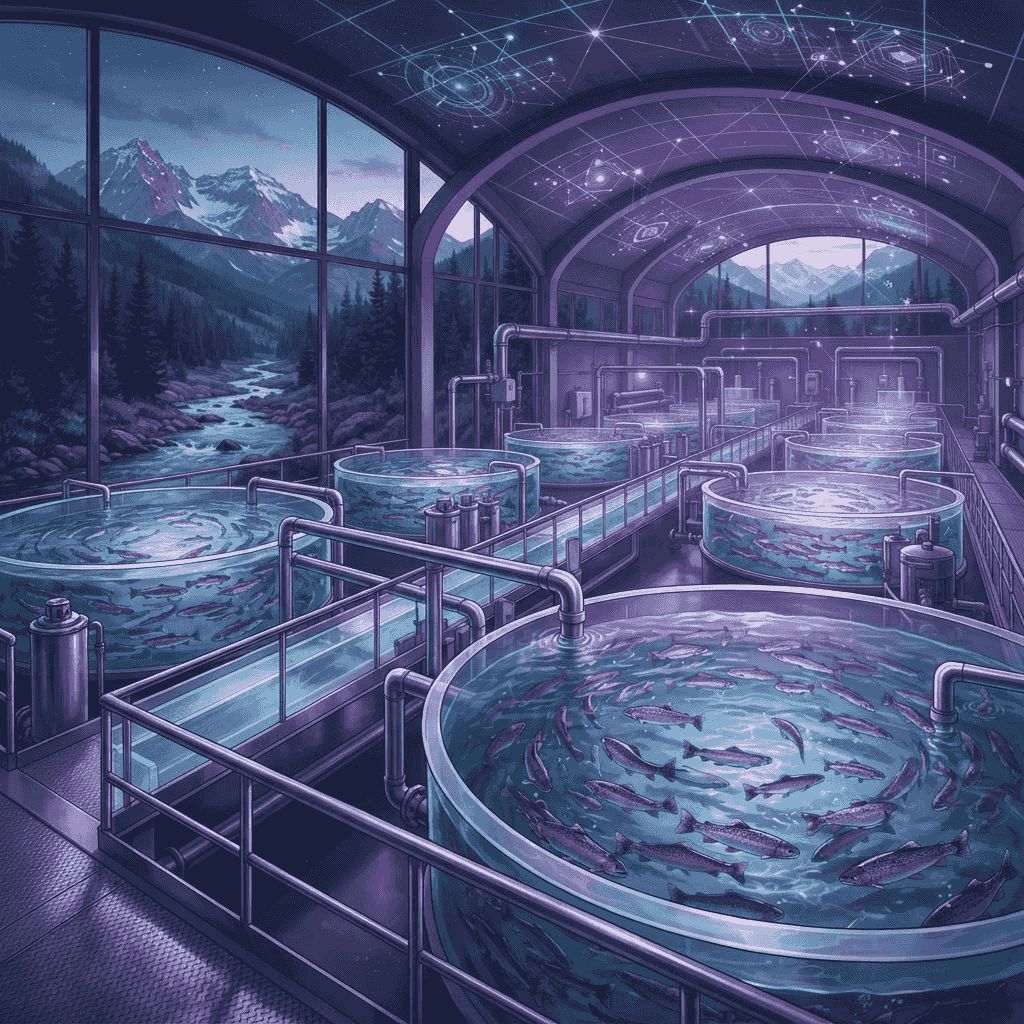
A city more than a thousand miles from the nearest ocean might seem like an unlikely place for a fishery industry, yet Colorado Springs supports a genuinely varied one. Cold, clean mountain water makes the region well suited to trout aquaculture. A passionate recreational fishing community sustains hatcheries, pond stocking services and habitat consultants. Restaurants and grocers require reliable seafood distribution. Meanwhile, controlled-environment aquaculture and aquaponics operations are proving that fish farming can thrive at altitude with careful engineering.
The technical demands are significant. Fish are extremely sensitive to water temperature, dissolved oxygen, ammonia and pH, and at high elevation dissolved oxygen saturation is naturally lower than at sea level. Successful operations invest heavily in filtration, aeration, monitoring and redundancy. The result is an industry that is small in scale but unusually technology-driven.
Why Aquaculture Works in Colorado
Cold water is the region's greatest aquaculture asset. Trout and other salmonids thrive in the temperature ranges that snowmelt-fed sources naturally provide, and the state has a long hatchery tradition supporting both conservation stocking and commercial production. Recirculating aquaculture systems, which filter and reuse water continuously, have made production viable even where water rights limit throughput, sometimes reusing more than ninety percent of system water.
Demand is equally supportive. Colorado's recreational fishing culture creates steady need for stocking fish in private ponds, reservoirs and HOA water features. Local restaurants increasingly want traceable, regionally raised fish rather than long-haul imports. Consumers concerned about ocean sustainability are receptive to responsibly farmed freshwater alternatives. Together those factors give aquaculture operators multiple viable market channels.
Top 10 Best Fishery Companies in Colorado Springs
1. Front Range Trout Farms
Specializing in rainbow, brown and brook trout, Front Range Trout Farms produces fish for both food markets and stocking programs. Cold spring-fed raceways and careful density management support healthy growth and clean flavor. Restaurants value the consistent sizing and short delivery timelines, while pond owners rely on the farm for reliable stocking stock.
2. Pikes Peak Aquaculture Systems
This company focuses on recirculating aquaculture technology, producing fish indoors with tightly controlled water chemistry. Pikes Peak Aquaculture Systems achieves very high water reuse rates through biofiltration, mechanical filtration and oxygenation, making it viable in a water-constrained region. It also consults on system design for other growers entering the sector.
3. Cheyenne Mountain Fish Hatchery Services
Hatchery work is the foundation of the industry, requiring meticulous broodstock and health management. Cheyenne Mountain Fish Hatchery Services produces eggs, fry and fingerlings for commercial growers and stocking programs. Disease-free certification and biosecurity protocols are central to its reputation and to regulatory compliance across state lines.
4. Summit Pond Stocking and Lake Management
Private ponds and community water features need more than fish delivery. Summit Pond Stocking and Lake Management provides stocking, aeration system installation, aquatic vegetation control, water quality testing and fish population surveys. Ongoing management contracts help HOAs, ranches and resorts maintain healthy, attractive waters year after year.
5. Colorado Springs Seafood Distributors
Restaurants and grocers depend on cold chain reliability more than anything else. Colorado Springs Seafood Distributors handles fresh and frozen seafood with temperature-controlled logistics and rapid inbound air freight. Sustainability sourcing documentation and chef-focused product education support menus that emphasize responsible seafood choices.
6. High Plains Aquaponics Farms
Integrating fish and plant production makes efficient use of both nutrients and water. High Plains Aquaponics Farms raises tilapia alongside leafy greens and herbs, with fish waste nutrients feeding plant growth and plants helping polish the water. The dual revenue stream improves resilience while dramatically reducing overall water consumption per unit of food produced.
7. Rocky Mountain Fly Fishing Outfitters and Fisheries
Recreational fishing is a major part of Colorado's outdoor economy. Rocky Mountain Fly Fishing Outfitters and Fisheries combines guided trips, private water access and fishery habitat improvement work. Stream restoration, riparian planting and habitat structure installation improve both fish populations and long-term angling quality.
8. Bijou Street Ornamental Fish and Koi Supply
The ornamental side of the industry serves a devoted market. Bijou Street Ornamental Fish and Koi Supply provides koi, goldfish and pond plants along with filtration equipment and winter care guidance. Overwintering expertise is genuinely valuable in a climate where pond ice and temperature swings can be fatal without proper preparation.
9. El Paso County Fish Processing and Smokehouse
Value-added processing captures margin that raw production cannot. El Paso County Fish Processing and Smokehouse handles filleting, portioning, vacuum packaging, smoking and curing under food safety controls. Custom processing services also serve anglers and small growers who lack their own certified facilities.
10. Garden of the Gods Aquatic Conservation Fisheries
Conservation work supports the health of the entire regional watershed. Garden of the Gods Aquatic Conservation Fisheries focuses on native species propagation, threatened fish recovery programs, invasive species monitoring and stream habitat assessment. Partnerships with agencies, universities and watershed groups make it an important scientific contributor as well as a working fishery.
Technology and Trends in Regional Fisheries
Recirculating aquaculture continues to advance, with improved biofilters, oxygen injection and automated monitoring reducing both water use and biological risk. Sensor networks now track dissolved oxygen, temperature, ammonia and pH continuously, triggering alarms and automated responses before conditions become dangerous. Alternative feeds using insect protein and algae-based oils are lowering reliance on wild-caught fishmeal. Traceability systems that let a restaurant identify exactly which tank a fish came from are becoming a marketing asset. Finally, aquaponics and integrated systems are attracting attention precisely because they align with Colorado's water conservation imperatives.
Final Thoughts
The fishery sector around Colorado Springs demonstrates that geography is less limiting than engineering ingenuity. Whether you are a chef sourcing regionally raised trout, a landowner stocking a pond, a hobbyist maintaining koi or an entrepreneur considering aquaculture, the region offers capable specialists. Evaluate providers on water quality management practices, fish health certification and technical depth rather than price alone, because in aquaculture the difference between a healthy system and a failed one is almost always attention to detail.