
The Chesapeake Bay Advantage
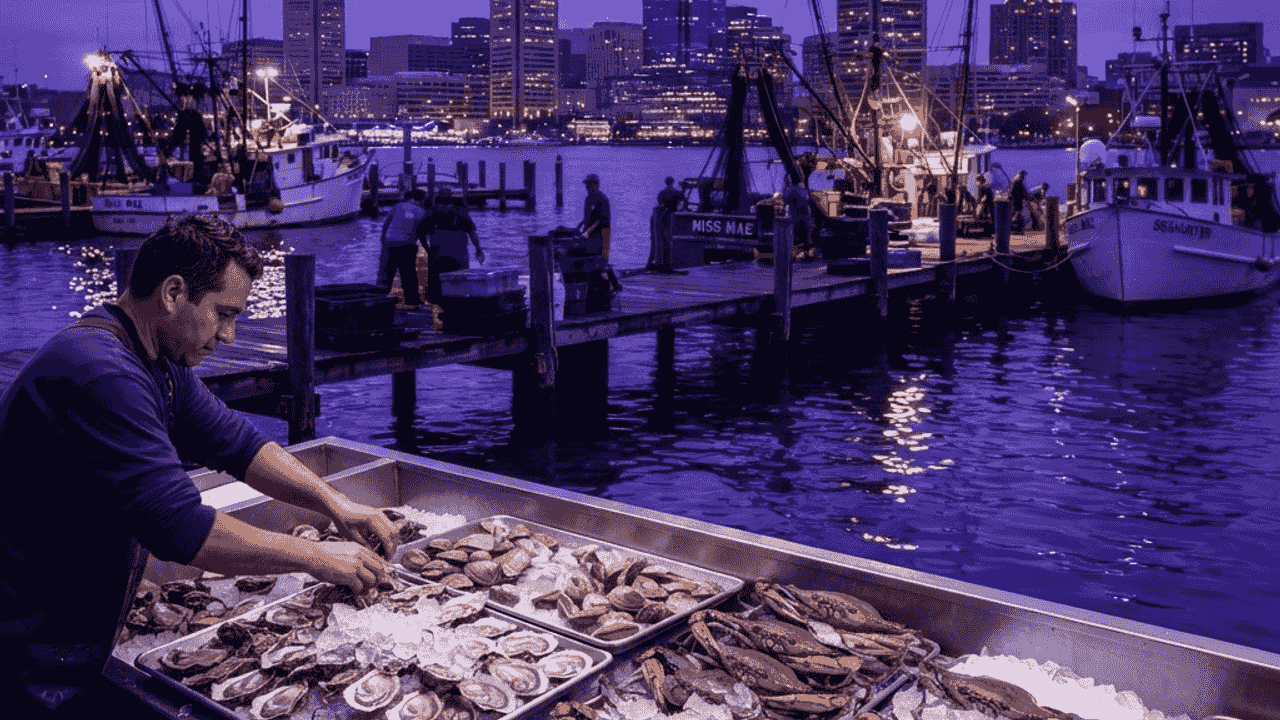
Few cities are as closely tied to their waters as Baltimore is to the Chesapeake Bay. The Bay is one of the most productive estuaries in the world, historically famous for its blue crabs, oysters, and finfish. This natural resource has shaped Baltimore's fishery industry, giving rise to a network of wholesale distributors, harvesters, and aquaculture ventures that supply seafood to restaurants, markets, and consumers across the region and beyond.
Today the industry balances tradition with innovation. Alongside long-standing seafood distributors, a new generation of aquaculture companies is pioneering sustainable farming methods designed to protect the Bay while meeting demand. This combination positions Baltimore as an important center for both seafood commerce and responsible marine production.
Distributors and Aquaculture Innovators
On the distribution side, wholesalers such as Mattes Seafood and Mister Fish Inc. move fresh product from harvesters to restaurants and retailers throughout the Baltimore area. These companies handle the critical logistics of seafood, maintaining cold chains, ensuring freshness, and offering the variety that chefs and grocers rely on.
Aquaculture innovation is thriving as well. Solar Oysters has developed solar-powered growth systems that raise oysters efficiently and cleanly. Seed to Shuck Ventures offers shellfish farming and restoration services that both produce seafood and help rebuild oyster populations. Hoopers Island Oyster Co. supplies aquaculture equipment and oyster seed, providing the tools and stock that support the region's growing shellfish farming community.
What Makes a Fishery Company Excel
In seafood, freshness and food safety are everything. The best distributors maintain impeccable cold chains, rapid turnaround, and rigorous handling standards so that product reaches customers at peak quality. Traceability, knowing where and how seafood was harvested or farmed, has become an important marker of a trustworthy supplier.
For aquaculture operations, sustainability and productivity go hand in hand. Companies that raise shellfish in ways that improve water quality and support Bay restoration deliver both commercial and environmental value. Reliable seed supply and quality equipment enable the broader industry to scale responsibly, making equipment and hatchery providers essential partners in the ecosystem.
Trends Driving the Seafood Industry
Sustainability is the defining theme of modern fisheries. Oyster aquaculture in particular has gained recognition not only as a source of food but as a tool for cleaning waterways, since oysters filter enormous volumes of water. This dual benefit has attracted investment and public support, accelerating the growth of shellfish farming around the Chesapeake.
Consumers increasingly seek local, traceable seafood, favoring products they can connect to specific waters and farming practices. This preference rewards Baltimore-area companies that can market their Bay heritage and sustainable methods. Meanwhile, technology, from solar-powered growing systems to improved hatchery techniques, is boosting efficiency and resilience across the sector.
Choosing a Seafood Partner
For restaurants and retailers, the right fishery partner depends on needs for freshness, variety, and reliability. A busy restaurant may prioritize a distributor with broad selection and dependable daily delivery, while a business emphasizing local sourcing may seek suppliers with direct ties to Chesapeake aquaculture.
Baltimore's fishery sector offers a compelling mix of established distribution and forward-looking aquaculture. By supporting companies committed to freshness, traceability, and Bay stewardship, buyers help sustain both a treasured regional industry and the health of the Chesapeake itself.