
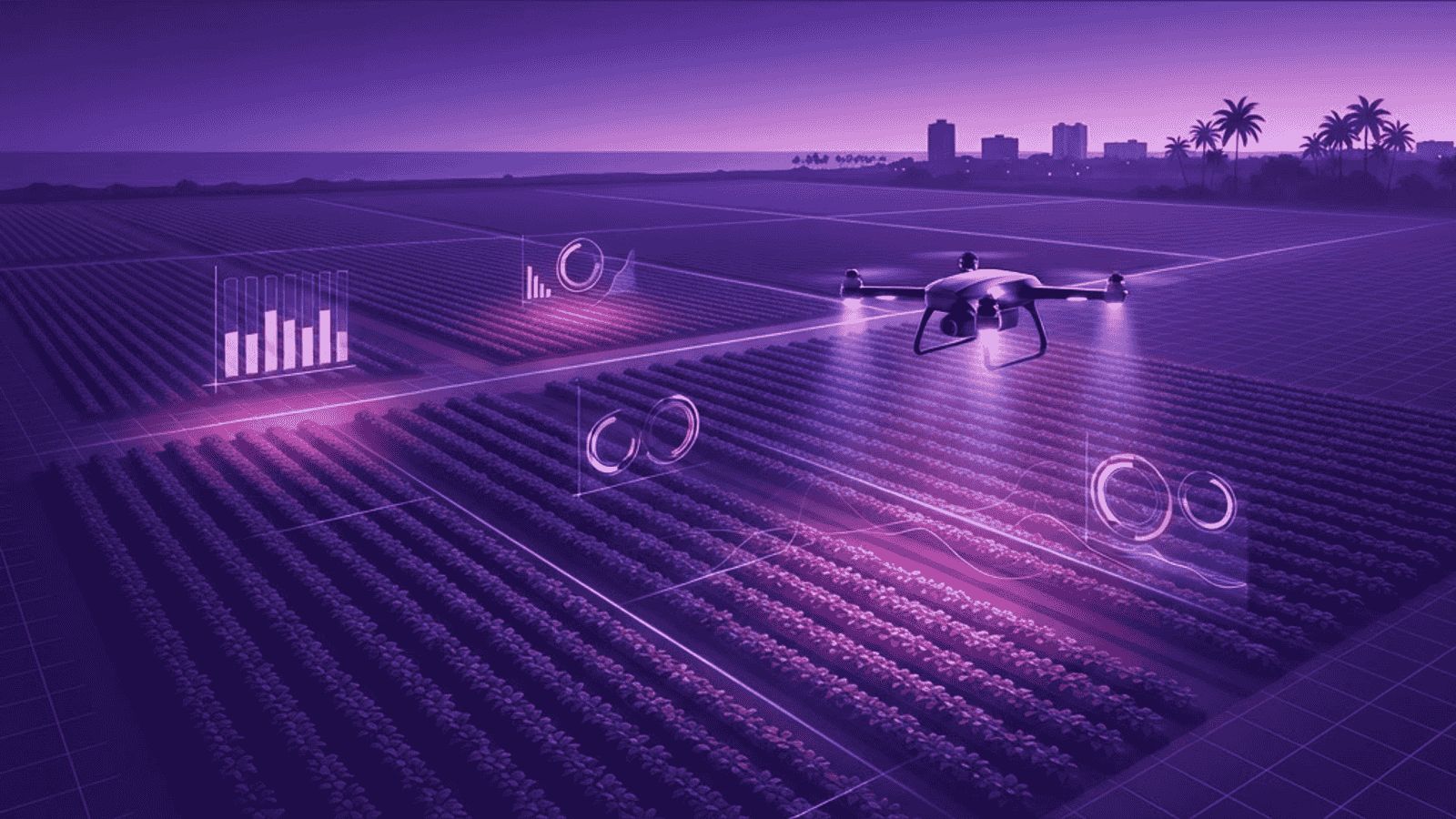
Farming in the Tampa Bay Region
Visitors tend to picture Tampa as a coastal metropolis of glass towers and waterfront restaurants, yet drive twenty minutes inland from downtown and the landscape becomes agricultural. Hillsborough County alone supports thousands of acres of production, and neighboring Polk, Pasco, and Manatee counties add significant volume in citrus, strawberries, cattle, and vegetables. The region's subtropical climate allows winter production when much of the country cannot grow at all, giving Tampa area farms a genuine seasonal advantage.
That advantage comes with real challenges. Summer heat and humidity create heavy disease pressure, hurricane season threatens entire harvests, sandy soils hold nutrients poorly, and land values near a growing metro area put constant pressure on farm economics. The companies that thrive here are the ones that adapted, whether through controlled environment agriculture, diversified revenue, or tighter integration with local buyers.
What Makes a Farming Company Stand Out
Evaluating agricultural operations means looking past acreage. Yield consistency, food safety certification, water management practices, labor stability, and the ability to fulfill contracts reliably matter more to buyers than raw size. Increasingly, farms are also judged on soil health programs, integrated pest management, and documented sustainability practices, because retail and foodservice buyers now require that documentation.
The Top 10 Farming Companies Serving Tampa
1. Hillsborough Valley Produce Farms — A diversified vegetable grower supplying tomatoes, peppers, squash, and leafy greens to regional distributors. Its rotating field program and cover cropping have earned respect for soil stewardship in a region where sandy soils degrade quickly.
2. Plant City Strawberry Growers Cooperative — Representing multiple family farms in the strawberry belt just east of Tampa, this cooperative gives smaller growers shared cooling, packing, and marketing infrastructure they could not afford individually.
3. Gulf Coast Citrus Enterprises — Managing groves across several inland counties, this operation has invested heavily in disease-resistant rootstock and precision irrigation as Florida citrus adapts to greening pressure.
4. Tampa Bay Hydroponic Farms — A controlled environment operation producing lettuces, herbs, and microgreens year-round in climate-managed greenhouses. Its water recirculation approach uses a fraction of the volume field production requires.
5. Riverview Cattle and Land Company — A cow-calf operation combining pasture management with rotational grazing. Its focus on native forage and controlled stocking density has kept pastures productive through repeated drought cycles.
6. Sunshine Organics Farm Group — Certified organic across a mix of row crops and specialty vegetables, this group supplies farmers markets, CSA subscribers, and independent grocers throughout the bay area.
7. Wimauma Nursery and Ornamental Growers — Florida's ornamental horticulture sector is substantial, and this grower produces landscape plants, palms, and container stock for regional garden centers and commercial landscapers.
8. Ybor Urban Agriculture Collective — Operating intensive small-plot and rooftop production inside the city, this collective supplies restaurants with high-value herbs and specialty greens while running community education programs.
9. Manatee River Aquaponics and Greens — Combining fish production with vegetable growing in a closed nutrient loop, this operation represents one of the more technically sophisticated approaches in the region.
10. Pasco Family Apiaries and Pollination Services — Beyond honey production, this company provides contract pollination to fruit and vegetable growers across the region, a service that has grown more valuable as wild pollinator populations declined.
Technology Reshaping Florida Agriculture
Precision agriculture has moved from experimental to standard among serious Tampa area operations. Soil moisture sensors tied to automated irrigation reduce both water use and disease pressure. Drone imaging identifies stressed sections of a field before symptoms are visible from ground level. Variable rate fertilizer application cuts input costs while limiting nutrient runoff into sensitive bay watersheds.
Controlled environment agriculture has been the most visible shift. Greenhouses and vertical systems allow production regardless of weather, eliminate most pesticide use, and place farms physically closer to urban customers. The tradeoff is capital intensity and energy cost, which is why the successful operations tend to focus on high-value, fast-turning crops rather than commodity staples.
Water, Weather, and Regulation
Water is the defining constraint in Florida agriculture. Regional water management districts regulate withdrawal permits closely, and growers must document conservation practices to maintain allocations. Nutrient management rules aimed at protecting Tampa Bay water quality add another compliance layer, requiring soil testing, application records, and buffer zones.
Hurricane risk shapes nearly every operational decision, from greenhouse engineering standards to harvest timing and crop insurance structure. Farms that build weather contingency into their planning rather than treating storms as anomalies consistently recover faster.
The Local Food Connection
Tampa's restaurant scene has matured considerably, and chefs increasingly build menus around regional sourcing. That has created durable demand for growers who can deliver small volumes of high-quality product on short notice. Farmers markets across Hillsborough and Pinellas counties, CSA subscription programs, and direct wholesale relationships with independent grocers now represent meaningful revenue for mid-sized farms that cannot compete on commodity pricing.
Final Thoughts
Farming around Tampa is not a relic of the region's past but an adapting, technically sophisticated industry operating under real pressure from land costs, climate, and regulation. The companies listed here succeed by choosing a clear strategy, whether that is scale efficiency, controlled environment precision, organic certification, or direct local relationships. For buyers, growers, and residents alike, understanding this landscape offers a fuller picture of what the Tampa Bay economy actually rests on.