
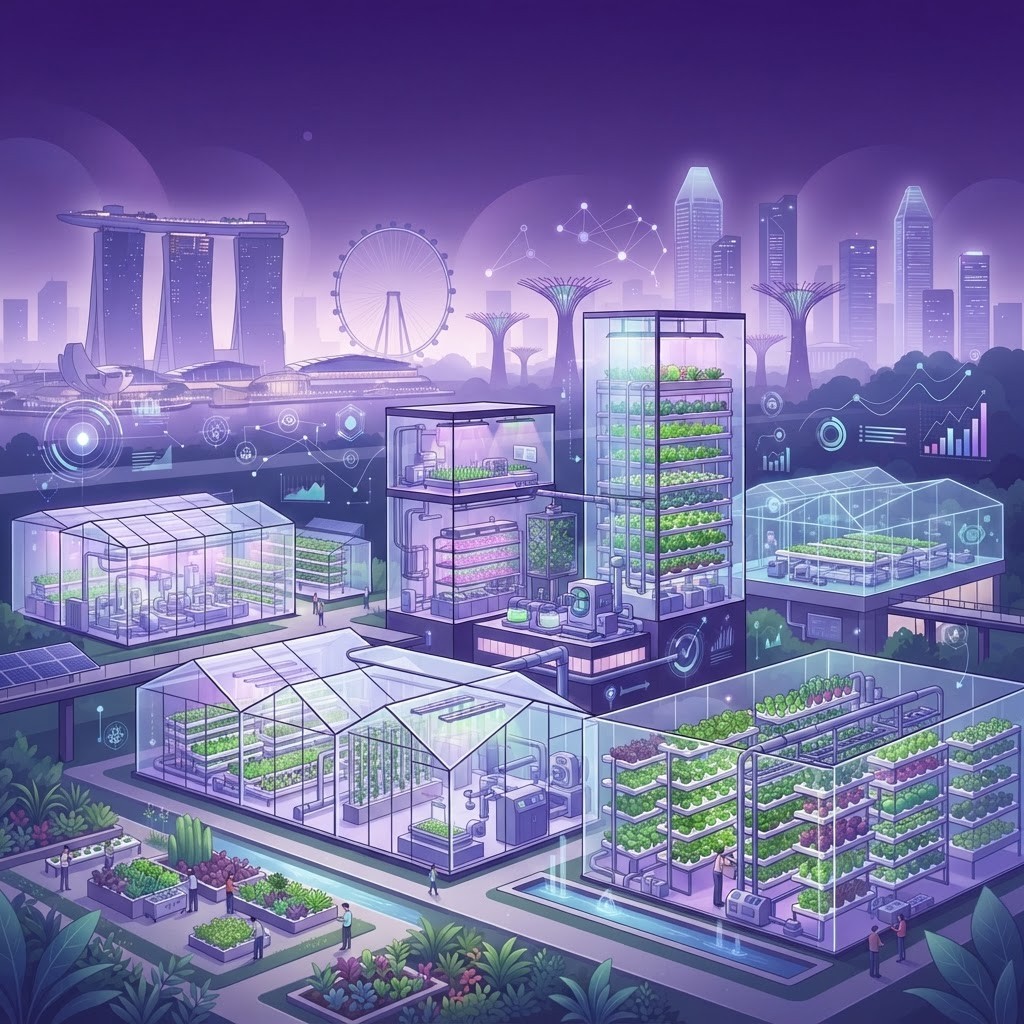
Cultivating Food Security in a City-State
Singapore faces a unique challenge: with limited land and a dense urban environment, the nation imports most of its food. Yet through bold innovation and a national commitment to food security, a remarkable farming industry has flourished. Driven by the ambitious goal of producing a significant share of nutritional needs locally, Singapore's farming companies are pioneering urban agriculture, vertical farming, aquaculture, and high-tech food production methods that are admired worldwide.
These companies blend agriculture with technology, transforming rooftops, indoor facilities, and coastal waters into productive farms. From leafy greens grown in vertical towers to fish raised in advanced aquaculture systems, Singapore's agri-businesses are redefining what farming looks like in a modern city. Below, we explore ten of the most innovative and respected farming companies in Singapore.
Why Local Farming Matters
For a nation reliant on imports, local farming is more than a business; it is a strategic priority. Domestic production strengthens food security, reduces vulnerability to global supply disruptions, and shortens supply chains for fresher produce. Local farms also support sustainability by reducing food miles and enabling efficient, resource-conscious production. The companies leading this movement combine agricultural expertise with cutting-edge technology to maximize output in limited space.
The Top 10 Farming Companies in Singapore
1. SkyGreens Vertical Farms is a pioneer in vertical farming, growing leafy vegetables in rotating towers that maximize sunlight and space. Their innovative approach has become a symbol of Singapore's urban agriculture ambitions.
2. AquaBlue Fisheries specializes in sustainable aquaculture, producing fresh fish through advanced, controlled systems. Their focus on quality and sustainability supports local seafood demand.
3. UrbanLeaf Farms operates indoor and rooftop farms producing pesticide-free greens. Their commitment to clean, local produce appeals to health-conscious consumers and restaurants.
4. GreenSpace AgriTech leverages technology and data to optimize crop production in controlled environments. Their precision farming methods deliver consistent yields year-round.
5. RootedFarms SG focuses on hydroponic and soilless cultivation, growing vegetables efficiently with minimal water. Their resource-conscious approach embodies sustainable urban farming.
6. EggCellent Poultry specializes in local egg production, helping strengthen Singapore's self-sufficiency in this essential staple. Their reliable supply supports both retail and food service.
7. HarvestHub Microgreens produces specialty microgreens and herbs prized by chefs and gourmet kitchens. Their fresh, flavourful crops add value to Singapore's culinary scene.
8. BlueWave Aquaponics combines fish farming with plant cultivation in integrated aquaponic systems. Their closed-loop approach demonstrates efficient, sustainable food production.
9. CityHarvest Greens operates community-focused urban farms, supplying fresh produce while promoting local engagement with agriculture. Their model blends production with education.
10. Lion City AgriFarms rounds out the list as a versatile agri-business producing a range of vegetables and crops using modern techniques. Their adaptability supports diverse local food needs.
Trends Transforming Singapore's Farming Industry
Singapore's farming sector is at the forefront of agricultural innovation. Vertical and indoor farming are central to overcoming land constraints, enabling high yields in compact, controlled spaces. These methods reduce dependence on weather and pesticides while improving consistency and food safety. Technology plays a pivotal role, with automation, sensors, and data analytics optimizing growing conditions and resource use.
Sustainability is a guiding principle, reflected in water-efficient hydroponics, closed-loop aquaponics, and renewable energy adoption. The national push for greater food self-sufficiency continues to attract investment and talent into agri-tech, fostering a culture of experimentation. Consumer demand for fresh, local, pesticide-free produce further fuels growth, while collaboration between farms, researchers, and authorities accelerates progress.
Supporting Singapore's Farming Future
The success of Singapore's farming companies depends on continued innovation, investment, and consumer support. Choosing locally grown produce strengthens demand and helps these businesses scale. For partners and buyers, evaluating a farm's production methods, sustainability practices, and consistency of supply is key. As technology advances, the potential for urban farming to contribute meaningfully to national food security grows ever more promising.
Collaboration and the Road Ahead
The future of Singapore's farming industry rests on collaboration between agri-businesses, researchers, government agencies, and consumers. Partnerships with research institutions help farms refine growing techniques, improve crop varieties, and adopt emerging technologies such as artificial intelligence and robotics. Supportive policies and funding encourage entrepreneurs to experiment with new models, while public engagement builds awareness of the value of locally grown food. As these farms scale, they create skilled jobs and position Singapore as a global leader in agri-technology innovation. Challenges remain, including high operating costs and the need for continued consumer support, but the trajectory is promising. With sustained investment and ingenuity, urban farming is set to play an ever-greater role in feeding the nation sustainably.
Conclusion
Singapore's farming companies are proving that even a dense, land-scarce city can cultivate a vibrant, sustainable agriculture industry. From vertical farming pioneers like SkyGreens Vertical Farms to sustainable aquaculture leaders such as AquaBlue Fisheries and tech-driven innovators like GreenSpace AgriTech, these businesses are transforming food production. By embracing innovation and sustainability, they are helping secure Singapore's food future while inspiring cities around the world to reimagine what urban farming can achieve.