
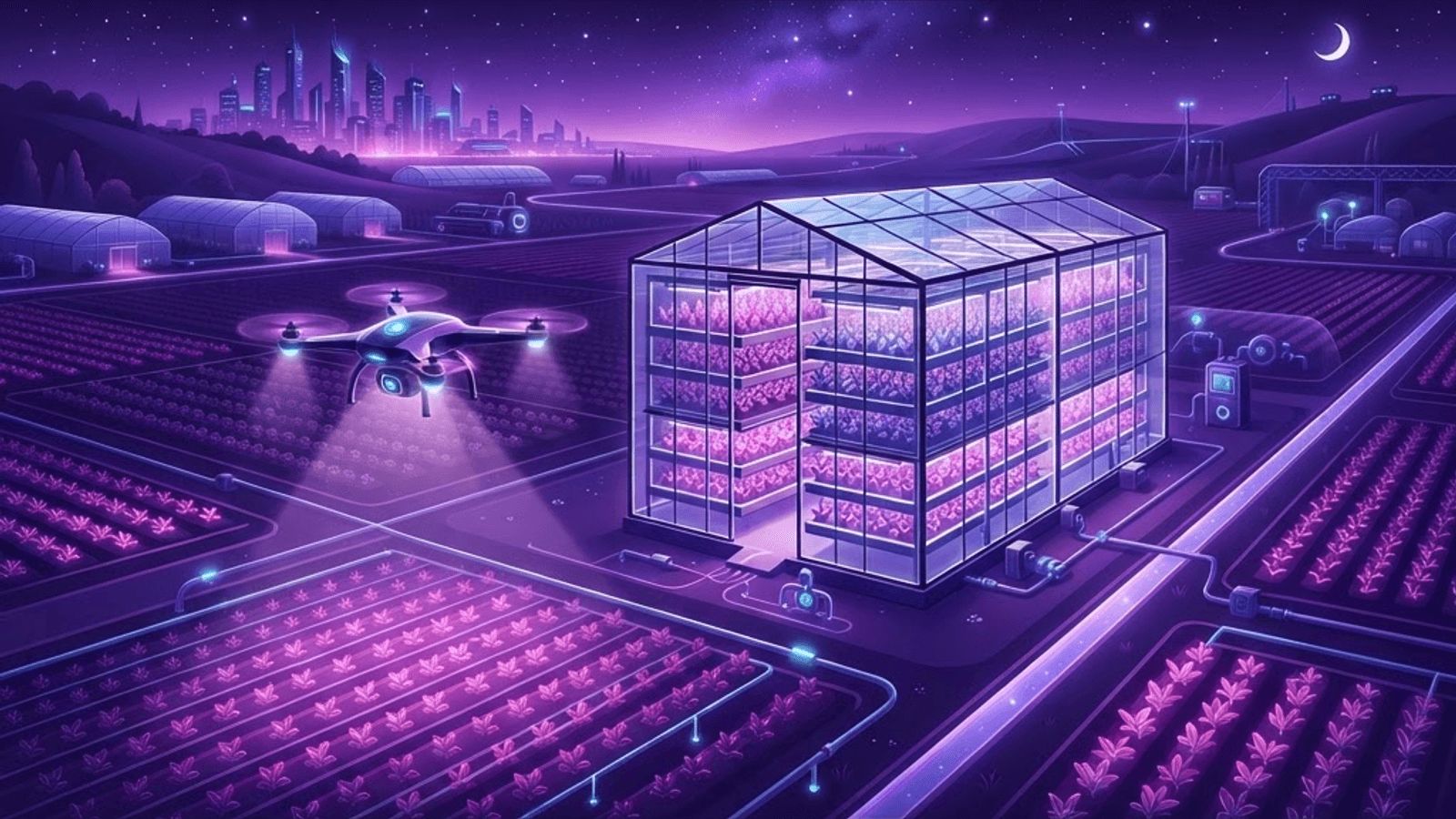
Agriculture in an Urban Setting
Farming in a dense city like Paterson looks nothing like farming in the open countryside, yet it is growing steadily and matters more each year. New Jersey's identity as the Garden State remains well earned, and the farmland surrounding the metropolitan area continues to produce at scale. Within the city itself, a different kind of agriculture has taken root: rooftop growing, hydroponic and vertical farms, community garden networks, urban orchards, and the service companies that support them.
The drivers are practical. Transportation costs and produce quality both favor growing close to consumers. Restaurants and grocers increasingly market local sourcing. Vacant and underused industrial buildings suit controlled environment agriculture well, offering the height, floor loading, and electrical capacity that indoor growing requires. And community food access initiatives have attracted genuine investment into neighborhoods where fresh produce has been historically scarce.
Models of Urban and Peri-Urban Farming
Several distinct models operate in and around Paterson. Controlled environment agriculture grows produce indoors under artificial light with precise climate control, delivering consistent year-round yield at higher energy cost. Greenhouse production uses natural light supplemented as needed, balancing yield against operating expense. Rooftop farming uses existing building area, with structural capacity as the limiting factor. Community and market gardens operate at smaller scale with significant social benefit alongside food production. Peri-urban field farms on the region's remaining agricultural land supply the volume that urban models cannot match.
Each model suits different crops. Leafy greens, herbs, and microgreens perform well indoors. Tomatoes, peppers, and cucumbers suit greenhouses. Root vegetables, tree fruit, and grains remain field crops for sound agronomic and economic reasons.
The Top 10 Farming Companies in Paterson
1. Great Falls Urban Farms
Great Falls Urban Farms operates the most established controlled environment growing facility serving the city, producing leafy greens and herbs year-round for restaurants, grocers, and institutional customers. Consistent quality, reliable volume, and delivery within hours of harvest are its defining advantages.
2. Silk City Hydroponics
Silk City Hydroponics runs vertical growing systems in a converted industrial building, specializing in microgreens and specialty produce for chefs. Its willingness to grow to order for specific menus has built strong relationships across the regional restaurant scene.
3. Passaic Valley Growers
Passaic Valley Growers is a peri-urban field operation supplying seasonal vegetables to farmers markets, community supported agriculture subscribers, and wholesale buyers. Its scale and crop diversity complement the narrow focus of indoor producers.
4. Broadway Rooftop Agriculture
Broadway Rooftop Agriculture designs, installs, and operates rooftop growing systems on commercial buildings. Beyond food production, these installations deliver stormwater management and building insulation benefits that improve the economics considerably.
5. Market Street Community Farms
Market Street Community Farms coordinates a network of neighborhood gardens and small production plots, combining food production with education and workforce training. Its impact on local food access extends well beyond harvest volume.
6. Hamilton Mushroom Company
Hamilton Mushroom Company cultivates specialty mushrooms indoors, supplying restaurants and retailers with varieties rarely available through conventional distribution. Mushroom growing suits urban settings particularly well, requiring little light and modest space.
7. Riverside Aquaponics
Riverside Aquaponics integrates fish production with hydroponic growing in a closed-loop system, producing both protein and produce while using dramatically less water than conventional methods. The technical complexity is significant, and the operation's consistency demonstrates real expertise.
8. Union Avenue Agricultural Services
Union Avenue Agricultural Services supplies seed, growing media, nutrients, equipment, and technical consulting to growers of all sizes. Its agronomic support helps new operations avoid the mistakes that sink many first-year ventures.
9. Clifton Avenue Nursery and Horticulture
Clifton Avenue Nursery and Horticulture produces plants, seedlings, and ornamental stock for landscapers, municipalities, and growers. Starter plant quality strongly influences final yield, making this an important upstream contributor.
10. Totowa Road Composting and Soil
Totowa Road Composting and Soil processes organic waste into compost and growing media, closing the loop between food waste and food production. Diverting organic material from landfill while producing a valuable input makes this one of the most quietly consequential operations in the local food system.
Trends in Urban Agriculture
Energy efficiency has become the central challenge for indoor growing, and advances in lighting efficiency, heat recovery, and renewable energy integration are steadily improving the economics. Operations that manage energy well are profitable while those that do not struggle regardless of yield.
Automation is advancing quickly, with automated seeding, transplanting, and harvesting reducing the labor cost that dominates controlled environment budgets. Crop diversification is expanding beyond the leafy greens that dominated early indoor farming toward berries, vine crops, and specialty items with higher value. Finally, integration with local food systems has deepened, with growers, distributors, restaurants, and food access programs coordinating more closely than they once did.
Working with Local Growers
Buyers should communicate volume needs well in advance, since growing cycles cannot be compressed to meet a sudden order. Understand seasonality even with indoor production, as energy costs and crop rotation affect availability. Discuss packaging and delivery logistics explicitly, because small growers may lack the infrastructure larger distributors provide. Visit the operation if possible, as food safety practices are far easier to assess in person. And build commitments that give growers planning certainty, since predictable demand is what allows small agricultural businesses to invest and expand.
Final Thoughts
Farming around Paterson demonstrates how agriculture adapts to an urban context without losing its essential purpose. Controlled environment producers, rooftop installations, community gardens, and nearby field farms together supply fresher produce, shorten supply chains, and create local employment. For restaurants, retailers, and institutions in the region, engaging with these growers offers quality and traceability that distant supply chains cannot match, along with a direct contribution to the resilience of the local food system.