
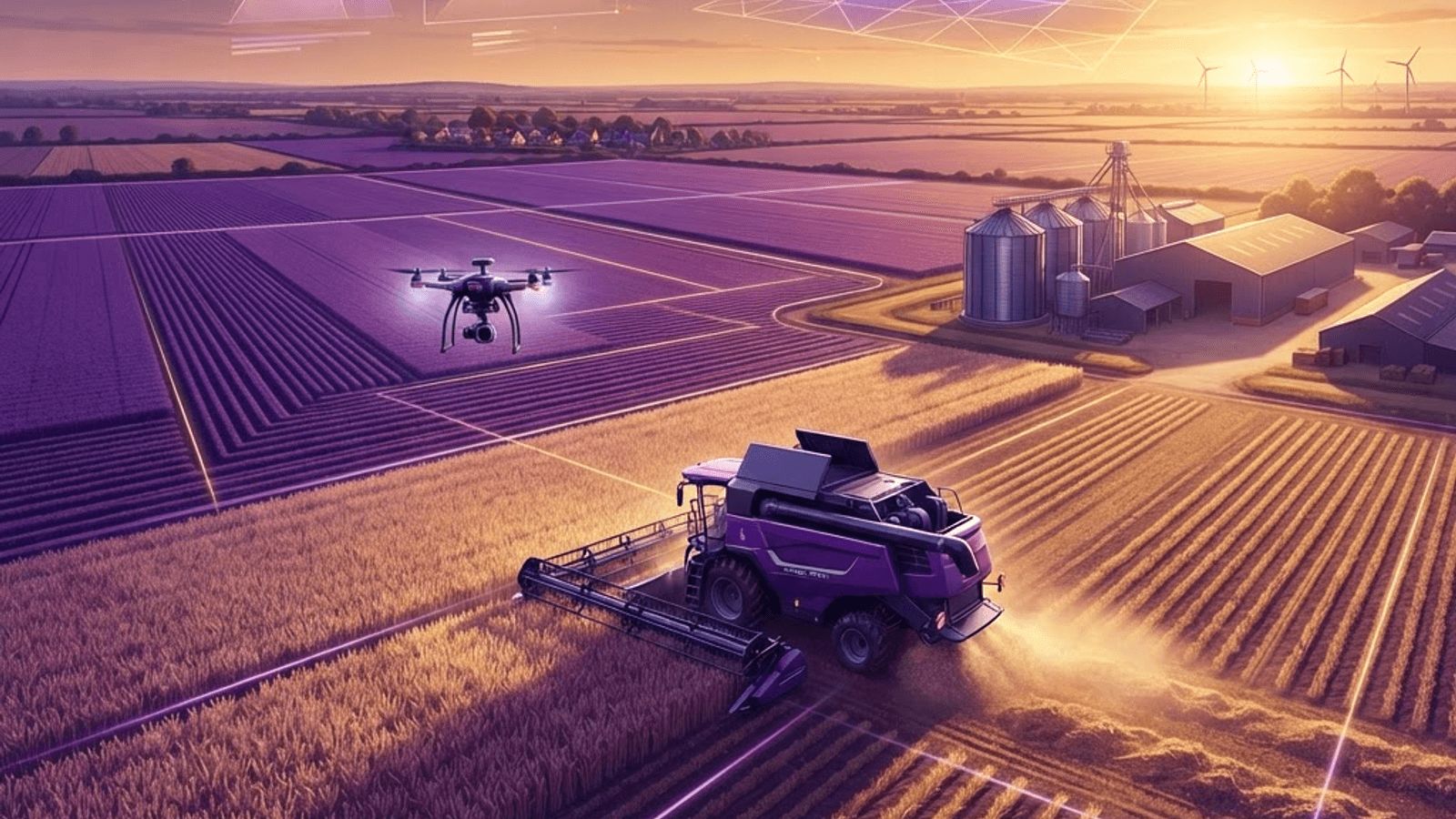
Norfolk's Place in British Agriculture
Norfolk is agricultural heartland. Its light, free-draining soils, low rainfall, long growing season and flat topography make it exceptionally suited to arable cropping and field vegetables. The county produces wheat, barley, oilseed rape, sugar beet, potatoes, carrots, onions, parsnips, salads, soft fruit and a substantial share of Britain's poultry and pork. Malting barley from Norfolk supplies brewers and distillers nationally, and the county's sugar beet feeds regional processing.
The Norfolk four-course rotation, developed here in the eighteenth century, remains one of the most influential innovations in agricultural history, and the spirit of experimentation persists. Today Norfolk farms are testing controlled traffic farming, variable rate application, cover cropping, regenerative systems, anaerobic digestion, agroforestry and on-farm renewable generation.
What Distinguishes an Excellent Farming Business
Modern farming success rests on several interlocking capabilities. Agronomic skill determines yield and quality, but financial discipline determines survival, particularly as support payments shift from area-based subsidy toward environmental outcomes. Diversification into storage, processing, energy, tourism or direct sales spreads risk across income streams.
Environmental stewardship has become both a moral and commercial requirement. Farms that build soil organic matter, manage water carefully, create habitat and reduce input dependency tend to be more resilient to weather extremes and better positioned for scheme payments and supply chain requirements.
Technology adoption matters too, from yield mapping and soil scanning to precision application that cuts fertiliser and pesticide use while maintaining output. Finally, people management is decisive: attracting and retaining skilled staff and seasonal workers is one of the sector's hardest challenges.
The Top 10 Best Farming Companies in Norfolk
1. Norfolk Estate Farming Company
A large-scale arable business farming combinable crops and sugar beet across multiple blocks, with grain storage, drying and marketing capability. Norfolk Estate Farming Company invests heavily in soil health monitoring, controlled traffic systems and precision application, and it operates environmental schemes alongside production. Its scale allows machinery efficiency and direct relationships with grain buyers.
2. Broadland Vegetable Growers
Specialising in root vegetables and salad crops, this grower manages irrigation, cold storage, washing and grading in-house, supplying supermarkets and wholesalers to tight specification. Cold chain control and consistent grading are central to its performance. Rotational planning with neighbouring arable farms maintains soil condition across intensive vegetable production.
3. Fenland Potato and Root Crop Producers
Operating on the county's western fringe, this business grows potatoes, onions and parsnips with substantial storage capacity allowing year-round supply. Variety selection, sprout suppression management and careful handling to minimise bruising underpin quality. Long-term contracts with processors and packers provide income stability in a volatile market.
4. Norfolk Poultry Enterprises
Poultry is one of the county's defining livestock sectors, and this company operates rearing and laying units with strong biosecurity, welfare accreditation and environmental management. Investment in ventilation, feed efficiency and litter handling improves both bird performance and emissions performance. Renewable heat and solar generation reduce energy exposure across the sites.
5. North Norfolk Regenerative Farming Collective
A group of farms transitioning toward regenerative systems using direct drilling, diverse cover crops, reduced synthetic inputs and integrated livestock grazing. Yield stability, improved infiltration and lower establishment costs are reported benefits. The collective shares machinery, data and agronomic learning, lowering the risk of individual transition.
6. Norfolk Livestock and Grassland Farms
Managing beef cattle and sheep across grassland, marshes and grazing marsh habitat, this business demonstrates how livestock support both food production and conservation grazing. Rotational grazing improves pasture productivity while maintaining habitat structure valued by conservation bodies. Native breed use suits marginal land and produces well-regarded meat.
7. Norfolk Soft Fruit and Horticulture
Growing strawberries, raspberries and other soft fruit under protection, this business extends the season with polytunnels and substrate systems, achieving high quality and long picking windows. Labour organisation is a central management discipline given picking intensity. Integrated pest management reduces chemical reliance using beneficial insects and monitoring.
8. Breckland Mixed Farming Company
Farming the distinctive sandy Breckland soils, this business combines irrigated arable cropping with pigs, energy crops and environmental land management. Its irrigation expertise and water storage reservoirs address the region's low rainfall. Manure integration builds organic matter in soils that would otherwise struggle to retain nutrients and moisture.
9. Norfolk Organic Farming Group
Certified organic across arable, vegetables and livestock, this group operates long rotations, mechanical weeding, legume-based fertility building and direct marketing through boxes, farm shops and wholesale. Premium pricing offsets lower yields, and its agronomic knowledge of non-chemical systems is increasingly relevant to conventional farms reducing inputs.
10. Norfolk Farm Diversification and Agri-Tourism Enterprises
Representing the diversification trend, this business combines commercial farming with farm shop retail, holiday accommodation, events, pick-your-own and educational visits. Non-farming income smooths commodity volatility and connects consumers to food production. It demonstrates how heritage buildings and landscape can generate value alongside cropping.
Trends Shaping Norfolk Farming
Policy transition dominates planning, as public funding moves toward environmental outcomes such as soil health, water quality, habitat creation and carbon storage. Farms are recalculating enterprise profitability without area-based support and identifying which land is best suited to production versus environmental use.
Water is the county's critical constraint. Low rainfall combined with irrigation-dependent vegetable production makes abstraction licensing, on-farm reservoirs, drip irrigation and soil moisture monitoring strategically important.
Technology continues advancing through autonomous machinery trials, drone crop monitoring, variable rate nutrition and improved decision support. Meanwhile carbon accounting has arrived commercially, with grain buyers and food manufacturers requesting emissions data from their suppliers.
Practical Insights for Farm Businesses
Know your cost of production per tonne for every crop, since informed marketing decisions depend on it. Invest in soil measurement before changing systems, so improvements can be demonstrated rather than assumed. Treat water as a strategic asset and plan storage well ahead of need.
Diversify thoughtfully rather than opportunistically, matching new enterprises to genuine local demand and available management capacity. Collaborate on machinery, storage and marketing where scale is lacking. And engage early with environmental schemes, because the mapping and baseline work takes considerable time.
Final Thoughts
Norfolk's farming companies range from large-scale arable estates and precision vegetable growers to poultry specialists, regenerative collectives, organic producers and diversified agri-tourism businesses. The county's agricultural strength lies in this combination of scale, technical skill and willingness to innovate, exactly as it did when the Norfolk rotation first changed European farming.