
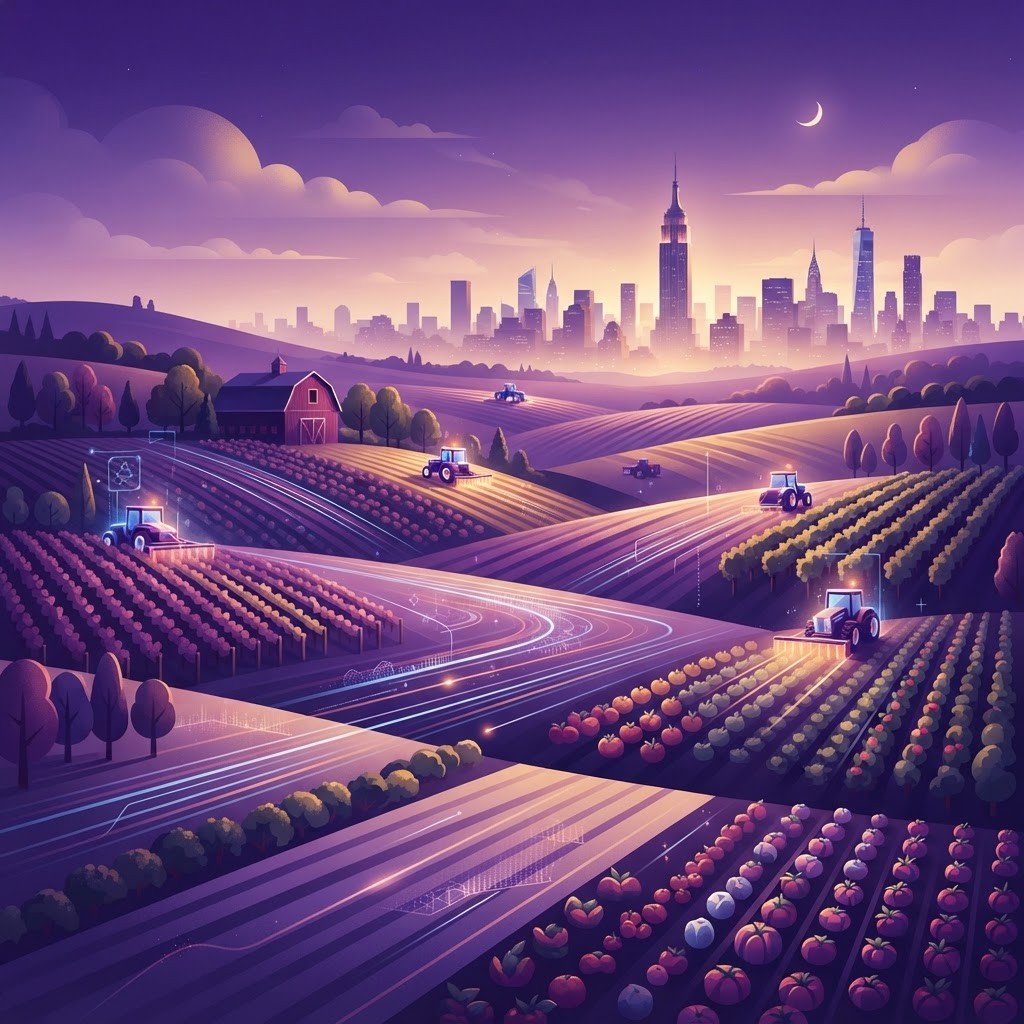
New York's Rich Agricultural Heritage
While New York is famous for its skyline, the state is also a significant agricultural powerhouse. Beyond the city, vast stretches of farmland support dairy operations, fruit orchards, vegetable farms, and vineyards. New York consistently ranks among the nation's top producers of dairy, apples, and several specialty crops, and its farming companies play a vital role in feeding both local communities and regional markets.
The state's agricultural landscape is defined by remarkable diversity. From family-run dairy farms in the north to sprawling produce operations in the Hudson Valley and Long Island, New York's farming companies navigate varied climates, soils, and market demands. The most successful operations combine generations of experience with modern techniques that improve yields, sustainability, and profitability.
What Distinguishes Leading Farming Companies
Top farming companies excel through a blend of operational efficiency, environmental stewardship, and market savvy. Efficient operations manage costs, labor, and resources carefully, while forward-thinking farms invest in soil health, water management, and crop diversity to protect long-term productivity. Increasingly, consumers reward farms that demonstrate genuine commitment to sustainable and humane practices.
Market access is equally important. Leading companies build strong relationships with distributors, grocers, restaurants, and direct-to-consumer channels such as farmers markets and community-supported agriculture programs. The ability to bring high-quality products to market reliably, and to tell a compelling story about how food is grown, has become a real competitive advantage.
Ten Leading Farming Companies in New York
Hudson Valley Family Farms is recognized for its diverse produce operations, supplying seasonal fruits and vegetables to regional grocers and restaurants with a focus on freshness and quality.
Empire Dairy Cooperative represents a network of dairy producers committed to high milk standards and animal welfare, supporting New York's position as a leading dairy state.
Finger Lakes Vineyard Estates combines grape growing with winemaking, contributing to the region's celebrated reputation for cool-climate wines and agritourism.
Long Island Produce Growers specializes in vegetables and specialty crops suited to the island's climate, serving both wholesale buyers and local markets.
Adirondack Organic Farms emphasizes certified organic practices across produce and livestock, appealing to consumers seeking chemical-free, sustainably raised food.
Genesee Valley Grain Co. focuses on grains and field crops, supplying feed, flour, and raw commodities to processors and livestock operations across the state.
Catskill Heritage Orchards is known for apples and stone fruits, blending traditional orchard management with modern storage and distribution to extend seasonal availability.
Mohawk Valley Livestock Farms raises beef, poultry, and other livestock with an emphasis on pasture-based methods and traceable, high-quality meat.
Sunrise Greenhouse Growers uses controlled-environment agriculture to produce greens, herbs, and vegetables year-round, reducing reliance on seasonal weather.
North Country Maple & Specialty Farms rounds out the list with maple syrup and specialty products that showcase New York's unique agricultural offerings.
Trends Transforming New York Agriculture
Sustainability and regenerative agriculture are reshaping how New York farms operate. Practices such as cover cropping, reduced tillage, and rotational grazing are gaining traction as farmers work to improve soil health, sequester carbon, and build resilience against extreme weather. These methods often align with growing consumer demand for responsibly produced food.
Technology is another powerful force. Precision agriculture tools, from soil sensors to data-driven irrigation, help farms optimize inputs and boost efficiency. Controlled-environment agriculture, including greenhouses and indoor farming, is expanding the state's capacity to produce fresh food year-round, even close to urban markets.
Direct-to-consumer sales continue to flourish as well. Farmers markets, farm stands, and community-supported agriculture programs allow New York farms to connect directly with buyers, capture more value, and build loyal customer relationships rooted in transparency.
How to Evaluate a Farming Partner or Producer
Whether you are a buyer sourcing produce or a consumer choosing where to spend your food dollars, evaluating a farming company involves looking at quality, consistency, and practices. Certifications such as organic or humane-raised labels provide useful signals, as do a farm's reputation, transparency, and willingness to share information about how food is grown.
For wholesale buyers, reliability of supply and the ability to meet volume and quality requirements are essential. For consumers, alignment with personal values around sustainability, animal welfare, and local sourcing often guides decisions. In both cases, strong communication and a clear commitment to quality distinguish the best producers.
Agriculture's Economic and Community Impact
Farming companies do more than produce food; they anchor rural communities and contribute significantly to New York's economy. Agricultural operations create jobs, support related industries such as equipment dealers and processors, and help preserve open landscapes that define the state's rural character. Many farms also strengthen local food systems by supplying nearby markets, restaurants, and institutions, reducing dependence on distant supply chains. As interest in local and traceable food continues to grow, New York's farms are well positioned to deepen these community connections. Their stewardship of land and resources ensures that agriculture remains not only economically vital but also environmentally and culturally important for future generations.
Final Thoughts
New York's farming companies are a vital and dynamic part of the state's economy and food system. Spanning dairy, produce, grains, orchards, and specialty products, these operations blend heritage with innovation to feed communities and adapt to a changing world. By embracing sustainability, technology, and direct market relationships, the state's leading farms are securing a resilient and productive future for New York agriculture.