
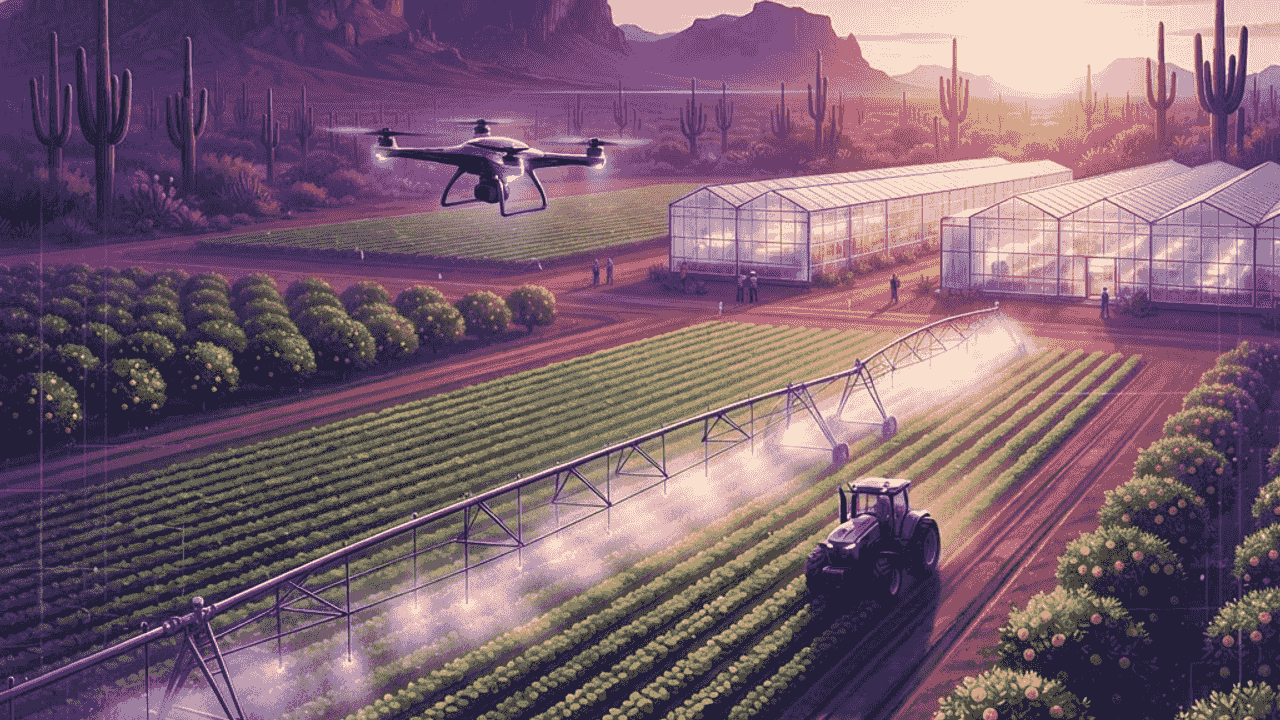
Agriculture built Mesa long before it became a major metropolitan city. Ancient canal systems in the Salt River Valley were among the most sophisticated irrigation works in North America, and later settlers rebuilt and extended those canals to create farmland that still produces today. Modern Mesa farming operates under real pressure from urban growth, water allocation limits and extreme heat, yet it remains genuinely productive and increasingly sophisticated. This guide profiles ten of the best farming companies in Mesa and examines the practices, technologies and market forces shaping desert agriculture.
What Makes Mesa Agriculture Distinctive
Mesa's growing conditions are unusual and, in some respects, advantageous. Abundant sunshine and mild winters allow production during months when most of the country cannot grow field crops, making Arizona a major supplier of winter vegetables and leafy greens. The tradeoff is water: everything depends on managed irrigation from the Salt and Colorado river systems and groundwater, and allocation planning is central to every farming decision. Summer heat effectively splits the year into distinct growing windows, pushing tender crops into fall through spring while heat-tolerant crops and shade structures cover the hottest months. Urban encroachment adds another dimension, as rising land values pressure farms toward higher-value crops, direct-to-consumer sales and controlled environment production that generates more revenue per acre.
The Top 10 Farming Companies in Mesa
1. Mesa Valley Produce Farms
Mesa Valley Produce Farms grows leafy greens, brassicas, root vegetables and melons across the region's winter and spring windows, supplying wholesalers, grocers and food service distributors. Its strength is scheduling, staggering plantings so harvest continues steadily rather than arriving in one overwhelming flush, which keeps buyers supplied and reduces field waste.
2. Sonoran Citrus Groves
Citrus is emblematic of the Salt River Valley, and Sonoran Citrus Groves maintains orange, grapefruit, lemon and tangerine plantings using drip irrigation and careful frost management. Beyond wholesale fruit, it supports packing, juicing and direct sales, and its grove management expertise, including pruning and nutrient programs suited to alkaline desert soils, sustains tree productivity for decades.
3. Red Mountain Dairy Company
Red Mountain Dairy Company operates a modern dairy with cooling systems, misting barns and shade structures designed specifically for heat stress mitigation, which is the defining challenge of Arizona dairying. Attention to cow comfort translates directly into milk yield and animal health, and its nutrition program balances locally grown forage with purchased feed to control cost.
4. Desert Sun Hydroponic Farms
Desert Sun Hydroponic Farms produces lettuce, herbs, tomatoes and cucumbers in greenhouses and controlled environment systems that use a fraction of the water field production requires. Year-round output regardless of outdoor temperature makes it valuable to local restaurants and grocers wanting consistent, extremely fresh supply with minimal transport distance.
5. Gateway Alfalfa and Forage Growers
Gateway Alfalfa and Forage Growers cultivates alfalfa, sudangrass and other forage crops serving dairies, horse owners and livestock operations. Arizona's sunshine produces high-quality hay with excellent protein retention, and the company's laser-leveled fields and irrigation scheduling maximize yield per acre-foot of water, a metric that increasingly governs the economics of forage farming.
6. Superstition Nursery and Plant Growers
Superstition Nursery and Plant Growers produces desert-adapted trees, shrubs, cacti and succulents for landscapers, municipalities and garden retailers. As water conservation reshapes landscaping across the Valley, demand for genuinely drought-adapted plants has grown substantially, and its expertise in acclimating plants for successful transplant reduces the failure rate that frustrates homeowners.
7. Salt River Organic Farm Cooperative
Salt River Organic Farm Cooperative unites smaller certified organic growers producing vegetables, herbs and specialty crops for farmers markets, community supported agriculture subscriptions and restaurants. Cooperative structure gives small farms shared access to cold storage, distribution and marketing that individually they could not afford, strengthening the local food economy.
8. Copper Canyon Pecan and Tree Nut Farms
Copper Canyon Pecan and Tree Nut Farms manages pecan orchards and related tree nut production, applying flood and micro-irrigation strategies suited to deep-rooted trees. Tree crops represent long-term investments requiring decades of consistent management, and the company's harvest, cleaning and grading capability lets it deliver market-ready product rather than depending entirely on processors.
9. Falcon Field Agricultural Services and Technology
Falcon Field Agricultural Services and Technology supports growers with soil testing, drone imagery, irrigation system design, precision fertility planning and pest scouting. Data-driven management has become essential when water is limited, and its ability to translate imagery and soil results into concrete irrigation and nutrient adjustments delivers measurable water and input savings.
10. Arizona Urban Agriculture Collective
Arizona Urban Agriculture Collective develops small-footprint farms, rooftop growing, vertical systems and educational gardens within the city, supplying restaurants and neighborhood markets. Beyond production, its educational programming builds public understanding of desert food systems, and its model demonstrates how agriculture can persist within an expanding urban landscape.
Trends in Mesa Agriculture
Water efficiency dominates every conversation. Drip and micro-irrigation, soil moisture sensing, laser leveling and deficit irrigation strategies are now standard rather than experimental, and crop selection increasingly reflects water productivity rather than acreage alone. Controlled environment agriculture continues expanding because it multiplies yield per gallon and per acre, making it viable on expensive urban-adjacent land. Direct-to-consumer channels, including subscription boxes, farm stands and restaurant partnerships, capture more margin than commodity wholesale. Labor availability pushes growers toward mechanization and automated harvesting aids, while regenerative practices such as cover cropping and compost application are gaining adoption for soil health and water retention.
How to Work With Farming Companies in Mesa
Buyers should align expectations with Arizona's seasonal calendar, since local availability peaks when much of the country is dormant and narrows sharply in summer. Ask growers about certification, food safety audits and traceability practices, all of which matter for wholesale and institutional purchasing. Discuss volume commitments honestly, because planting decisions are made months ahead and growers plan around dependable buyers. For landscape and nursery purchases, confirm plants were grown or acclimated locally rather than imported from milder climates, which dramatically affects survival. Anyone entering farming should study water rights and allocation carefully before land acquisition, as water access determines what is agronomically and financially possible.
Final Thoughts
Mesa's farming companies span winter vegetable production, citrus, dairy, hydroponics, forage, desert nursery stock, organic cooperatives, tree nuts, agricultural technology services and urban agriculture. Together they demonstrate that desert farming is not a relic but an evolving industry defined by efficiency and innovation. Support growers who manage water responsibly, document their practices and invest in soil and tree health, and the Valley's agricultural heritage will continue producing well into the future.