
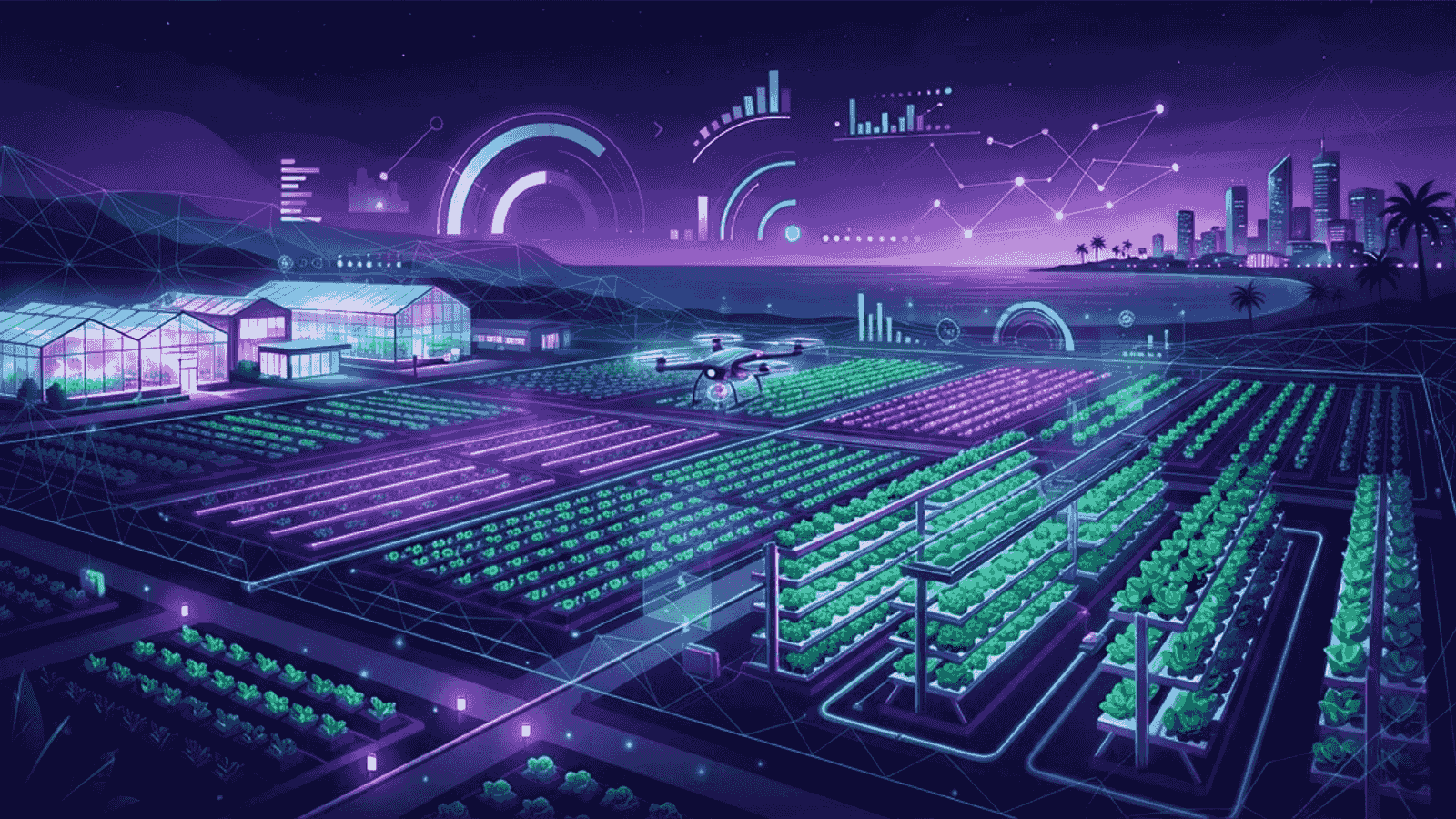
How Farming Works in a Coastal Urban City
Farming in Long Beach looks nothing like farming in the Central Valley, and that is precisely what makes it interesting. Land is expensive, parcels are small and irregular, and water is a permanent strategic concern. Growers who succeed here have adapted by farming intensively rather than extensively: controlled-environment greenhouses, vertical racks, rooftop beds, aquaponic systems and soil-based market gardens squeezed onto reclaimed lots.
The city's mild coastal climate is a genuine asset. Moderate temperatures and long growing seasons allow multiple harvests per year with lower heating and cooling loads than inland or northern operations. Combined with immediate proximity to restaurants, grocers and farmers markets, that produces a compelling value proposition: greens harvested in the morning can be on a plate the same evening, with minimal transport loss and no long-haul refrigeration cost.
The Economics of Urban Growing
Urban farms cannot compete on commodity price, so nearly all successful operators compete on freshness, specialty varieties, and relationships. High-value crops such as microgreens, culinary herbs, salad mixes, edible flowers and specialty tomatoes dominate because they deliver revenue per square foot that justifies urban real estate. Many operations layer additional income streams on top, including community education, subscription boxes, event hosting and consulting for other growers.
The Top 10 Farming Companies in Long Beach
1. Harbor Greens Urban Farms
Harbor Greens operates controlled-environment growing space producing leafy greens and herbs for local restaurants and grocers. Its systems recirculate water and monitor nutrient levels continuously, achieving yields that would be impossible in open-field conditions on the same footprint. Chefs cite consistency across seasons as its biggest advantage.
2. Pacific Coast Hydroponics Company
This grower specializes in hydroponic lettuces, basil and specialty greens delivered within hours of harvest. It also sells growing systems and provides technical support to smaller producers, effectively acting as both farm and enabler for the surrounding urban agriculture community.
3. Signal Hill Rooftop Agriculture
Signal Hill Rooftop Agriculture converts underutilized commercial rooftops into productive growing space, cultivating vegetables and herbs while reducing building heat load. Its model appeals to property owners seeking both revenue and measurable sustainability outcomes from otherwise idle square footage.
4. Belmont Shore Aquaponics
Combining fish cultivation with plant production, Belmont Shore Aquaponics runs closed-loop systems where fish waste fertilizes crops and plants filter the water. The approach dramatically reduces water consumption, an advantage that matters more each year in Southern California, and yields both produce and protein from one facility.
5. Queensway Community Growers
Queensway Community Growers manages neighborhood market gardens with a social mission, supplying fresh produce to nearby residents while training new growers. Its work addresses food access in underserved areas and has become a template for community-anchored agricultural enterprises.
6. Golden State Microgreens
Focused entirely on microgreens and shoots, this company serves restaurants, caterers and specialty grocers with fast production cycles and reliable weekly volumes. Tight crop timing allows it to match demand closely and minimize waste in a highly perishable category.
7. Bixby Knolls Organic Produce Co.
Bixby Knolls Organic Produce cultivates certified organic vegetables on reclaimed urban parcels, selling through farmers markets and a subscription program. Soil health, cover cropping and composting underpin its practices, and its direct-to-consumer model builds strong customer loyalty.
8. Terminal Island Vertical Farms
Operating stacked growing systems inside a converted industrial building, Terminal Island Vertical Farms produces salad crops and herbs year-round under precisely controlled light and climate. Automation and data monitoring allow a small team to manage substantial output with predictable quality.
9. Cerritos Avenue Nursery and Transplants
Rather than selling harvested produce, this company supplies seedlings, transplants and starter plants to other farms, landscapers and home growers. It plays a quiet but essential role in the local agricultural ecosystem by giving growers a reliable head start on each planting cycle.
10. Anaheim Street Edible Landscapes
Blending agriculture and design, Anaheim Street Edible Landscapes installs and maintains productive gardens for schools, restaurants and residential clients. The company demonstrates how food production can be integrated into everyday urban space rather than confined to dedicated farmland.
Trends Shaping Urban Agriculture
Water efficiency is the defining technical trend. Recirculating hydroponic and aquaponic systems can use a small fraction of the water conventional field agriculture requires, which has moved them from experimental to strategic in drought-prone California. Energy management is the counterweight, since indoor growing depends on lighting and climate control; growers are increasingly pairing production with solar and efficiency upgrades to protect margins.
Data and automation are advancing rapidly, with sensors tracking nutrient levels, humidity and growth rates to fine-tune conditions. Meanwhile, demand for hyper-local food continues to strengthen as restaurants market provenance and shoppers scrutinize supply chains. Policy is catching up too, with zoning and land-use frameworks gradually becoming more accommodating to commercial urban growing.
Choosing a Local Grower to Work With
Restaurants and retailers evaluating urban farms should look closely at consistency, not just quality on a single delivery. Ask about weekly volume capacity, crop planning windows, food safety practices and how the farm handles a failed crop cycle. Confirm delivery schedules match your prep routine, and discuss pricing stability, since specialty produce can swing sharply. For buyers who value provenance as part of their brand story, a grower's willingness to host visits and share practices is a meaningful signal of transparency.
Final Thoughts
Long Beach demonstrates that agriculture and urban density are not mutually exclusive. Through hydroponics, rooftops, aquaponics and community gardens, local companies are producing genuinely useful volumes of food while conserving water and shortening supply chains. As technology costs fall and demand for local produce grows, these operations look less like experiments and more like durable pieces of the regional food system.