
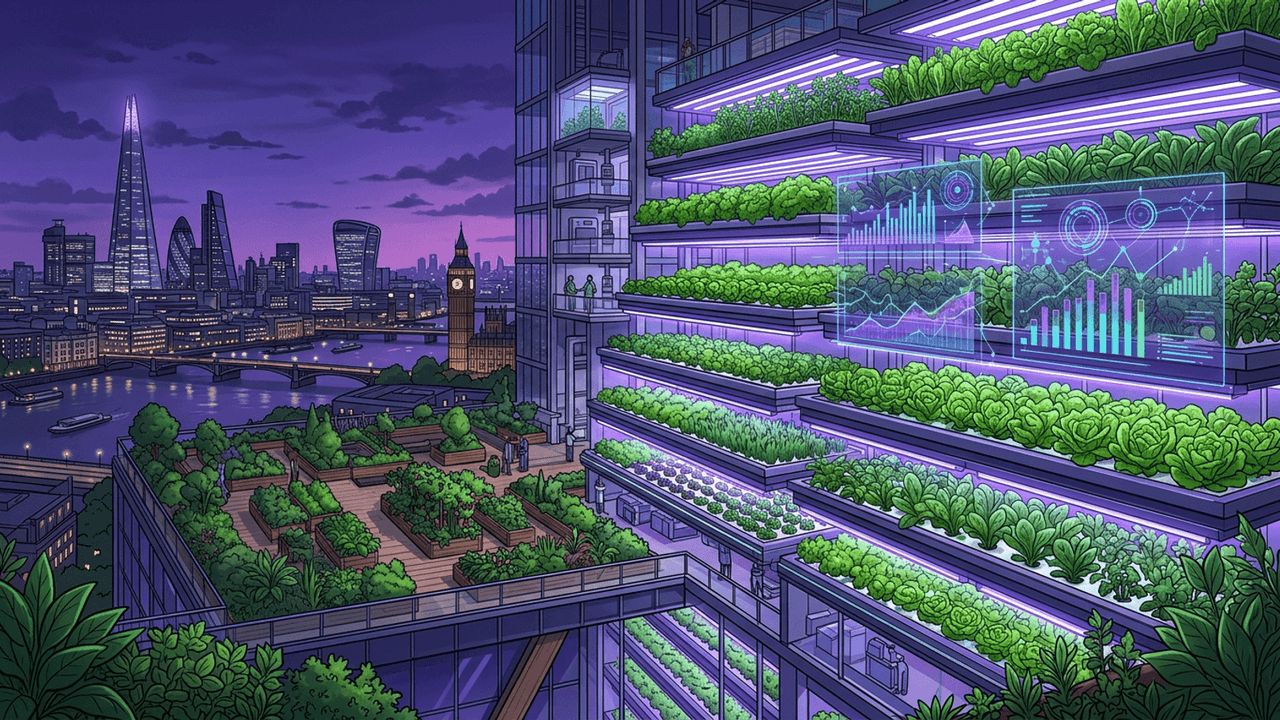
Urban Farming in the Heart of London
London may not seem like an obvious place for farming, but the capital has a surprisingly vibrant agricultural scene. Innovative companies are growing herbs and salad leaves in disused tunnels, rooftop farms are producing fresh vegetables above office buildings, and community farms provide education and green space to local residents.
Urban farming addresses several challenges at once. It shortens supply chains, reduces food miles, makes use of underused spaces, and reconnects city dwellers with how food is produced. As concerns about food security and climate change grow, London's farming pioneers are demonstrating new ways to feed cities.
Here are ten of the best farming companies and farms in London.
The Top 10 Farming Companies in London
1. Growing Underground
Growing Underground operates a hydroponic farm in former air raid shelters beneath Clapham. Using LED lighting and recirculating water systems, it grows microgreens and salad leaves year-round with minimal water and no pesticides, supplying restaurants and retailers across the capital.
2. Square Mile Farms
Square Mile Farms installs vertical farms in offices and buildings across London. Its systems grow fresh herbs and greens for employees, improving workplace wellbeing while showcasing sustainable urban food production.
3. Crate to Plate
Crate to Plate builds vertical farms inside shipping containers. Its modular, automated systems allow fresh produce to be grown in urban areas with controlled conditions, offering a scalable model for city farming.
4. Sutton Community Farm
Sutton Community Farm is a community-owned farm in South London that grows vegetables using sustainable methods. It runs a popular veg box scheme and provides volunteering and training opportunities for local residents.
5. Organiclea
Organiclea is a workers' cooperative based in Chingford, North East London. It grows organic food, runs a veg box scheme, operates market stalls and offers horticulture training, all with a focus on community and sustainability.
6. Mudchute Farm
Mudchute Farm on the Isle of Dogs is one of the largest city farms in Europe. Surrounded by the skyscrapers of Canary Wharf, it keeps livestock, offers educational programmes and provides green space for East London communities.
7. Hackney City Farm
Hackney City Farm is a much-loved community farm in East London. It keeps animals, grows produce and runs educational activities, providing a valuable connection to nature in one of the city's busiest boroughs.
8. Surrey Docks Farm
Surrey Docks Farm in Rotherhithe is a riverside working farm with livestock, orchards and vegetable gardens. It offers education programmes and community events that teach Londoners about farming and food.
9. Vauxhall City Farm
Vauxhall City Farm is a community farm in South London offering animal care, riding therapy and educational programmes. It is a valuable resource for local schools and families seeking hands-on experience with animals.
10. Riverford
Although based in Devon, Riverford is one of the most important organic farming companies serving London. Its organic veg boxes are delivered to thousands of London households, connecting city residents with sustainably grown produce.
Trends in Urban Farming
- Vertical farming: Stacked growing systems maximise production in small spaces.
- Hydroponics and aquaponics: Soil-free growing reduces water use and enables year-round production.
- Community food growing: Local farms and allotments strengthen communities and food resilience.
- Corporate farming: Offices install growing systems to improve employee wellbeing and sustainability.
- Short supply chains: Restaurants and retailers increasingly source hyper-local produce.
The Benefits of Farming in London
Urban farming offers fresher produce, reduced transport emissions and greater food security. It also provides educational opportunities, green jobs and spaces that improve mental health and community cohesion. City farms in particular help children understand where their food comes from.
How to Support London's Farms
Londoners can support local farming by subscribing to veg box schemes, buying from farm shops and markets, volunteering at community farms and choosing restaurants that source local produce.
London's Green Belt and Peri-Urban Agriculture
Beyond its city farms and indoor growers, London is surrounded by a Green Belt that includes working farmland within and just beyond the capital's outer boroughs. Farms in areas such as Enfield, Havering and Bromley grow vegetables, raise livestock and run farm shops and pick-your-own fields that attract families from across the city. These peri-urban farms supply farmers' markets throughout London and play an important role in protecting open countryside, biodiversity and local food heritage close to millions of residents.
Together with rooftop gardens, community orchards and allotments, they form a patchwork of food growing spaces that make London greener and more resilient.
Frequently Asked Questions
Can urban farms really feed a city like London?
Urban farms cannot replace rural agriculture, but they can supply significant quantities of fresh, perishable produce such as salad leaves and herbs, while improving food resilience and education.
Can I visit London's city farms?
Most city farms welcome visitors, and many offer volunteering opportunities, school visits and community events throughout the year.
Conclusion
London's farming scene is creative, diverse and inspiring. Pioneers like Growing Underground and Square Mile Farms are redefining urban agriculture, while community farms such as Mudchute, Sutton Community Farm and Organiclea strengthen local food systems. Together, they show that farming has an important place even in one of the world's largest cities.