
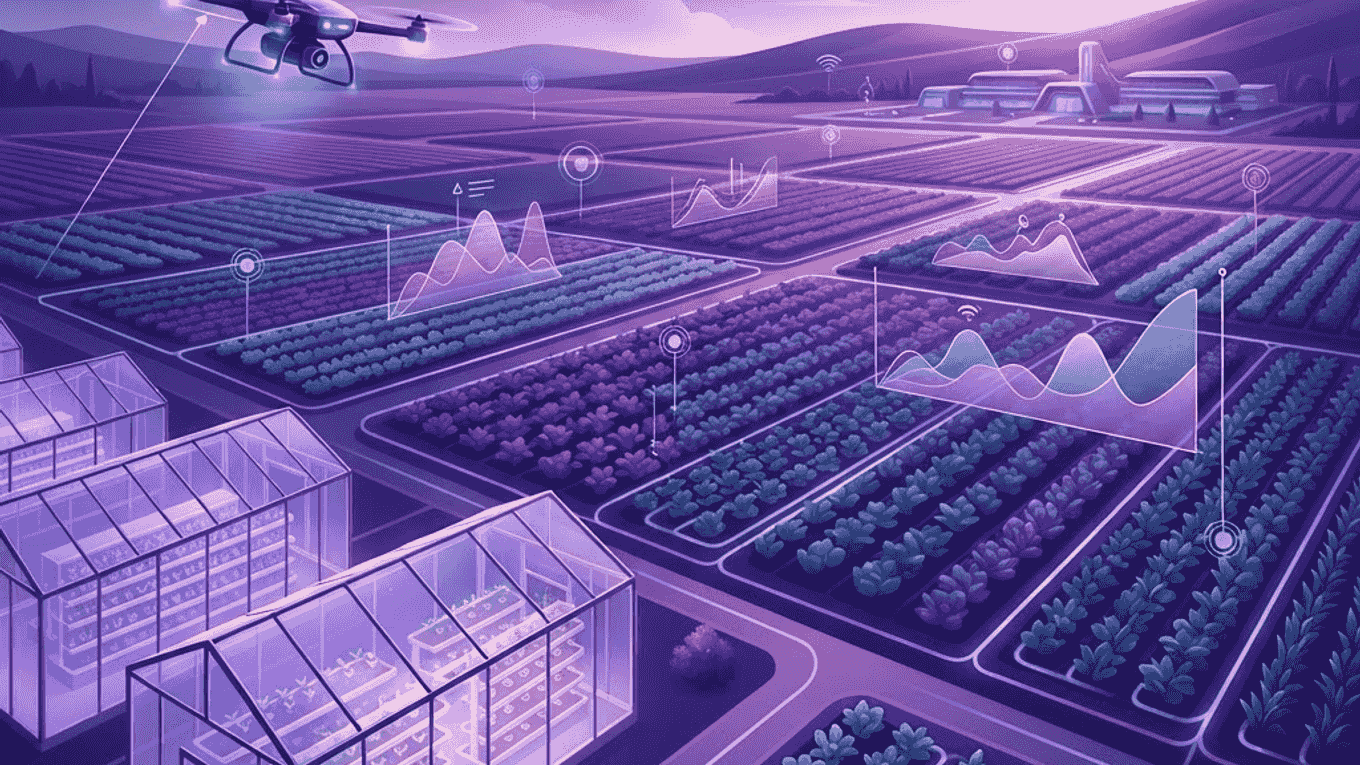
Agriculture in a Master-Planned City
Irvine's identity as a planned city is inseparable from agriculture. The land that became the modern city was once a vast working ranch, and citrus, row crops and grazing defined the landscape for generations. Although residential and commercial development now dominates, farming has not disappeared. It has adapted, concentrating into preserved agricultural parcels, specialty operations, research-driven ventures and controlled-environment production that fits an urban setting.
This evolution makes Irvine unusually interesting. Within a short drive you can find traditional field growing, protected cultivation under glass or plastic, educational farms, and technology companies developing sensors, irrigation controls and plant science applications for growers across California. Understanding the local farming sector therefore means looking beyond acreage alone.
What Modern Irvine-Area Farming Looks Like
Three pressures shape agriculture here: land value, water cost and labour availability. Land prices push growers toward high-value crops such as strawberries, specialty vegetables, herbs, cut flowers and nursery stock rather than low-margin commodities. Water scarcity drives investment in drip irrigation, soil moisture monitoring, recycled water use and precise scheduling. Labour constraints encourage mechanisation, protected growing environments and crops with manageable harvest windows.
The result is a highly professional sector where efficiency per acre matters more than total area, and where direct-to-consumer sales channels frequently outperform wholesale distribution.
The Top 10 Farming Companies and Operations Around Irvine
1. Great Park Agricultural Growers
Operating on preserved agricultural land within the city, this grower produces seasonal vegetables and berries for local markets and community programmes. Its significance goes beyond production: it demonstrates that commercially viable farming can coexist with dense urban development when land is deliberately protected.
2. Coastline Strawberry Farms
Strawberries remain one of the highest-value crops in Orange County, and Coastline Strawberry Farms focuses on the discipline this demands, including careful variety selection, plastic mulch management, integrated pest control and tightly coordinated harvest labour. Quality consistency drives its reputation with regional buyers.
3. Pacific Nursery & Greenhouse Company
Ornamental horticulture is a major agricultural category in Southern California. This company grows nursery stock, landscape plants and container material for developers, landscape contractors and garden retailers, benefiting from Irvine's continuous demand for landscaping across residential and commercial projects.
4. Meridian Hydroponic Produce
Meridian represents the controlled-environment side of local agriculture, producing leafy greens and herbs hydroponically with dramatically reduced water consumption and year-round harvest cycles. Proximity to customers means produce reaches retailers and restaurants within hours, improving shelf life and reducing transport emissions.
5. Orange County Citrus Heritage Groves
Citrus built the county's agricultural reputation, and heritage grove operations maintain that continuity. Beyond fruit production, these groves serve educational and cultural purposes, preserving cultivars and demonstrating traditional grove management to residents unfamiliar with the region's farming history.
6. Spectrum AgriTech Innovations
Not every farming company grows crops. Spectrum AgriTech Innovations develops irrigation control systems, soil sensors and data platforms that help growers reduce water use while protecting yield. Irvine's engineering talent pool makes the city a logical base for this kind of venture.
7. Harbor Organic Vegetable Farms
Certified organic production commands premium pricing and requires rigorous documentation, crop rotation and biological pest management. Harbor Organic Vegetable Farms supplies farmers markets, subscription boxes and independent grocers, serving customers who prioritise growing method as much as freshness.
8. Evergreen Community Farm Collective
Community-supported agriculture has grown steadily across Orange County. This collective coordinates small-scale growers, shared equipment and subscription distribution, giving new farmers a route to market that would be difficult to build independently and giving households direct access to seasonal produce.
9. Golden State Herb & Specialty Crops
Culinary herbs, microgreens and specialty leaves are ideal urban-adjacent crops: high value, quick cycles and strong restaurant demand. Golden State supplies chefs and specialty retailers who need consistent quality and same-day or next-day delivery.
10. Summit Agricultural Research Partners
Research operations conduct variety trials, soil health studies and pest management research relevant to Southern California conditions. Their findings influence practices well beyond Irvine, supporting growers throughout the state who face similar water and climate pressures.
Trends Defining Local Agriculture
Water efficiency remains the defining theme. Precision irrigation, recycled water, soil moisture telemetry and evapotranspiration-based scheduling are now standard practice rather than innovation, and further gains increasingly come from data rather than hardware alone.
Controlled-environment agriculture continues to expand because it addresses several constraints simultaneously: land scarcity, water consumption, pest pressure and seasonality. Greenhouses and hydroponic systems require significant capital but deliver predictable output near dense population centres.
Direct-to-consumer selling has also matured. Farmers markets, subscription boxes, farm stands and restaurant partnerships allow growers to capture more of the retail price and to explain their practices directly to customers, which supports premium positioning.
Finally, agricultural technology developed in Irvine's business parks increasingly serves growers statewide, blurring the line between farming and software. That intersection is arguably the city's most distinctive contribution to modern agriculture.
Final Thoughts
Farming in Irvine is smaller in acreage than it once was but considerably more sophisticated. Preserved farmland, high-value specialty crops, protected cultivation, community agriculture and agritech innovation together form an ecosystem that keeps agriculture relevant in one of California's most developed cities. For residents, supporting these operations means fresher produce and a living connection to the ranch land that made Irvine possible.