
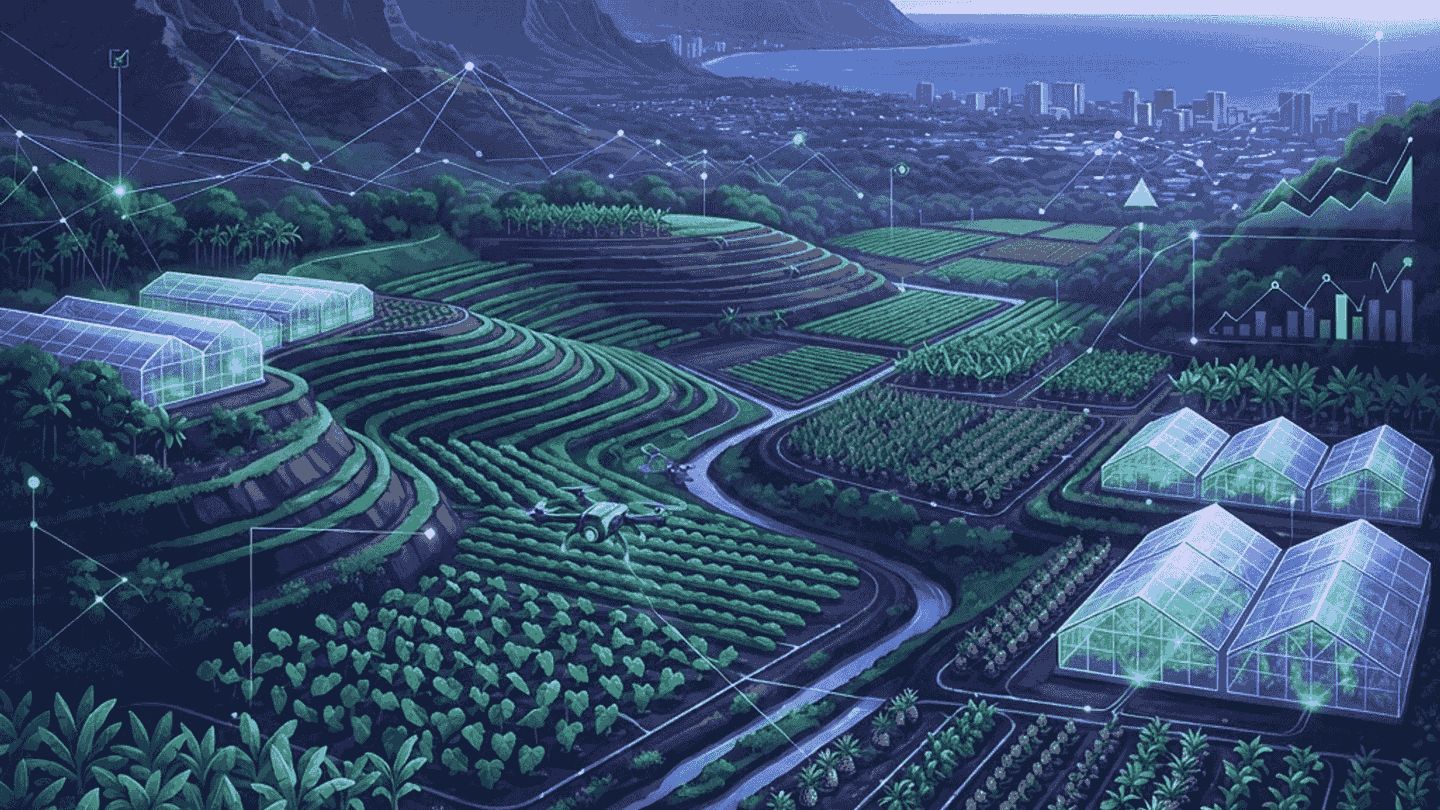
Agriculture on Oahu is a study in doing a great deal with very little land. The island supports a dense urban population alongside farmland that competes directly with residential and commercial development for space. Water is expensive, labor is scarce, and land values are among the highest in the nation for agricultural use. Yet Honolulu's farms supply an increasing share of the produce that appears in the city's restaurants, farmers markets, grocery stores, and school cafeterias.
The Food Security Context
Because Hawaii imports the large majority of its food, any disruption to shipping has immediate consequences. That vulnerability has made local agriculture a policy priority as well as a culinary preference. State initiatives to increase local food production, school procurement programs favoring island-grown produce, and consumer willingness to pay a premium for freshness have all strengthened the economics of farming near Honolulu.
Geography helps. Oahu's microclimates allow year-round production, with different elevations and rainfall patterns supporting distinct crops. The Waianae and North Shore areas, the Waimanalo plain, and the central plateau around Kunia and Wahiawa each host different agricultural profiles. Continuous growing seasons mean farms can supply consistently rather than in concentrated harvest windows, which is exactly what restaurant buyers need.
The 10 Best Farming Companies Serving Honolulu
1. Aloun Farms
One of Oahu's largest diversified vegetable operations, Aloun Farms grows watermelon, pumpkin, sweet corn, onions, and a broad range of vegetables on the island's leeward side. Its scale allows it to supply supermarkets and distributors consistently, which is uncommon among Hawaii farms. Community events tied to seasonal harvests have also made it a recognizable local brand.
2. Kahuku Farms
A multigenerational family operation on the North Shore, Kahuku Farms grows papaya, banana, apple banana, and tropical fruit alongside value-added products. Its agritourism component, including farm tours and a cafe, creates direct consumer revenue that supplements wholesale sales. The value-added product line demonstrates how small farms improve margins beyond raw commodity pricing.
3. Nalo Farms
Nalo Farms in Waimanalo is closely associated with specialty greens and micro greens supplied to Honolulu's finer restaurants. Chef relationships are the core of the business, with harvest timed to delivery so product reaches kitchens within hours. That freshness standard is difficult to match with imported greens and commands premium pricing accordingly.
4. Ho Farms
Ho Farms is known for tomatoes, cucumbers, eggplant, and specialty vegetables grown on Oahu's north side. Its branded packaging in local grocery stores helped normalize consumer recognition of island-grown produce. Consistent quality grading and reliable volume make it a dependable supplier for both retail and foodservice buyers.
5. Kunia Country Farms
Kunia Country Farms operates hydroponic and controlled-environment production focused on lettuces, greens, and herbs. Hydroponics dramatically reduces water consumption per unit of output, a meaningful advantage in a market where water cost is a major expense. Year-round consistency and clean product appeal strongly to foodservice accounts.
6. Twin Bridge Farms
Located in central Oahu, Twin Bridge Farms grows a diversified mix including corn, papaya, and vegetables, and has been part of the island's transition from plantation-scale monoculture to diversified agriculture. Crop rotation and diversification reduce both pest pressure and market risk. Direct sales channels supplement wholesale distribution.
7. MA O Organic Farms
Based in Waianae, MA O Organic Farms combines certified organic vegetable production with a youth leadership and education program. The farm supplies restaurants and markets while training young people in agriculture and business skills. Its dual mission has made it a widely respected model for community-based agriculture in Hawaii.
8. Sugarland Farms
Sugarland Farms in the Kunia area produces vegetables at commercial scale, supplying distributors and retailers across Oahu. Efficiency in planting, irrigation, and harvest logistics allows it to compete on price against imported produce, which is the central challenge for Hawaii growers. Reliable volume commitments make it a practical partner for larger buyers.
9. Mari's Gardens
Operating in Mililani, Mari's Gardens combines aquaponics, hydroponics, and nursery operations, producing greens, herbs, and fish alongside landscape plants. Aquaponics recirculates water and uses fish waste as nutrient input, reducing both water and fertilizer requirements. Its integrated model appeals to buyers seeking documented sustainable practices.
10. Oahu Taro Growers
Taro cultivation carries deep cultural significance in Hawaii, and growers producing kalo for poi, restaurants, and cultural use maintain both a traditional practice and a modern business. Wetland taro farming requires specific water management and considerable hand labor. Buyers supporting these operations sustain a food tradition that is central to Hawaiian identity.
Technology and Trends in Oahu Agriculture
Controlled environment agriculture is expanding fastest, since greenhouses and hydroponic systems raise yield per acre in a market where land is the binding constraint. Precision irrigation using soil moisture sensors and drip systems reduces water expense substantially. Drones and imaging tools support crop scouting across dispersed fields, letting small teams manage more area effectively.
On the market side, direct-to-consumer models including CSA subscriptions, farmers markets, and farm stands improve grower margins by removing intermediaries. Value-added processing, turning surplus fruit into jams, sauces, dried products, or frozen purees, reduces waste and smooths seasonal revenue. Regenerative practices such as cover cropping, composting, and reduced tillage are gaining adoption both for soil health and for the marketing credibility they provide.
How Buyers Can Source Locally
Restaurants and retailers should start by committing to a forecast. Farms plant months ahead, and a buyer who guarantees weekly volume enables planning that a spot-market purchaser cannot. Build menus with seasonal flexibility so a crop shortfall does not force a substitution to imported product. Work with produce distributors that maintain formal local grower programs when you need consolidated delivery rather than managing multiple farm relationships directly.
Above all, treat local sourcing as a partnership rather than a transaction. Oahu's farms operate on thin margins against high input costs, and buyers who pay promptly, accept reasonable size variation, and plan collaboratively get first access to the best product. That relationship is how Honolulu's food economy becomes more resilient, one purchase order at a time.