
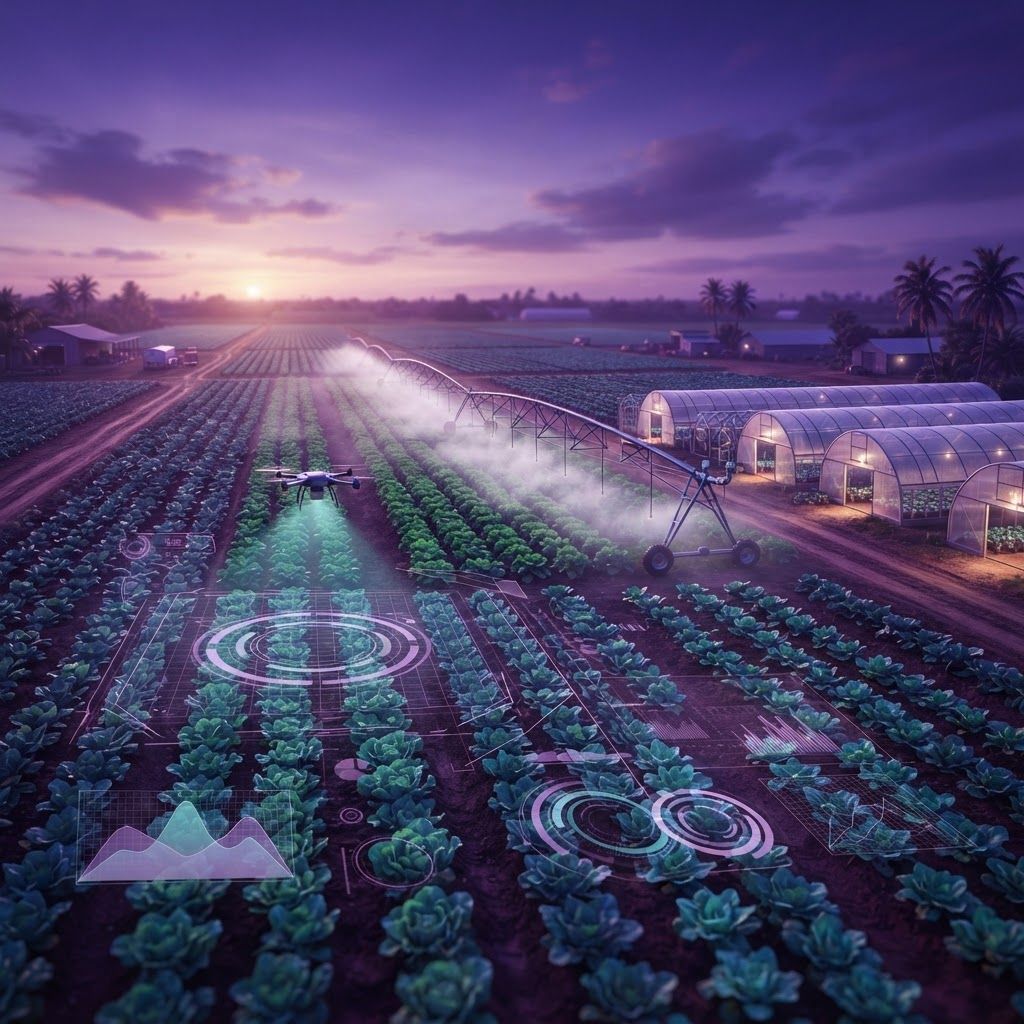
Farming in an Urban Setting
Hialeah is known for industry rather than fields, yet agriculture remains a real presence in and around the city. To the west and south lie some of Miami-Dade County's most productive agricultural land, and within Hialeah itself a growing number of greenhouse operations, nurseries, hydroponic facilities, and community farms make use of warehouse space and vacant lots. The result is an agricultural sector defined less by acreage than by intensity and innovation.
South Florida's subtropical climate allows year-round production and supports crops grown almost nowhere else in the continental United States, including tropical fruits and ornamental plants. That advantage is balanced against real pressures: land costs, hurricane risk, water management rules, and labor availability. The companies that succeed here are those that farm efficiently in small footprints and sell into markets that value freshness.
What Makes a Farming Operation Stand Out
Consistency is the first test. Restaurants, grocers, and distributors need predictable volume and quality rather than occasional exceptional harvests. Food safety documentation is the second, as buyers increasingly require certification and traceability. Beyond that, the strongest operations demonstrate water stewardship, integrated pest management, and a clear plan for storm resilience.
Top 10 Best Farming Companies in Hialeah
1. Hialeah Greenhouse Growers
A controlled-environment operation producing leafy greens, herbs, and vine crops for local restaurants and grocers. Climate control and drip fertigation deliver year-round consistency, and short delivery distances mean produce reaches kitchens within hours of harvest rather than days.
2. Palmetto Tropical Fruit Farms
Cultivating mangoes, avocados, guava, and other tropical varieties suited to the region's climate. The company sells through wholesale channels and seasonal direct programs, and its varietal selection reflects decades of local knowledge about which cultivars withstand South Florida weather.
3. Sunshine Hydroponic Produce Company
Operating soilless growing systems inside converted industrial space, this producer achieves high yields per square foot with dramatically reduced water consumption. Lettuce, microgreens, and culinary herbs form the core catalog, supplying chefs who value predictable specification and cleanliness.
4. Okeechobee Ornamental Nurseries
Ornamental horticulture is among the largest agricultural sectors in Miami-Dade, and this nursery represents it well. Palms, tropical foliage, flowering shrubs, and landscape material are grown for landscapers, garden centers, and commercial property developers throughout the region.
5. Miami-Dade Organic Vegetable Growers
Certified organic production of seasonal vegetables sold through farmers markets, community subscription boxes, and specialty grocers. Cover cropping and composting programs build soil health, and the operation has become a reference point for growers transitioning away from conventional inputs.
6. Flagler Urban Farming Collective
A network of small urban plots and rooftop gardens producing vegetables and herbs while running education programs for residents and schools. Its social impact is as significant as its harvest, improving fresh food access in neighborhoods with limited grocery options.
7. Caribe Herb and Specialty Crop Farms
Growing culinary and cultural crops that serve the region's diverse communities, including tropical root vegetables, specialty peppers, and herbs used in Caribbean and Latin American cooking. Demand from local markets and restaurants remains consistently strong.
8. Tri-County Aquaponics Systems
Combining fish production with vegetable growing in a closed recirculating system, this operation demonstrates how nutrient cycling can reduce inputs while producing two revenue streams. It also consults for other growers building similar systems.
9. West Hialeah Poultry and Egg Producers
Supplying fresh eggs and poultry products to local markets and restaurants with an emphasis on short supply chains and humane husbandry standards. Proximity to buyers reduces transport time and preserves freshness that distant producers cannot match.
10. Amigo Family Farms
A multigenerational operation growing mixed vegetables and tropical fruit, selling through wholesale relationships and a roadside outlet. Its longevity reflects careful land management and deep relationships with buyers built over decades.
Innovations Changing South Florida Agriculture
Controlled environment agriculture is the most visible shift. Greenhouses and indoor farms sidestep weather volatility, use a fraction of the water of field production, and locate near consumers, which suits Hialeah's industrial building stock perfectly. Costs remain a challenge, particularly energy, but improving equipment efficiency continues to narrow the gap.
Precision irrigation and soil sensing are also spreading among field growers, allowing water application matched to plant need rather than schedule. Given Florida's water management regulations and periodic drought stress, that efficiency has both environmental and economic value. Finally, direct-to-consumer and direct-to-restaurant sales models let small growers capture more of the retail dollar than commodity channels allow.
Working With Local Growers
Buyers should communicate volume needs well in advance, since planting decisions are made months before harvest. Flexibility on variety and size grading often unlocks better pricing and reduces farm waste. Restaurants that build menus around seasonal availability rather than fixed specifications typically develop the strongest grower relationships.
For residents, farmers markets and subscription programs offer the most direct access, and many of these operations welcome visitors during harvest seasons. Supporting local agriculture in a rapidly urbanizing county helps preserve farmland that, once converted to development, does not return.