
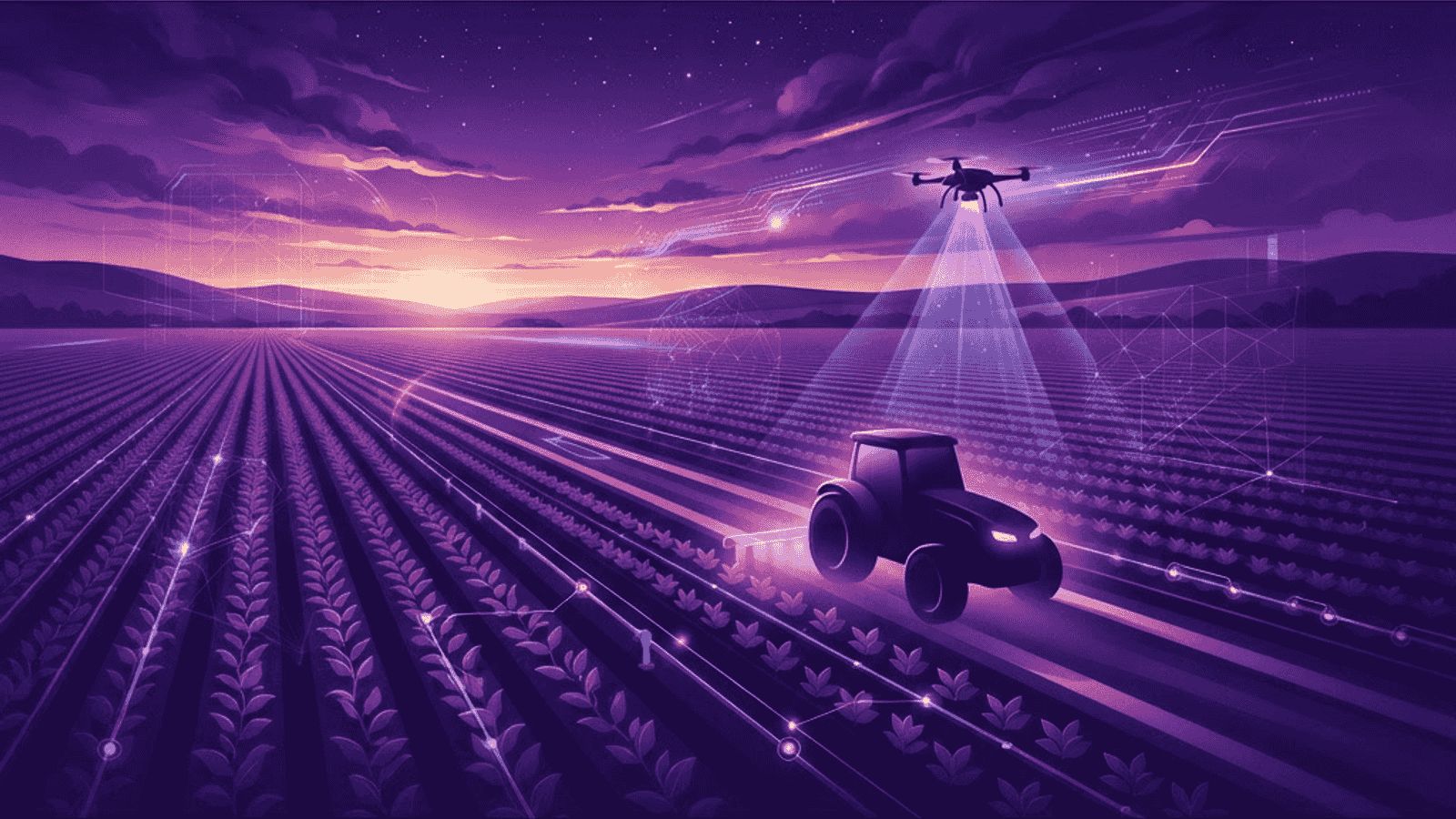
Farming in a Desert City
Henderson averages roughly four inches of rainfall a year, summer temperatures well above one hundred degrees, and alkaline soils with limited organic matter. On paper it is one of the least promising agricultural environments in the United States. In practice, a serious and growing farming sector operates in and around the city, and it does so by replacing land and rainfall with technology, controlled environments, and extremely efficient water use.
The commercial logic is compelling. Henderson sits beside a metropolitan area with thousands of restaurants, resort kitchens, and grocery outlets that consume enormous quantities of fresh produce, most of it currently trucked from California and Arizona. Every mile of that journey costs money, shortens shelf life, and reduces flavour. Local growers who can supply the same product harvested that morning have a structural advantage that no amount of scale in another state can offset.
The Farming Models That Work Here
Controlled-environment greenhouse growers
Climate-controlled greenhouses using evaporative cooling, shade management, and hydroponic nutrient delivery produce tomatoes, cucumbers, peppers, and herbs year-round. Water use per pound of produce can be a fraction of conventional field farming because irrigation water is recirculated rather than lost to soil and evaporation.
Vertical and indoor farms
Fully enclosed vertical farms stack growing trays under LED lighting with computer-managed climate. They are energy-intensive but produce leafy greens, microgreens, and herbs with no pesticides, no seasonality, and harvest-to-delivery times measured in hours. Southern Nevada's abundant solar generation potential improves the economics considerably.
Hydroponic and aquaponic operations
Hydroponic systems grow plants in nutrient solution without soil, while aquaponic systems pair fish tanks with plant beds so that fish waste fertilises the crop and the plants clean the water. Both approaches suit a region where water is the binding constraint.
Desert-adapted field agriculture
Some operations still farm outdoors using drip irrigation, drought-tolerant cultivars, mulching, and shade cloth. Crops such as dates, pomegranates, figs, olives, jujube, and certain melons perform genuinely well in desert heat when water is delivered precisely to the root zone.
Livestock, poultry, and eggs
Small and mid-sized ranching operations in the surrounding valleys supply beef, lamb, goat, poultry, and pastured eggs to local butchers and restaurants, often marketed on welfare standards and traceability rather than price.
Apiculture and pollination services
Beekeeping operations produce desert wildflower and mesquite honey while providing pollination services to orchards and greenhouse crops. Honey from arid regions carries distinctive floral characteristics that command premium pricing.
Nursery and ornamental production
Given the region's construction pace, nurseries growing desert-adapted landscape plants, palms, cacti, succulents, and drought-tolerant turf alternatives represent one of the largest agricultural segments by revenue.
Urban and community farming
Community gardens, school growing programmes, and small urban plots contribute food, education, and neighbourhood cohesion, and they frequently act as incubators for commercial growers.
Specialty and value-added producers
Mushroom growers, sprouting operations, microgreen specialists, and producers of value-added goods such as sauces, dried fruit, and cold-pressed oils capture higher margins from smaller footprints.
Agricultural technology providers
Finally, a cluster of companies supplying sensors, irrigation controls, farm-management software, and consulting services has grown alongside the farms themselves, exporting desert-farming expertise to other arid regions.
Water: The Defining Constraint
Any honest discussion of Henderson agriculture begins with the Colorado River. Southern Nevada holds a modest allocation and has responded with some of the most aggressive conservation policy in the country, including extensive water recycling and restrictions on ornamental turf. For farmers, this means water efficiency is not an environmental gesture but the core economic variable. Drip and subsurface irrigation, soil-moisture sensing, deficit-irrigation scheduling, recirculating hydroponics, and condensate recovery in greenhouses are all standard practice rather than innovations. The most successful operations measure yield per gallon as carefully as yield per acre.
Trends to Watch
Controlled-environment agriculture continues to attract investment, and falling LED and solar costs steadily improve its economics. Direct-to-consumer and direct-to-chef sales channels keep expanding, letting small growers bypass distributors entirely through subscription boxes, farmers markets, and restaurant relationships. Agrivoltaics, the practice of growing crops beneath elevated solar arrays, is being trialled across the Southwest and suits the region unusually well because partial shade reduces both heat stress and irrigation demand. Meanwhile, automation and data tools are reaching a scale where a modest family operation can manage climate, nutrition, and harvest planning with the sophistication once reserved for industrial farms.
How to Evaluate a Local Farming Partner
Restaurants, grocers, and distributors assessing a Henderson grower should look at:
- Food-safety certification and documented handling procedures.
- Supply consistency across the extreme summer months, not just spring and autumn.
- Water and energy stewardship, which indicates long-term viability.
- Harvest-to-delivery time, the single biggest driver of shelf life and flavour.
- Varietal choice, since growers selecting for taste rather than shipping durability produce noticeably better results.
- Transparency, including willingness to host a site visit.
Final Thoughts
Farming near Henderson is a genuine test of engineering discipline, and the operations that succeed here tend to be technically excellent by necessity. For buyers, that produces unusually fresh, traceable, high-quality food grown minutes from where it is eaten. For the region, it builds a measure of food security that a long-distance supply chain cannot provide. Desert agriculture will never be about acreage in Henderson, but on efficiency and quality it competes with anywhere.