
Agriculture in Guilford County
Greensboro is best known as a manufacturing and logistics city, yet agriculture remains a working part of Guilford County's landscape and economy. Beyond the city limits, farmland supports row crops, hay, poultry, cattle, produce, nursery stock, and greenhouse operations. Within the city, urban farms and community growing projects have expanded significantly, driven by interest in local food and by efforts to improve food access in underserved neighborhoods.
The Piedmont's growing conditions are generally favorable. The region enjoys a long season, adequate rainfall in most years, and clay loam soils that reward good management. Challenges exist too: summer heat and humidity increase disease pressure, periodic drought stresses unirrigated fields, and development pressure continually converts farmland to other uses. Farms that succeed here tend to be diversified, well capitalized in equipment or irrigation, and closely connected to their markets.
What Distinguishes a Strong Farming Operation
Soil management is the foundation. Operations that test regularly, use cover crops, minimize tillage where practical, and manage nutrients precisely build resilience against both drought and heavy rain. These practices also reduce input costs over time, which matters when commodity margins are thin.
Market channel strategy is the second differentiator. A farm selling into commodity markets competes almost entirely on cost and yield. A farm selling through farmers markets, subscription boxes, restaurant accounts, or on farm retail captures more value per unit but must invest in marketing, handling, and customer relationships. Many of the strongest operations blend both.
Labor and mechanization decisions matter enormously, particularly for produce growers. Water management, food safety certification, and record keeping complete the picture, especially for farms selling to institutional or wholesale buyers who require documentation.
The Top 10 Farming Companies Around Greensboro
1. Gate City Family Farms. A diversified operation growing row crops alongside seasonal vegetables, with direct sales through farmers markets and wholesale accounts. Gate City Family Farms is recognized for careful crop rotation and consistent quality across a long harvest window.
2. Piedmont Produce Growers. A vegetable specialist producing tomatoes, peppers, squash, greens, and sweet corn for regional distribution. Piedmont Produce Growers invests in drip irrigation and plasticulture, which stabilizes yields through variable summer weather.
3. Guilford Grain and Hay Company. Focused on corn, soybeans, small grains, and quality hay production for livestock customers. Guilford Grain and Hay uses precision application and yield mapping to manage inputs field by field rather than uniformly.
4. Battleground Poultry Farms. A poultry operation raising broilers and layers with attention to biosecurity, housing ventilation, and welfare standards. Poultry remains one of North Carolina's largest agricultural sectors, and Battleground reflects the professionalism that demands.
5. Carolina Cattle and Pasture Company. A cow calf and grass finished beef operation practicing rotational grazing to improve pasture health and reduce supplemental feed needs. Carolina Cattle sells both into regional markets and directly to consumers.
6. Summit Greenhouse Growers. A controlled environment operation producing greenhouse tomatoes, herbs, leafy greens, and transplants year round. Summit's protected growing extends the local season well beyond field production windows.
7. Revolution Urban Farms. An intensive urban growing enterprise operating on repurposed lots within Greensboro, producing salad greens, microgreens, and vegetables for restaurants and neighborhood markets. Revolution Urban Farms also runs training programs that develop new growers.
8. Bessemer Organic Farm. A certified organic operation growing vegetables and small fruits with composting, cover cropping, and biological pest management. Bessemer serves subscription customers and natural food retailers who require certification documentation.
9. Cornwallis Orchards and Berry Farm. Producing apples, peaches, blackberries, and strawberries with pick your own and value added products such as ciders and preserves. Cornwallis illustrates how agritourism supplements farm income while building community connection.
10. Triad Nursery and Sod Farm. Growing ornamental trees, shrubs, container stock, and turf sod for landscapers, builders, and garden centers. Nursery production is a major North Carolina industry, and Triad Nursery supplies much of the region's landscape trade.
Trends in Piedmont Agriculture
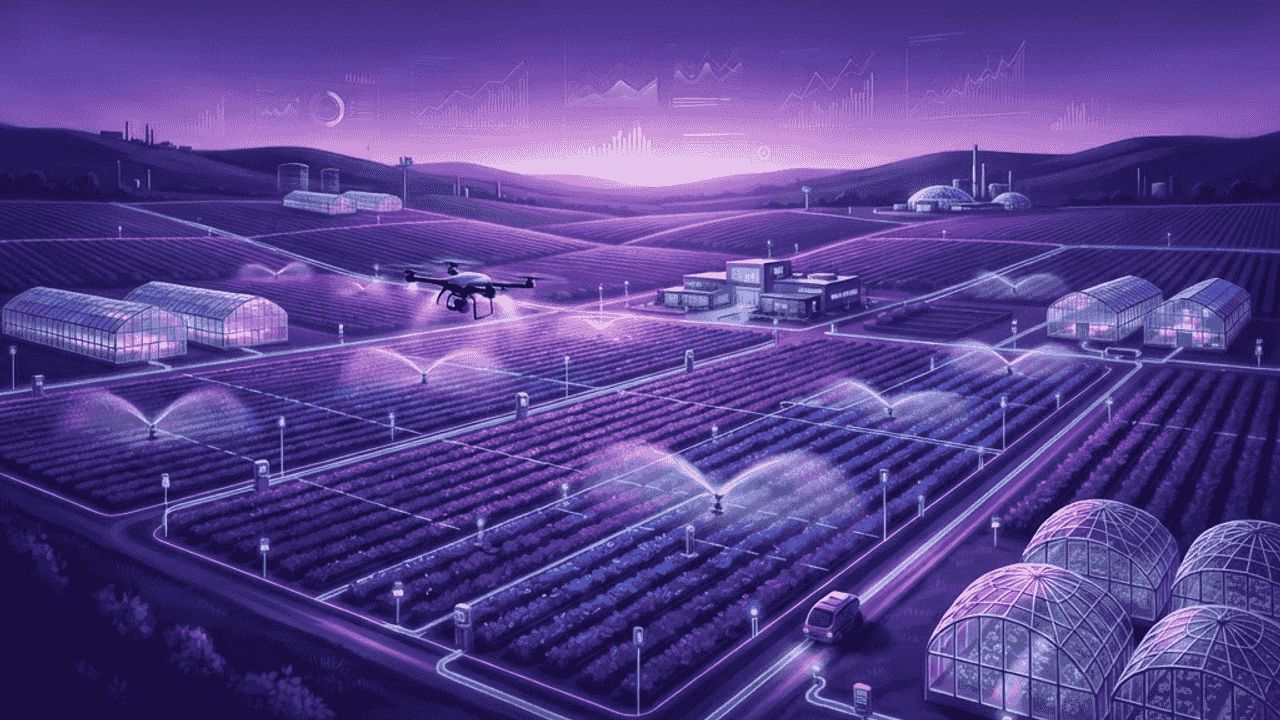
Precision agriculture has become practical even for mid sized farms. Soil sampling by zone, variable rate fertilizer application, guidance systems, and drone based crop scouting reduce input waste and improve yield consistency. The economics now favor adoption rather than merely justifying it.
Controlled environment agriculture continues expanding. Greenhouses and high tunnels extend seasons, protect against weather extremes, and allow growers to hit premium market windows. For growers serving restaurants that want year round local supply, protected growing is often the deciding investment.
Direct marketing has matured. Farmers markets, community supported agriculture subscriptions, online ordering, and farm to restaurant relationships now represent a substantial share of income for smaller operations. Aggregation services have made it easier for these farms to reach wholesale buyers without individually managing logistics.
Land pressure remains the defining structural challenge. As Greensboro grows, farmland near the city becomes more valuable for development, pushing production outward and raising interest in conservation easements and farmland preservation programs.
Working With Local Farms
Buyers should plan around seasonality rather than fighting it, and commit to volumes early so growers can plant accordingly. Understanding that a summer storm can eliminate a planting builds the flexibility these relationships require.
For institutional buyers, request food safety certification early and clarify delivery and packaging expectations. For consumers, buying consistently rather than occasionally is what actually sustains local farms. And for aspiring growers, the region's extension services, cooperative networks, and urban farm training programs offer genuinely useful entry points.
Final Thoughts
Farming around Greensboro spans diversified row crop operations, produce specialists, poultry, cattle, greenhouse production, urban agriculture, certified organic growing, orchards, and nursery stock. Together these operations keep agriculture a living part of Guilford County while supplying an increasingly local minded regional market.