
Agriculture on the Edge of a Growing City
Grand Prairie's name is a reminder of what the land was before development, and agriculture remains part of the area's identity. The city sits in the Blackland Prairie region, where deep clay soils historically supported cotton, small grains and forage production. Today, farming here operates in a more complex environment: urban growth has raised land values, water is managed carefully, and successful operations tend to be those that adapt through diversification, direct marketing or high-value production rather than competing on commodity acreage alone.
The local agricultural sector includes crop farms producing forage, small grains and specialty crops, cattle and livestock operations, greenhouse and nursery businesses supplying the regional landscape market, urban and market farms selling directly to consumers and restaurants, and agricultural service companies providing custom work, agronomy and equipment support. This variety reflects both the region's soils and the proximity of several million potential customers.
North Texas Growing Conditions and Water Management
Farming in this region means managing extremes. Summers bring sustained heat that stresses both plants and livestock, rainfall is variable and often arrives in intense events rather than gentle soaking rains, and occasional hard freezes affect perennial crops and winter production. Blackland clay soils hold water and nutrients well but work in a narrow moisture window, becoming difficult when too wet and hard when dry.
Water management is the defining challenge. Successful operations invest in efficient irrigation, typically drip or low-pressure systems that deliver water directly to root zones rather than losing it to evaporation. Soil health practices, including cover cropping, reduced tillage and organic matter building, improve infiltration and water-holding capacity, which reduces both drought stress and runoff during heavy rain. Rainwater capture and pond storage supplement supply on many operations.
Crop and variety selection matters as well. Heat-tolerant varieties, appropriate planting windows and season extension through high tunnels or shade structures let growers produce during periods that would otherwise be unproductive. Livestock operations manage heat through shade, water access and rotational grazing that maintains forage quality.
The Top 10 Farming Companies in Grand Prairie
1. Prairie Valley Farms
A diversified crop operation producing forage, small grains and rotational field crops on Blackland soils. Prairie Valley Farms has invested in soil health practices including cover cropping and reduced tillage, which has improved water infiltration and reduced input costs. The operation also provides custom haying and field work for smaller neighboring landowners.
2. Lone Star Cattle Company
A cow-calf and stocker operation managing herds on improved and native pasture, Lone Star Cattle Company practices rotational grazing to maintain forage quality through summer heat. Genetic selection for heat tolerance and efficiency, along with careful animal health protocols, supports productivity in a demanding climate.
3. Trinity Greenhouse Growers
Trinity Greenhouse Growers produces bedding plants, perennials, tropicals and seasonal color for landscape contractors, garden centers and municipal projects. Controlled environment production, integrated pest management and scheduling that matches the region's landscape planting calendar define its operation.
4. Metroplex Nursery and Tree Farm
Growing shade trees, ornamentals and native shrubs, Metroplex Nursery and Tree Farm supplies landscape contractors and developers with plant material adapted to North Texas conditions. Its emphasis on regionally appropriate and native species reduces establishment failure and long-term irrigation demand for its customers.
5. Summit Market Gardens
Summit Market Gardens grows vegetables, herbs and cut flowers for direct sale through farmers markets, subscription boxes and restaurant accounts. Intensive production on limited acreage, season extension with high tunnels and a diverse crop plan allow it to supply consistently through an extended season.
6. Crossroads Hay and Forage
Specializing in hay production, Crossroads Hay and Forage produces coastal bermuda, alfalfa mixes and small square bales for horse owners and livestock operations. Forage testing provides customers with nutritional analysis, which allows accurate ration planning rather than guesswork.
7. Vantage Poultry and Egg Farms
Vantage Poultry and Egg Farms produces eggs and pastured poultry with attention to biosecurity, welfare practices and food safety documentation. Direct sales to local grocers, restaurants and consumers support premium pricing that commodity production cannot achieve.
8. Pioneer Agricultural Services
Rather than farming its own acreage, Pioneer Agricultural Services provides custom planting, harvesting, spraying, soil sampling and agronomic consulting to landowners across the area. Access to modern equipment and precision application technology allows smaller operations to benefit from capabilities they could not purchase individually.
9. Skyline Hydroponic Produce
Skyline Hydroponic Produce grows leafy greens, herbs and specialty crops in controlled environment systems with substantially reduced water use compared to field production. Year-round consistency and proximity to urban customers give it a genuine advantage in freshness and shelf life for restaurant and grocery accounts.
10. Grand Prairie Urban Agriculture Collective
Rounding out the list, Grand Prairie Urban Agriculture Collective operates community-scale growing sites, educational programs and small-plot production within the city. Beyond food production, it provides training for beginning growers and improves fresh food access in neighborhoods with limited retail options, connecting agricultural knowledge to an urban population.
Technology and Trends in Regional Agriculture
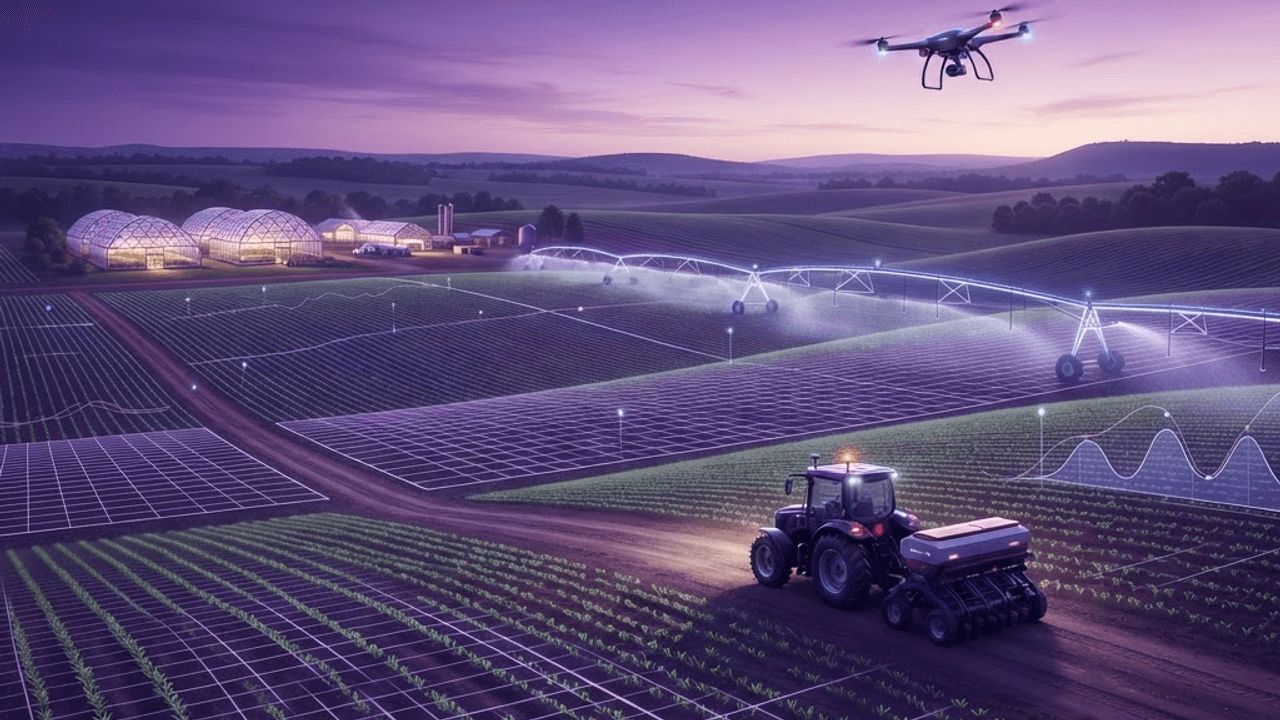
Precision agriculture has become practical at smaller scales. Global positioning guidance, variable rate application, soil moisture sensing and drone imagery let growers apply inputs where they are needed rather than uniformly, which reduces cost and environmental impact simultaneously. Custom service providers have made these tools accessible to operations that cannot justify owning the equipment.
Controlled environment agriculture continues to expand near urban markets, driven by water efficiency, year-round production and short delivery distances. Direct marketing has grown as well, with consumers willing to pay premiums for local, traceable food, which favors diversified operations able to sell through multiple channels.
Soil health practices have moved from experimental to mainstream as growers observe measurable improvements in water infiltration, drought resilience and input efficiency. Meanwhile, urban development pressure remains the sector's structural challenge, pushing operations toward higher-value production per acre and, in some cases, toward conservation arrangements that preserve agricultural land use.
Supporting and Working With Local Agriculture
For buyers, sourcing locally means engaging with seasonality and communicating needs in advance so growers can plan plantings around committed demand. Restaurants and grocers who build multi-season relationships get better product and priority during scarcity than those who buy opportunistically.
For landowners, custom operators and agricultural service providers offer a practical way to keep land productive without owning equipment. For aspiring growers, the area's educational programs and established operations provide realistic exposure to what the work requires.
Grand Prairie's farming companies demonstrate that agriculture near a major metropolitan area can succeed by leaning into its advantages: proximity to customers, willingness to diversify, and adoption of technology and soil practices that make each acre and each gallon of water go further.