
Agriculture in a City Named for Its Gardens
Garden Grove earned its name honestly. Before postwar development transformed Orange County, the area was covered in orange groves, strawberry fields, and chili pepper farms, and agriculture was the dominant local industry. Urbanization consumed most of that acreage, but farming never disappeared entirely. Instead, it adapted, shifting toward high-value, space-efficient production that makes sense on expensive urban land.
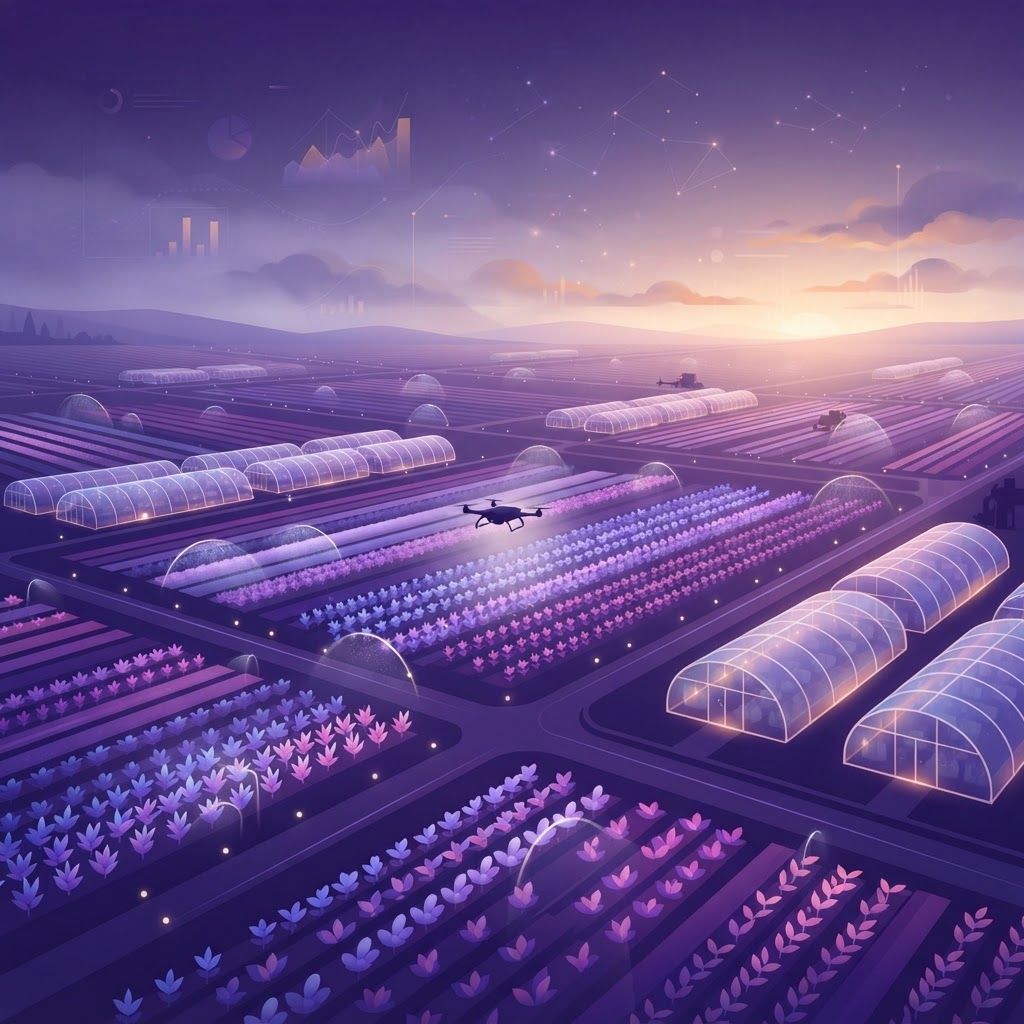
Today the city's agricultural sector looks like nurseries and greenhouse operations, controlled-environment growers, urban and community farms, specialty crop producers on nearby land, and agricultural service companies that support growers throughout the region. Combined with a strong farmers market culture and growing consumer interest in local food, this constitutes a real and economically meaningful industry.
What Makes Urban Agriculture Work
Farming in a built-up city requires a different economic model than conventional row-crop agriculture. Land costs make low-margin commodity crops impossible, so successful operations focus on yield per square foot and on direct-to-consumer or direct-to-restaurant channels that capture more of the retail value. Water efficiency is critical given California's recurring drought conditions, which has driven adoption of drip irrigation, hydroponics, and recirculating systems. Labor is expensive, pushing growers toward crops and systems that can be managed efficiently.
The Top 10 Farming Companies in Garden Grove
1. Grove Valley Growers
Grove Valley Growers is among the most established agricultural operations associated with the city, producing seasonal vegetables and herbs for regional distribution. The company has invested heavily in drip irrigation and soil health practices including cover cropping and reduced tillage, which have measurably improved water retention. It supplies restaurants, grocers, and farmers markets throughout Orange County, and its harvest-to-delivery window is short enough to preserve genuine freshness.
2. Harbor West Hydroponic Farms
Operating controlled-environment greenhouses, Harbor West Hydroponic Farms produces leafy greens, herbs, and microgreens year-round using recirculating nutrient systems that consume a fraction of the water conventional field production requires. Growing indoors also eliminates most pesticide use. The company's consistent quality and predictable supply have made it a preferred source for chefs who cannot tolerate seasonal gaps.
3. Trask Avenue Nursery and Plant Production
Ornamental horticulture is the largest agricultural category in urban Orange County, and this grower is a significant producer of landscape plants, shade trees, shrubs, and container stock for landscapers, municipalities, and garden retailers. Its focus on drought-tolerant and California-native species aligns with regional water policy and with homeowners converting lawns to lower-water landscapes.
4. Orangewood Citrus Heritage Farm
This operation preserves the agricultural history that gave the region its identity, cultivating citrus varieties including classic navel and Valencia oranges alongside less common cultivars. Beyond fruit production, the farm runs educational programming that connects schools and families to the area's agricultural past. Its fruit reaches consumers through farm stands and local markets rather than long-distance distribution.
5. Pacific Grove Urban Agriculture Collective
This collective manages multiple small parcels across the city, converting underused lots into productive growing space. It produces vegetables for local distribution while functioning as a training organization, teaching growing skills to residents interested in food production. Its food access work, supplying produce to community organizations, gives it social as well as agricultural significance.
6. Lampson Specialty Herb and Asian Vegetable Farm
Reflecting Garden Grove's demographics, this farm specializes in herbs and vegetables central to Vietnamese, Korean, Chinese, and Southeast Asian cuisines, including varieties that are difficult to source fresh through conventional supply chains. Restaurants and specialty grocers value both the authenticity of the varieties and the short time between harvest and delivery, which matters enormously for delicate herbs.
7. Brookhurst Vertical Farming Systems
Brookhurst Vertical Farming Systems operates stacked indoor growing environments under controlled lighting, achieving very high output per square foot of building footprint. The model suits urban settings where horizontal land is unavailable but warehouse space exists. The company also consults on system design for other growers, sharing its accumulated knowledge of lighting spectra, nutrient management, and climate control.
8. Stanford Avenue Organic Produce Company
This certified organic grower produces vegetables and small fruits without synthetic pesticides or fertilizers, relying on composting, beneficial insects, and crop rotation. Organic certification requires rigorous documentation, and the company maintains full traceability from field to customer. It serves a community-supported agriculture subscription base alongside wholesale accounts with natural grocers.
9. Westgate Agricultural Services Group
Not every agricultural business grows crops. Westgate Agricultural Services Group provides soil testing, irrigation design, integrated pest management consulting, and compliance support to growers across the region. As water regulations and pesticide rules have become more complex, this advisory role has grown in importance, particularly for smaller operations without in-house agronomists.
10. Garden Grove Community Farm and Education Center
Rounding out the list, this organization combines working production with public education, operating demonstration plots, school programs, and workshops on home food growing and composting. Its produce supports community food programs. The center has become a practical entry point for residents who want to understand where food comes from, and it functions as an incubator for people considering agricultural careers.
Trends in Urban and Regional Agriculture
Water remains the defining constraint. Every successful operation in the region has invested in efficiency, and technologies that once seemed exotic, such as soil moisture sensing and recirculating hydroponics, are now standard practice. Controlled-environment agriculture continues to expand as lighting efficiency improves and energy costs are offset by yield and consistency. Consumer demand for local, traceable food has strengthened direct-to-consumer channels, allowing small growers to capture margins that would be impossible through conventional wholesale distribution. Finally, agricultural technology, from drone imaging to automated climate control, is making small-scale operations viable in ways they were not a decade ago.
Final Thoughts
Farming in Garden Grove today bears little resemblance to the sprawling groves that gave the city its name, but the agricultural thread has never been cut. It survives in greenhouses, nurseries, vertical farms, specialty plots, and community gardens, sustained by growers who have adapted to urban economics with real ingenuity. For residents, these operations offer fresher food and a tangible connection to the region's history. For the broader industry, they demonstrate that agriculture and urban density can coexist productively.