
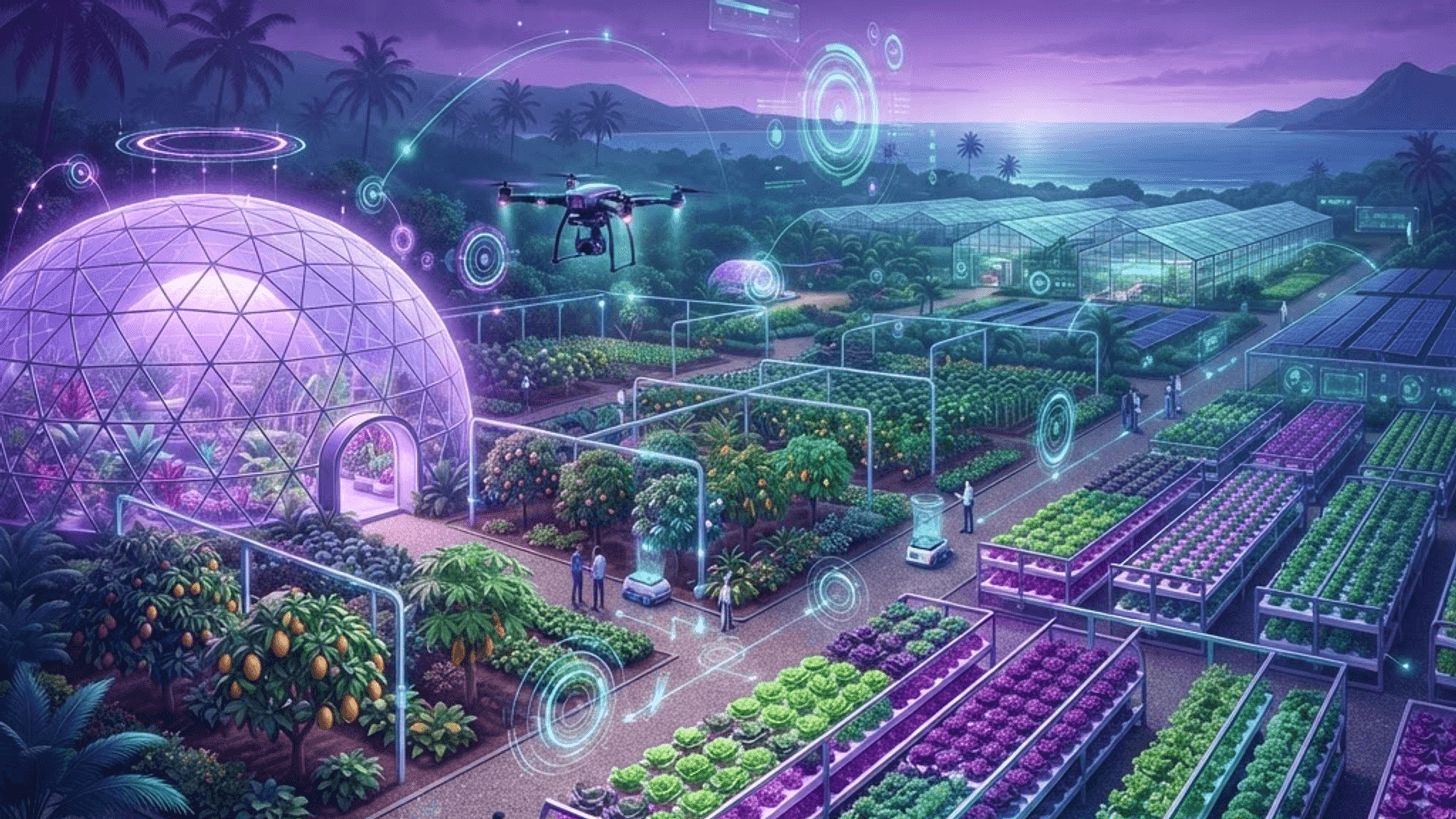
Agriculture in an Urban Subtropical Setting
Farming around Fort Lauderdale is shaped by conditions found almost nowhere else in the continental United States. The growing season runs year-round, but the calendar inverts familiar patterns, with the cooler dry season from roughly November through April serving as the peak production window and the hot, wet summer presenting disease and flooding pressure. Soils vary dramatically, from sandy coastal ground to the organic muck soils near the Everglades Agricultural Area.
Land economics add another layer. Broward County's development pressure has made large-scale field agriculture difficult inside urban boundaries, pushing traditional operations westward while encouraging high-value, space-efficient models closer to the city. Nurseries, tropical fruit groves, hydroponic greenhouses, and urban farms now define much of the local landscape.
The Pressures Local Growers Manage
Water is the defining issue. South Florida receives abundant rainfall but distributes it unevenly, so growers need both irrigation infrastructure and drainage capacity, often on the same parcel. Saltwater intrusion in coastal aquifers complicates matters further. Pest and disease pressure is relentless in a climate with no hard freeze to interrupt life cycles, which has pushed many operations toward integrated pest management and protected cultivation. Hurricane risk requires structural investment and insurance planning that growers in other regions rarely face.
The Top 10 Farming Companies in Fort Lauderdale
1. Everglades Edge Tropical Fruit Growers
This operation cultivates mangoes, avocados, lychees, longans, and star fruit on groves west of the urban core. It supplies farmers markets, specialty grocers, and restaurants that prize varieties rarely found in national distribution. Careful variety selection extends its harvest window across much of the year.
2. Broward Hydroponic Farms
Operating climate-controlled greenhouses, Broward Hydroponic Farms produces lettuces, herbs, and microgreens with dramatically lower water consumption than field growing. Proximity to Fort Lauderdale restaurants allows same-day harvest delivery, which gives chefs a shelf-life advantage no distant supplier can match.
3. Sunrise Nursery and Ornamental Growers
Landscape and ornamental horticulture is among the largest agricultural segments in South Florida. This grower produces palms, flowering shrubs, ground covers, and container plants for landscapers, municipalities, and garden centers, with an emphasis on species suited to salt exposure and drought periods.
4. Atlantic Coast Organic Vegetable Farm
Certified organic production in a high-pressure pest environment requires real skill. This farm grows seasonal vegetables using cover cropping, beneficial insect habitat, and rotation strategies adapted to subtropical conditions. It runs a community supported agriculture program alongside wholesale supply to natural grocers.
5. Cypress Creek Urban Agriculture Collective
Working across repurposed lots and rooftop spaces, this collective demonstrates how productive small urban parcels can be. Beyond producing vegetables and herbs for local buyers, it operates education programs that have introduced many residents to food production for the first time.
6. Port Everglades Aquaponics
Combining fish production with plant cultivation in a recirculating system, this operation produces tilapia alongside leafy greens while recycling nutrients between the two. The closed-loop model appeals strongly to sustainability-minded buyers and uses a fraction of the water conventional systems require.
7. Coral Springs Herb and Specialty Crop Farm
Culinary herbs, edible flowers, and specialty crops command strong prices and suit small acreage well. This farm supplies restaurants and specialty markets with basil, cilantro, lemongrass, Thai chilies, and other ingredients reflecting South Florida's diverse culinary traditions.
8. Tri-County Citrus and Grove Management
Citrus faces significant disease challenges statewide, and this company provides grove management services including nutrition programs, pest monitoring, and replanting with tolerant rootstocks. Its consulting work helps smaller grove owners make informed decisions about whether to invest, adapt, or transition.
9. Las Olas Vertical Farming Company
Using stacked growing systems and controlled lighting, this operation produces high volumes of greens in a compact footprint. Energy efficiency remains the central challenge of vertical farming, and the company has focused on optimized lighting schedules and heat recovery to improve unit economics.
10. Pompano Apiaries and Pollination Services
Beekeeping supports both honey production and crop pollination. This operation manages hives across Broward County, produces varietal honeys from local nectar sources, and provides pollination services to fruit and vegetable growers who depend on healthy bee populations.
Where the Sector Is Heading
Controlled environment agriculture continues to expand because it addresses several regional problems at once, reducing water use, limiting pest exposure, and protecting crops from storms. Direct-to-consumer and direct-to-restaurant channels keep growing as buyers prioritize freshness and traceability. Climate adaptation is increasingly explicit in planting decisions, with growers selecting heat-tolerant and salt-tolerant varieties. Agritourism has also emerged as a supplementary revenue stream, with farm tours and seasonal events drawing visitors from across the metropolitan area.
Working With Local Growers
Restaurants and retailers sourcing locally should communicate volume needs well ahead of planting decisions, since a grower cannot conjure additional acreage mid-season. Flexibility on variety and appearance standards unlocks better pricing and reduces waste. Building multi-year relationships gives growers the confidence to invest in the specific crops a buyer wants. And understanding the inverted seasonal calendar prevents the common mistake of expecting summer abundance in a climate where summer is the difficult season.
Final Thoughts
Farming near Fort Lauderdale is a story of adaptation. Limited land, intense climate pressure, and urban proximity have produced an agricultural sector that is smaller in acreage but unusually innovative in method. From tropical fruit groves to vertical farms and aquaponic systems, the region's growers demonstrate that productive agriculture and dense urban development can coexist when producers are willing to rethink conventional practice.