
Agriculture in Enterprise: Traditional Foundations, Modern Methods
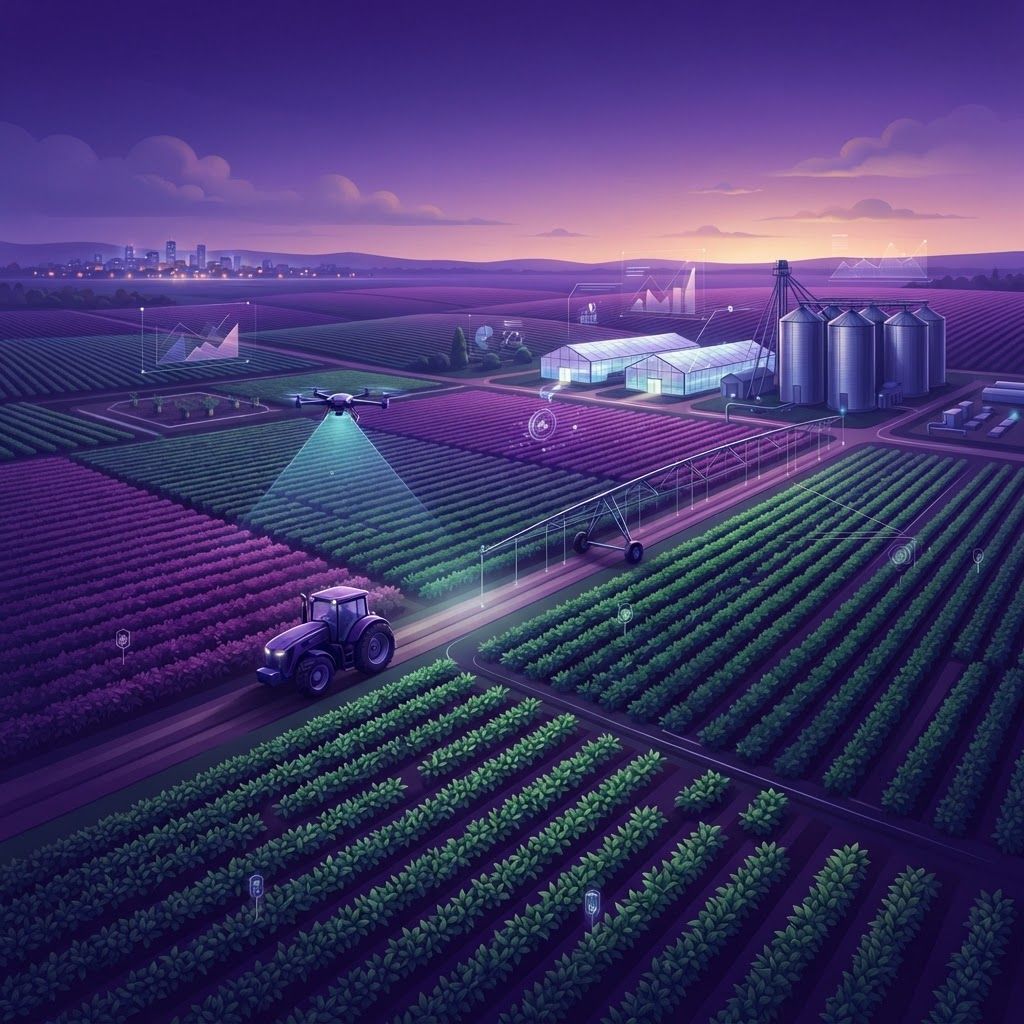
Farming around Enterprise reflects a broader transformation happening across agriculture. Operations that once relied primarily on experience and observation now combine that knowledge with soil sampling data, satellite imagery, variable rate application and detailed yield analysis. The result is a sector that remains deeply tied to land and weather while operating with a level of measurement that would be unrecognizable to a previous generation.
The local agricultural base is diverse. Row crop operations produce grain and oilseed for commodity markets, vegetable growers supply regional wholesale and retail channels, livestock and dairy operations serve protein and fluid milk markets, greenhouse and nursery businesses produce plants and controlled-environment crops, and specialty producers focus on organic, direct-to-consumer and value-added products. That diversity gives the region resilience, since no single market disruption affects every operation equally.
How These Operations Were Evaluated
Assessment considered production scale and consistency, adoption of agronomic and technological practice, soil health and conservation management, water use efficiency, product quality and grading, market channel development including wholesale and direct sales, labor practices and workforce stability, and demonstrated stewardship of land over multiple seasons. Operations that combined productivity with genuine long-term resource management ranked highest, since agriculture is ultimately a business of maintaining productive capacity across decades.
The Top 10 Farming Companies in Enterprise
1. Enterprise Valley Farms
A large row crop operation producing grain and oilseed with comprehensive precision agriculture practice. Enterprise Valley Farms uses grid soil sampling, variable rate fertility, controlled traffic patterns and detailed yield mapping to manage fields by zone rather than uniformly, which improves both input efficiency and per-acre return.
2. Harrow Bend Produce Company
Harrow Bend grows vegetables for wholesale distribution and regional retail, managing extended harvest windows through succession planting and varietal selection. Its cooling and packing facility preserves quality immediately after harvest, which is where produce shelf life is largely determined.
3. Stillwater Dairy Enterprises
Stillwater operates a modern dairy with attention to herd health, nutrition management and milk quality metrics. Automated monitoring supports early detection of health issues, and manure management practices return nutrients to cropland in a controlled, documented manner.
4. Ridgeline Cattle Company
Ridgeline manages cow-calf and finishing operations with rotational grazing and pasture management practices that build forage productivity. Genetic selection focused on efficiency and carcass quality supports consistent performance in a market that rewards uniformity.
5. Glasshouse Growers Collective
This controlled-environment operation produces greenhouse vegetables and herbs year-round using climate control, integrated pest management and recirculating irrigation. Extended-season supply fills gaps when field production is unavailable, giving regional buyers continuity through winter months.
6. Fernvale Organic Farms
Fernvale operates certified organic acreage producing vegetables, grains and cover crop seed. Its rotation and composting practices build soil organic matter measurably over time, and its certification documentation supports the premium channels through which it sells.
7. Ambergate Orchards and Vineyards
Ambergate manages tree fruit and grape production with attention to canopy management, pest monitoring and harvest timing. Perennial crops require investment horizons measured in years, and its long-term block management reflects that discipline.
8. Willowmere Poultry and Egg Farms
Willowmere produces eggs and poultry with biosecurity protocols, welfare-conscious housing systems and consistent grading. Reliable volume and quality make it a dependable supplier to regional distributors and institutional buyers.
9. Cedarloft Nursery and Sod Company
Cedarloft grows ornamental plants, trees, shrubs and turf sod for landscape contractors, garden centers and construction projects. Careful irrigation management and plant health monitoring reduce transplant failure, which is the primary quality measure landscapers apply.
10. Thornfield Specialty and Direct Market Farm
Thornfield focuses on diversified specialty crops sold through farmers markets, subscription boxes and restaurant accounts. Its close relationships with local chefs allow it to grow varieties selected for flavor and culinary use rather than shipping durability.
Precision Agriculture and Data-Driven Management
Precision agriculture has moved from experimental to standard among competitive operations. Global positioning guidance reduces overlap and skips, variable rate application places fertilizer and seed according to measured field variability, and remote sensing identifies stress before it becomes visible from the cab. Yield monitoring closes the loop by revealing which decisions produced results.
The value lies less in any single technology than in accumulated records. An operation with several years of layered soil, application and yield data can make fertility and variety decisions with far more confidence than one relying on field averages. That data also supports conversations with lenders, landlords and buyers who increasingly expect documented management practice.
Soil Health and Conservation
Soil is the productive asset that determines an operation's long-term viability, and management practices around it have shifted substantially. Reduced tillage preserves structure and organic matter, cover crops protect surface soil and cycle nutrients, diversified rotations interrupt pest and disease cycles, and controlled traffic limits compaction. These practices frequently reduce input costs while improving water infiltration and drought resilience.
Adoption requires patience, since soil biological improvement occurs over years rather than seasons, and transition periods can involve yield variability. The operations that have persisted through that adjustment generally report lower input requirements and greater stability during difficult weather years.
Water Management and Irrigation Efficiency
Water availability shapes what can be grown and how reliably. Efficient irrigation, whether through drip systems, low-pressure pivots or soil moisture-guided scheduling, delivers water when and where the crop can use it rather than on a fixed calendar. Drainage management matters equally in wet periods, since saturated soils damage roots and delay field operations. Operations that monitor soil moisture directly, rather than irrigating by schedule, typically achieve better yields with less water and less energy.
Market Channels and Value Addition
How a farm sells is as consequential as how it grows. Commodity markets offer scale and liquidity but no pricing power. Wholesale produce channels reward volume and consistency. Direct-to-consumer sales through markets and subscription programs command higher prices but require marketing effort and customer service. Value-added processing, from washing and packing to preserving and milling, captures margin that would otherwise leave the farm.
Most successful operations in the Enterprise area blend channels deliberately, using stable wholesale relationships as a base while developing higher-margin direct sales that improve overall returns and reduce dependence on any single buyer.
Trends Shaping Regional Agriculture
Several forces are influencing the sector. Labor availability continues to drive mechanization and automation investment, particularly in specialty crops. Consumer interest in local sourcing has strengthened regional supply chains and direct channels. Climate variability has increased the value of resilience practices and crop diversification. Carbon and conservation programs have created new revenue possibilities for documented practice change. Controlled environment agriculture continues to expand seasonal availability, and traceability requirements from buyers have pushed record keeping toward field-level documentation.
Working With Farming Operations in Enterprise
Buyers evaluating agricultural suppliers should look at food safety certification, harvest and cooling practices, grading consistency, volume reliability across a season and communication during weather disruptions. Building relationships ahead of the season, with committed volumes and clear specifications, gives growers the planning certainty they need to serve you well. The farming companies in Enterprise that combine productive capability with careful stewardship and honest communication are the ones that sustain both their land and their customer relationships across many seasons.