
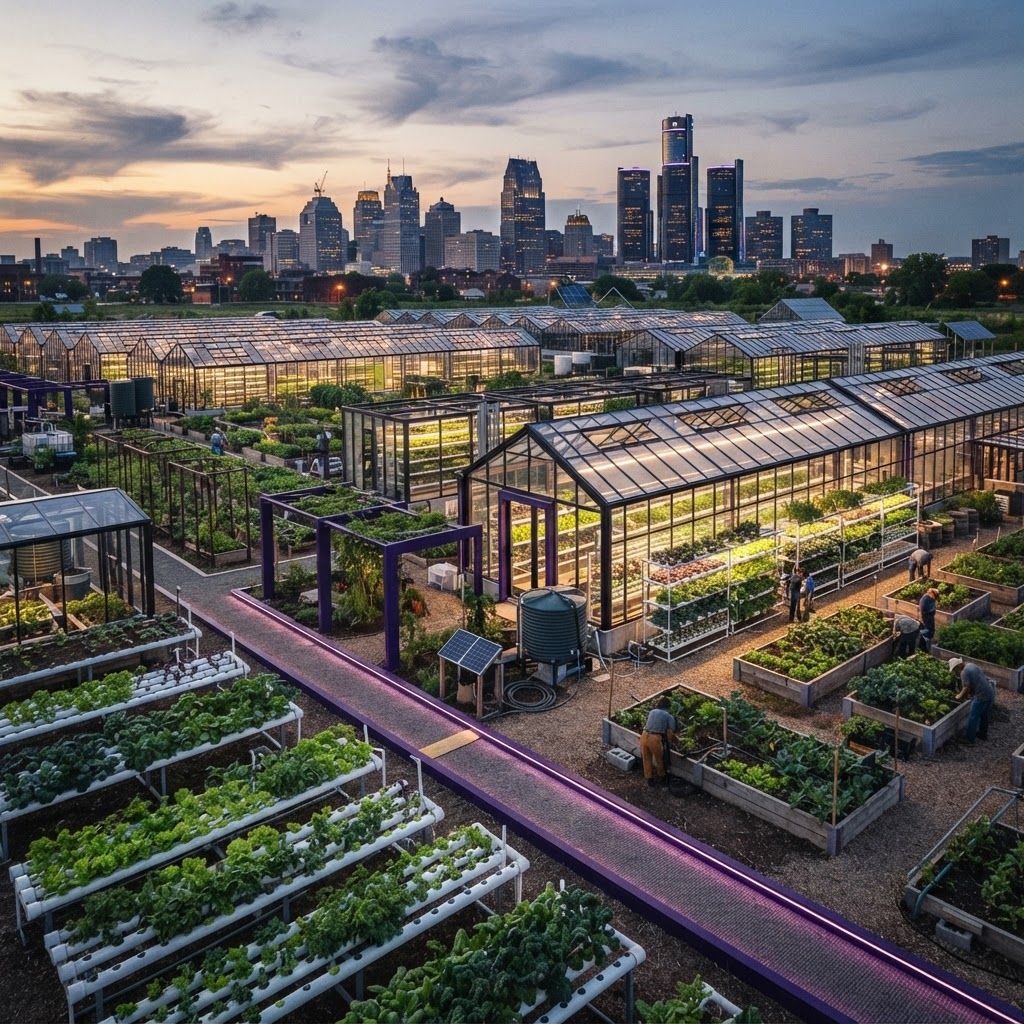
Detroit's Urban Farming Renaissance
Detroit has become one of the most fascinating examples of urban agriculture in the United States. As the city reimagined vacant land and empty lots, a new generation of farming companies emerged to grow fresh produce, strengthen food security, and revitalize neighborhoods. These enterprises range from community-focused urban farms to sophisticated commercial operations, and together they have turned Detroit into a national model for city-based agriculture.
The movement is more than symbolic. Detroit's farming companies produce meaningful quantities of vegetables, fruits, and herbs that supply local markets, restaurants, and residents. In doing so, they address longstanding challenges around access to fresh, healthy food while creating jobs and reconnecting communities with the origins of what they eat.
Innovative Growing Methods
What makes Detroit's farming companies especially compelling is their embrace of innovation. Many operate on land that was once residential or industrial, requiring creative approaches to soil remediation and space utilization. Techniques such as raised-bed cultivation, hydroponics, aquaponics, and controlled-environment greenhouses allow growers to maximize yields on limited urban footprints.
Season extension is another hallmark of local farming operations. Given Michigan's cold winters, greenhouses and high tunnels enable year-round production of certain crops, providing a steady income stream and a consistent supply of fresh produce even in the off-season. These methods demonstrate how modern agriculture can thrive within a dense urban environment.
Community Impact and Food Security
Beyond commercial production, Detroit's farming companies play a vital social role. Many partner with schools, food banks, and community organizations to distribute fresh produce and teach agricultural skills. These initiatives help combat food insecurity in neighborhoods that historically lacked convenient access to grocery stores stocked with quality fruits and vegetables.
Educational programming is a common thread among the best operations. By hosting workshops, internships, and youth programs, these farms cultivate not just crops but also knowledge and opportunity. Residents learn how to grow their own food, understand nutrition, and even pursue careers in agriculture, creating lasting ripple effects throughout the community.
Economic and Environmental Benefits
Urban farming generates tangible economic value. It creates local jobs, supports farmers markets, and supplies restaurants that prize fresh, locally grown ingredients. This keeps money circulating within the community and reduces dependence on produce shipped in from distant regions, cutting transportation costs and emissions.
Environmentally, Detroit's farms transform neglected land into green, productive space. They improve air quality, manage stormwater, support pollinators, and beautify neighborhoods. Composting programs turn organic waste into valuable soil amendments, closing the loop and demonstrating sustainable practices that benefit the whole city.
The Future of Detroit Agriculture
The outlook for Detroit's farming companies is bright. Growing consumer demand for local, sustainably grown food continues to fuel expansion, and advances in agricultural technology make urban farming increasingly efficient. Partnerships with local governments and nonprofits are helping to secure land, funding, and infrastructure for continued growth.
As these companies scale and mature, they are proving that agriculture and urban life can coexist and even reinforce one another. Detroit's farming pioneers have written an inspiring chapter in the story of American cities, showing how vacant land can be reborn as fertile ground for food, community, and hope.