
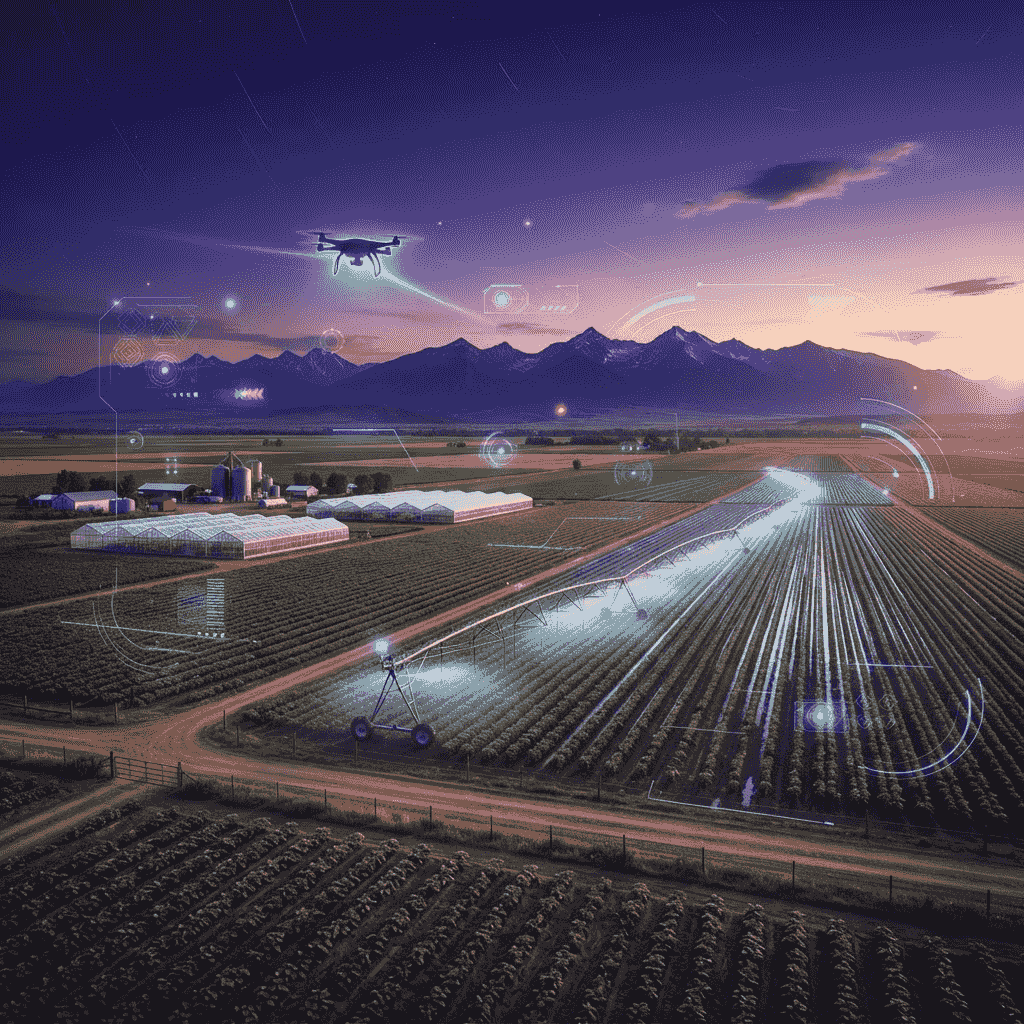
Farming in the Colorado Springs region is an exercise in precision. At roughly six thousand feet, with annual precipitation often below sixteen inches, a short frost-free window and semi-arid soils, agriculture here cannot rely on abundance. It depends on water efficiency, crop selection, soil building and increasingly on technology. The operations that succeed are those that treat every gallon and every growing day as a managed resource.
Despite those constraints, El Paso County and the surrounding high plains support a genuinely diverse agricultural economy. Cattle ranching remains foundational. Dryland wheat and forage production covers substantial acreage east of the city. Greenhouse and controlled-environment growers supply year-round produce. Market gardens serve a strong local food movement anchored by farmers markets and restaurant partnerships. Specialty producers raise everything from hemp to hops to alpaca fiber.
The Agricultural Realities of the High Plains
Water governs everything. Colorado's prior appropriation doctrine means water rights are a distinct and valuable asset, often more valuable than the land itself. Growers respond with drip irrigation, soil moisture monitoring, deficit irrigation strategies and drought-adapted crop varieties. Many operations have shifted toward crops with high value per acre-foot of water rather than maximum yield per acre.
Soil presents a second challenge. Regional soils tend toward sandy or clay-heavy profiles with low organic matter and alkaline pH. Serious growers invest in compost application, cover cropping, reduced tillage and biological amendments to build water-holding capacity. Wind erosion is a persistent risk, addressed through windbreaks and residue management. Finally, the intense solar radiation at altitude is both an asset and a hazard, accelerating growth while increasing plant stress and requiring careful shading and irrigation timing in greenhouse and field settings alike.
Top 10 Best Farming Companies in Colorado Springs
1. Front Range Family Farms
A diversified operation combining vegetable production, small grains and livestock, Front Range Family Farms is known for supplying local markets and restaurants with consistent seasonal produce. The operation invests heavily in soil health practices including cover cropping and compost application. Its community-supported agriculture program has become a fixture for households seeking reliable local food.
2. Pikes Peak Greenhouse Growers
Controlled-environment agriculture sidesteps the region's short season entirely. Pikes Peak Greenhouse Growers produces tomatoes, cucumbers, peppers and leafy greens year round using climate control, supplemental lighting and recirculating irrigation. Water use per pound of produce is dramatically lower than field production, which is a decisive advantage in a water-limited region.
3. Cheyenne Mountain Cattle Company
Ranching remains central to the regional agricultural identity. Cheyenne Mountain Cattle Company runs cow-calf and grass-finished beef operations with rotational grazing management designed to improve rangeland health. Direct-to-consumer beef sales and transparency about grazing and processing practices have built a loyal local customer base.
4. Summit High Plains Grain Producers
East of the city, dryland farming dominates the landscape. Summit High Plains Grain Producers grows winter wheat, sorghum, millet and sunflowers using no-till and residue management practices that conserve scarce soil moisture. Precision equipment guidance and variable-rate input application help maintain viability in a low-margin, weather-dependent enterprise.
5. Colorado Springs Urban Farm Collective
Small-footprint agriculture inside city limits has grown substantially. Colorado Springs Urban Farm Collective cultivates intensive vegetable beds, high tunnels and rooftop growing spaces, supplying farmers markets, food hubs and restaurants. Educational programming and volunteer involvement give the operation a community development role alongside food production.
6. High Plains Hydroponic and Vertical Farms
Stacked growing systems maximize output per square foot and per gallon. High Plains Hydroponic and Vertical Farms produces microgreens, herbs and salad greens with tightly controlled nutrient delivery and minimal pesticide use. Extremely short harvest-to-delivery timelines appeal to chefs and grocers prioritizing freshness and shelf life.
7. Rocky Mountain Organic Produce Farms
Certified organic production requires disciplined systems rather than simply avoiding inputs. Rocky Mountain Organic Produce Farms manages crop rotation, biological pest control, composting and certification compliance across diversified vegetable acreage. Wholesale relationships with regional grocers and distributors extend its reach well beyond direct market channels.
8. Bijou Street Specialty Crop Growers
High-value niche crops make sense where water is expensive. Bijou Street Specialty Crop Growers focuses on culinary herbs, cut flowers, hops, garlic and unusual vegetable varieties targeted at restaurants, breweries and floral designers. Small-scale precision and direct customer relationships allow premium pricing that conventional commodity production cannot achieve.
9. El Paso County Livestock and Poultry Farms
Diversified animal agriculture supports both food supply and soil fertility. El Paso County Livestock and Poultry Farms raises pastured poultry, eggs, sheep and hogs using rotational systems that integrate with crop ground. Local processing coordination and on-farm sales provide the traceability that many regional consumers now expect.
10. Garden of the Gods Agritourism Farms
Tourism and agriculture combine naturally in this region. Garden of the Gods Agritourism Farms operates pick-your-own fields, seasonal festivals, farm tours and educational events alongside commercial production. This diversified revenue model reduces exposure to crop and market risk while building public understanding of regional agriculture.
Technologies and Trends in Regional Agriculture
Precision agriculture has moved from novelty to necessity. Soil moisture sensors, weather station networks and variable-rate irrigation controllers let growers apply water exactly when and where it is needed. Drone imagery identifies crop stress and pest pressure before it becomes visible from ground level. Controlled-environment agriculture continues expanding because it decouples production from weather volatility. Regenerative practices including cover crops, reduced tillage and managed grazing are gaining traction on both economic and ecological grounds. Meanwhile, direct-to-consumer sales channels and local food hubs allow smaller operations to capture retail margins rather than commodity prices.
Final Thoughts
Agriculture near Colorado Springs will always be shaped by water availability, elevation and a compressed growing season. The farming companies thriving here are the ones treating those constraints as design parameters rather than obstacles, investing in efficiency technology, soil health and diversified revenue. For residents and buyers, supporting these operations through markets, community-supported agriculture programs and restaurant sourcing helps sustain a working agricultural landscape that would otherwise face relentless development pressure.