
Agriculture in a City That Grew Out of Farmland
Chandler began as an agricultural community. Dr. Alexander Chandler acquired substantial acreage in the 1890s and developed an irrigated farming settlement that became the city, and for most of the twentieth century cotton, alfalfa, citrus and grain dominated the surrounding land. Urban growth has since converted much of that farmland to housing and industry, but agriculture remains a real presence in and around the city, operating with far more sophistication than it did a century ago.
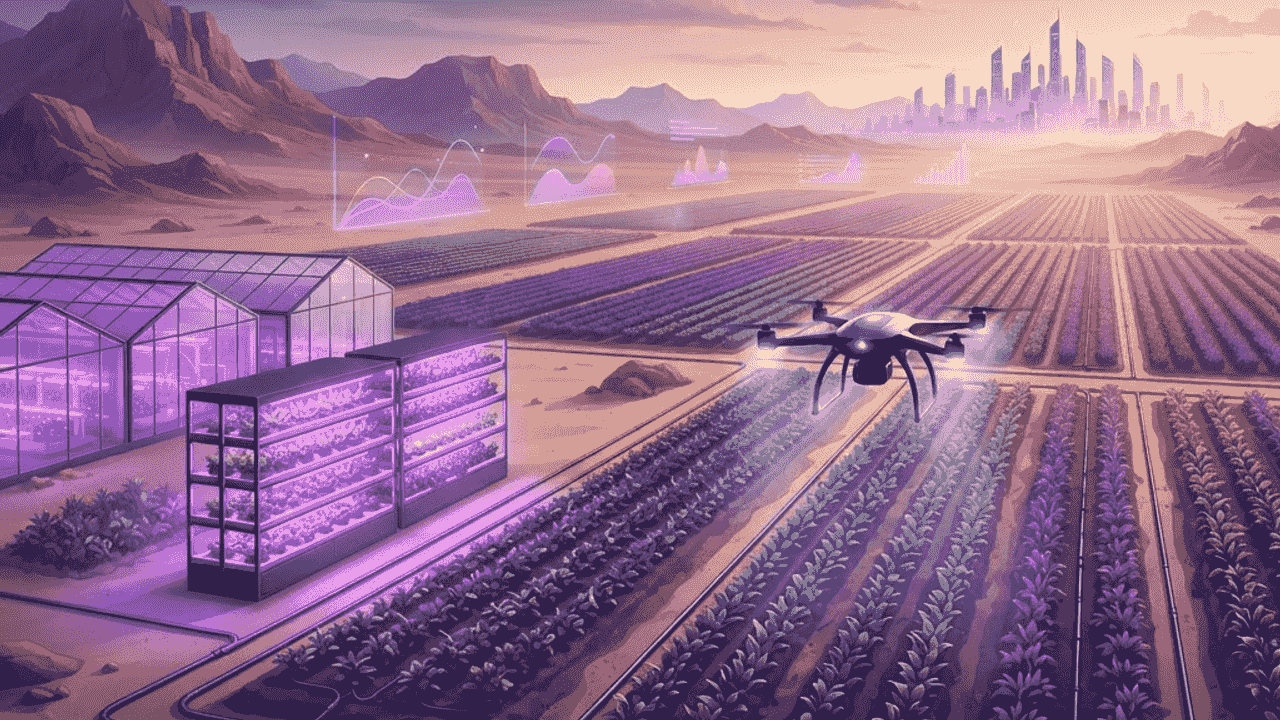
What remains is agriculture reshaped by scarcity and technology. Water is the defining constraint of Arizona farming, and operations that survived urban expansion did so by becoming dramatically more efficient per acre-foot of water applied. Drip irrigation, soil moisture sensing, controlled environment growing and crop selection matched to water availability now characterize the sector. The result is farming that produces more value from less water than the flood-irrigated operations it replaced.
The Shape of Modern Chandler Agriculture
Field crop operations grow cotton, alfalfa, wheat and grain sorghum on larger acreages, typically using laser-leveled fields and increasingly precise irrigation scheduling. Vegetable and produce growers supply regional markets during Arizona's winter growing season, when the desert climate becomes a genuine advantage rather than an obstacle. Controlled environment agriculture uses greenhouses and indoor systems to grow high-value crops with a fraction of conventional water use. Dairy and livestock operations remain in the surrounding area, supported by local alfalfa production. Specialty growers focus on dates, citrus, olives and desert-adapted crops. Agricultural services companies provide the custom harvesting, crop consulting and equipment support that make modern farming possible.
Direct marketing has also become significant. Farm stands, community supported agriculture subscriptions, farmers market participation and agritourism generate revenue per acre that wholesale commodity production cannot match, which helps operations survive on smaller acreages near urban edges.
The Ten Most Notable Farming Companies Around Chandler
1. Chandler Heights Farms
Chandler Heights Farms operates diversified field crop and vegetable production on land farmed continuously for generations. Laser-leveled fields, converted drip irrigation on vegetable ground and careful crop rotation reflect a long-term approach to soil health. The operation's winter vegetable production supplies regional distributors during the months when Arizona supply matters most nationally.
2. Ocotillo Valley Produce Company
Ocotillo Valley Produce Company specializes in cool-season vegetables including lettuce, broccoli, cauliflower and leafy greens grown during Arizona's winter window. Harvest and cooling operations timed to preserve field freshness support both regional foodservice and retail distribution. Food safety certification and traceability systems meet buyer requirements that have tightened considerably across produce.
3. Desert Alfalfa and Forage
Desert Alfalfa and Forage produces alfalfa hay and forage crops supplying regional dairies and livestock operations. Multiple cuttings per season in Arizona's long growing period yield exceptional productivity per acre, and careful moisture management at baling protects feed quality. Water use efficiency improvements have been central to the operation's continued viability.
4. Arizona Controlled Environment Growers
Arizona Controlled Environment Growers operates greenhouse production of tomatoes, cucumbers, peppers and leafy greens using recirculating irrigation that reuses water rather than losing it to evaporation. Year-round production independent of outdoor conditions supplies consistent volume to regional buyers. Water consumption per unit of production is a small fraction of field growing, which makes this model increasingly relevant.
5. Price Road Cotton Growers
Price Road Cotton Growers continues the crop most associated with Chandler's agricultural history, producing upland cotton with modern precision irrigation and integrated pest management. Arizona cotton is valued for fiber quality, and the operation's attention to harvest timing and ginning coordination protects that premium. Rotation with grain crops maintains soil condition.
6. Southwest Date and Citrus Orchards
Southwest Date and Citrus Orchards grows dates, citrus and olives on established orchard ground suited to desert conditions. Tree crops offer favorable water efficiency per unit of value once established, and the operation's direct sales and specialty market channels capture margins that commodity distribution would not. Heritage citrus varieties serve niche demand.
7. Chandler Community Farm
Chandler Community Farm operates intensive small-acreage production with direct marketing through subscription boxes, farm stand sales and farmers markets. Diverse crop mix, succession planting and season extension techniques generate high revenue per acre from limited ground. Educational programming and farm events build the customer relationships that direct marketing depends on.
8. Copper State Dairy Farms
Copper State Dairy Farms operates dairy production in the surrounding agricultural area, supported by local alfalfa supply and regional processing capacity. Cow comfort infrastructure including cooling systems is essential in Arizona summers and directly affects both animal welfare and milk production. Manure management integrated with nearby crop fertility programs closes a nutrient loop efficiently.
9. Gilbert Road Organic Growers
Gilbert Road Organic Growers produces certified organic vegetables and herbs for regional retailers, restaurants and direct customers. Cover cropping, compost application and biological pest management build soil biology in a challenging desert context. Certification documentation supports the premium pricing that makes lower-yield organic production economically viable.
10. Arizona Agricultural Services Group
Arizona Agricultural Services Group provides custom harvesting, planting, soil testing, irrigation design and agronomic consulting to growers across the region. Access to specialized equipment and expertise without capital investment allows smaller operations to farm at a technical level they could not otherwise afford. Irrigation efficiency consulting has become its most requested service as water pressure has intensified.
Forces Shaping Desert Agriculture
Water allocation is the central issue and will remain so. Colorado River shortage declarations and groundwater management rules have forced growers to treat water as the scarcest input rather than a fixed entitlement. Operations investing in drip conversion, soil moisture monitoring and deficit irrigation strategies produce more per acre-foot and are positioned to continue farming as allocations tighten.
Urban encroachment continues to convert farmland. Rising land values create genuine pressure to sell, and each conversion removes production capacity permanently. The operations that persist tend to either own land outright without debt pressure or generate enough revenue per acre through specialty and direct marketing to compete with development economics.
Controlled environment agriculture has moved from experiment to established practice. Greenhouse and indoor production achieve water efficiency that field growing cannot approach, and proximity to a large metropolitan market makes local production commercially sensible for perishable crops. This model is likely to represent a growing share of the region's food production.
What Buyers and Neighbors Should Understand
Local sourcing has real seasonal logic in Arizona. The winter months are when regional production peaks and local produce is both freshest and most abundant, which is the reverse of the pattern in most of the country. Buyers who align menus and purchasing with this calendar get better quality at better prices.
Water efficiency claims deserve specific questions. Ask about irrigation method, measured application rates and yield per acre-foot rather than accepting general assertions about conservation. Operations that track these numbers carefully are the ones genuinely managing the constraint.
Finally, direct relationships benefit both sides. Growers selling through subscription programs, farm stands and direct wholesale capture more value and gain planting certainty, while buyers gain freshness and traceability. In an urban-adjacent farming region, these relationships are often what keep agriculture viable at all.
Conclusion
Farming around Chandler spans field crops, winter vegetables, forage, controlled environment production, cotton, orchards, direct-market operations, dairy, organics and agricultural services. The ten operations above represent that range. Understanding the water constraint that shapes every decision, buying in season and building direct relationships are how the region's residents and businesses can support agriculture that has adapted remarkably to a difficult and changing environment.