
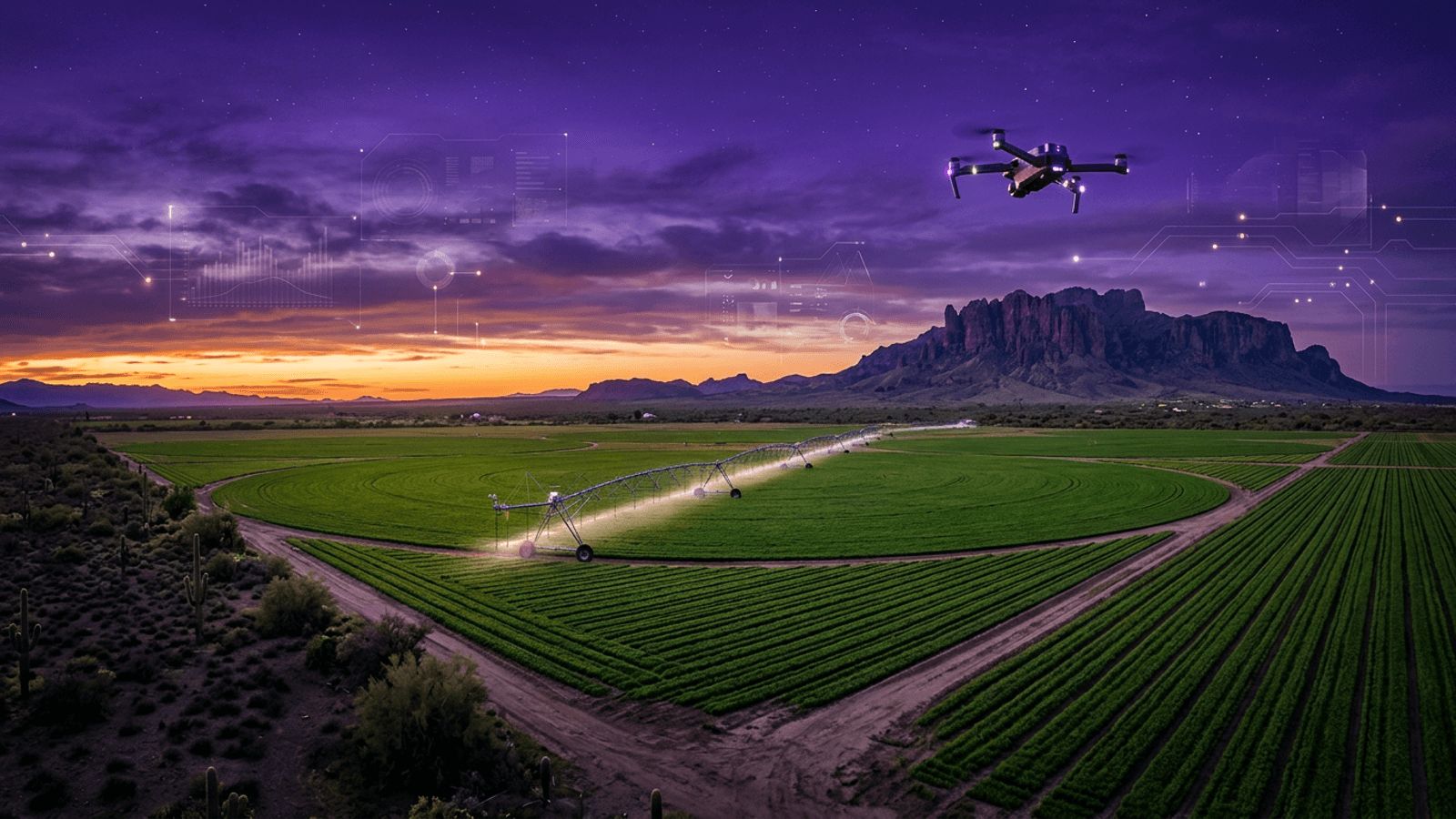
Buckeye's Agricultural Heritage
Long before it became one of the fastest-growing cities in America, Buckeye was a farming community. Its name traces back to early settlers who built canals to irrigate the fertile land along the Gila River. For generations, cotton, alfalfa, wheat, and vegetables were grown across the Buckeye Valley, and dairies and livestock operations dotted the landscape. Today, while new neighborhoods are rising quickly, agriculture remains an important part of the city's identity and economy.
Modern farming in the West Valley is shaped by water scarcity, extreme heat, and growing demand for local food. The companies below represent some of the most respected farming and agricultural operations serving Buckeye and the broader region, from family farms to innovative agricultural service providers.
The 10 Best Farming Companies Serving Buckeye
1. Duncan Family Farms
Duncan Family Farms is a family-owned organic grower based in the West Valley, known for leafy greens, herbs, and specialty vegetables. It has earned a strong reputation for sustainable farming practices, food safety, and community involvement. Its seasonal production complements other growing regions to provide year-round organic produce.
2. Hickman's Family Farms
Hickman's Family Farms is an Arizona family-owned egg producer that has grown into one of the largest egg farms in the Southwest. With operations west of Phoenix, it supplies eggs to grocery stores and restaurants throughout the state. Hickman's is known for its commitment to quality and its expansion into cage-free and specialty egg production.
3. Rousseau Farming Company
Rousseau Farming Company is a multi-generation West Valley farming family growing vegetables such as lettuce, broccoli, cauliflower, and specialty greens. Its long history in the region and focus on quality produce make it an important contributor to Arizona's winter vegetable supply.
4. Shamrock Farms
Shamrock Farms is a family-owned Arizona dairy with a heritage dating back decades. It produces milk, flavored milks, and dairy products enjoyed throughout the Southwest. Shamrock Farms is recognized for its investments in sustainability, animal care, and modern dairy practices.
5. United Dairymen of Arizona
United Dairymen of Arizona is a farmer-owned dairy cooperative that processes and markets milk from member dairies across the state. Many dairies in the Buckeye area have historically been part of Arizona's strong dairy sector, and cooperatives like this one help family farms access processing and markets.
6. McClendon's Select
McClendon's Select is a certified organic family farm in the West Valley that supplies produce to top Phoenix-area restaurants and farmers markets. It is known for exceptional citrus, heirloom vegetables, and specialty crops. Chefs prize its produce for flavor and freshness, and it has helped elevate the local farm-to-table movement.
7. Schnepf Farms
Schnepf Farms is a beloved Arizona agritourism destination known for peach orchards, festivals, and family-friendly farm experiences. While located in the East Valley, it represents an important model for agricultural innovation, showing how farms can thrive by combining crop production with education and entertainment.
8. Maya's Farm
Maya's Farm is a small organic farm in the Phoenix area that has become a respected voice in local agriculture. It grows seasonal vegetables, hosts farm dinners, and supports community education about sustainable farming. Its approach inspires many small-scale growers in the West Valley.
9. J.R. Simplot Company
J.R. Simplot Company provides agronomy services, fertilizers, crop protection products, and seed through its grower solutions business. Farmers in the Buckeye Valley rely on Simplot's agronomists for soil testing, nutrient planning, and strategies that maximize yields while conserving water.
10. Wilbur-Ellis
Wilbur-Ellis is a long-established agricultural products and services company offering crop nutrition, crop protection, seed, and precision agriculture solutions. Its local agronomists help West Valley growers adopt data-driven practices, from variable-rate fertilization to irrigation scheduling.
Farming Trends in the West Valley
Water management is the most important issue facing Buckeye-area agriculture. Farmers are investing in drip irrigation, laser-leveled fields, and soil moisture sensors to make every gallon count. Many are shifting toward crops that require less water or offer higher value per acre.
Technology adoption is accelerating as well. Drones, satellite imagery, and farm management software help growers monitor crop health and optimize inputs. Meanwhile, consumer demand for local and organic food continues to rise, supporting farmers markets, community-supported agriculture programs, and direct-to-restaurant sales.
Urban growth presents both challenges and opportunities. While farmland is being converted to housing, new residents also create demand for locally grown food and agritourism experiences.
Why Supporting Local Farms Matters
Buying from local farms keeps money in the regional economy, reduces transportation emissions, and provides fresher food. It also helps preserve Buckeye's agricultural character as the city grows. Residents can support local agriculture by shopping at farmers markets, choosing Arizona-grown products at grocery stores, and dining at restaurants that source locally.
Frequently Asked Questions
What crops are most commonly grown around Buckeye?
Alfalfa, cotton, wheat, barley, and a range of winter vegetables are common in the Buckeye Valley. Dairy and egg production are also significant parts of the regional agricultural economy.
Where can residents buy locally grown food in the West Valley?
Farmers markets, farm stands, community-supported agriculture programs, and grocery stores that label Arizona-grown products are great options. Many West Valley restaurants also highlight local farms on their menus.
Final Thoughts
Farming is woven into the history and future of Buckeye. The companies above demonstrate how agriculture in the West Valley is evolving through innovation, sustainability, and community connection, ensuring that the region continues to feed Arizona for generations to come.