
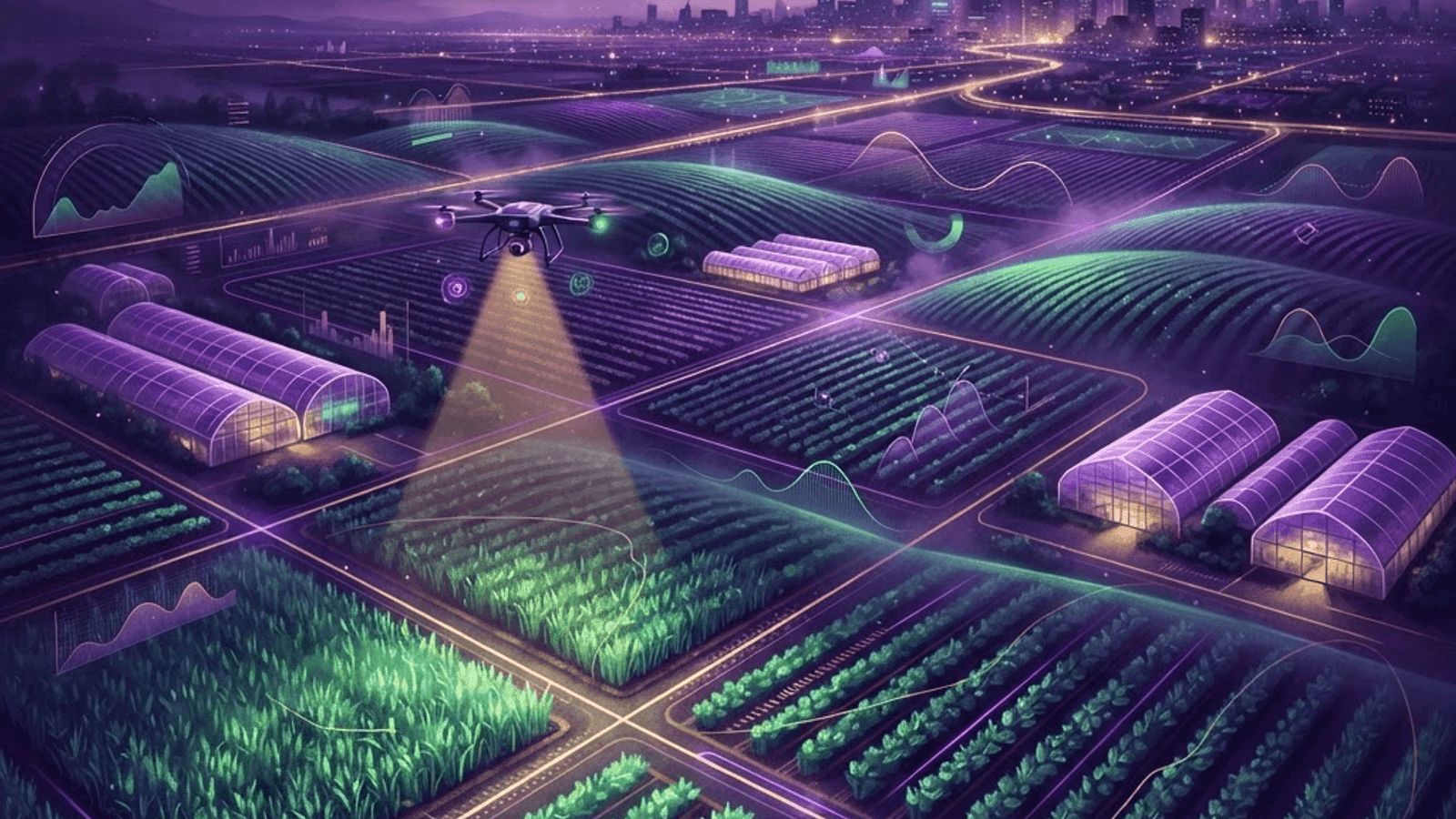
Farming at the Edge of a Major City
Birmingham may be Britain's second city, but agriculture sits closer to it than many people realise. The green belt surrounding the conurbation supports mixed arable, livestock and horticultural enterprises, while within the city boundary a growing network of community farms, market gardens and urban growing projects produce food and deliver education.
Urban-fringe farming has distinct characteristics. Land is expensive and fragmented, planning pressure is constant, and public access is high. In return, farms enjoy something rural operations often lack: an enormous customer base within a short distance, willing to pay a premium for genuinely local produce.
Ten Farming Businesses Around the City
1. Sutton Fields Mixed Farming — A mixed arable and livestock operation on the northern fringe, supplying grain to regional millers and lamb to local butchers, with careful attention to soil health.
2. Woodgate Valley Community Farm — A community-focused farm combining small-scale livestock, horticulture and extensive educational programmes for schools and families across the city.
3. Longbridge Market Garden Company — Intensive vegetable growers supplying box schemes, independent greengrocers and restaurants with short-supply-chain seasonal produce.
4. Shard End Urban Growing Collective — An urban agriculture enterprise using raised beds, polytunnels and vertical systems on reclaimed land, with a strong social employment focus.
5. Kings Norton Dairy Enterprises — A dairy operation supplying milk regionally, with pasture management practices designed to improve biodiversity alongside yield.
6. Bartley Green Poultry and Eggs — Free range egg producers supplying local retailers, bakeries and caterers with a genuinely short delivery radius.
7. Frankley Arable Holdings — Growers of cereals and break crops using precision agriculture techniques including variable rate application and satellite-guided operations.
8. Northfield Orchard and Soft Fruit Company — Producers of apples, pears and soft fruit, supplying juice makers, farm shops and pick-your-own visitors.
9. Castle Bromwich Heritage Growers — Specialists in heritage vegetable varieties and seed saving, supplying restaurants seeking distinctive ingredients and supporting crop diversity.
10. Hodge Hill Hydroponic Farms — An indoor growing business producing salads and herbs year-round in controlled environments with high water efficiency.
Regenerative and Sustainable Practice
Farming practice around Birmingham is shifting noticeably toward soil-first thinking. Cover cropping, reduced tillage, diverse rotations and integrated livestock grazing all aim to rebuild soil organic matter, improve water infiltration and reduce reliance on purchased inputs.
These approaches suit urban-fringe farms particularly well. Reduced input costs improve resilience on smaller acreages, while visible environmental benefit strengthens relationships with a nearby public that increasingly cares how food is produced.
Biodiversity work is prominent too. Hedgerow restoration, wildflower margins, pond creation and tree planting deliver environmental benefit and often attract support through agri-environment schemes.
The Local Food Economy
Short supply chains are the great advantage of farming near a city. Produce harvested in the morning can be on a restaurant plate the same evening. Farm shops, box schemes, farmers markets and direct supply to independent retailers all capture far more value for the grower than commodity routes.
Birmingham's diverse food culture also creates opportunities for growers willing to produce less conventional crops. Demand for specific vegetables and herbs used in the city's varied cuisines can be met locally, and growers who build those relationships find consistent, loyal customers.
Challenges Facing Urban-Fringe Farms
The pressures are real. Land values driven by development potential make expansion difficult. Fly tipping, trespass and dog worrying of livestock are persistent problems. Fragmented holdings increase machinery movement between parcels. Labour availability for horticulture remains tight.
Successful operations respond by diversifying income. Educational visits, events, livery, storage, renewable energy and direct retail all supplement farming income and spread risk across more than one revenue stream.
Technology on Local Farms
Precision agriculture has reached even modest holdings. Satellite guidance reduces overlap and input waste. Soil mapping targets fertiliser where it is needed. Livestock monitoring supports earlier health intervention. Controlled environment growing extends seasons and stabilises supply.
These tools matter most where margins are thin and land is limited, which describes urban-fringe farming precisely.
Education, Access and Community Connection
Farms close to a large city carry an unusual additional role: they are often the only place urban residents encounter food production directly. Community farms, school visit programmes, open days and volunteer schemes around Birmingham introduce thousands of people each year to livestock, growing and land management.
This has practical value for the farms involved. Public support translates into direct sales, volunteer labour, grant eligibility and goodwill that helps when planning or access issues arise. It also builds a customer base that understands why locally produced food sometimes costs more than imported equivalents.
Access brings challenges alongside benefits. Public rights of way require careful management around livestock and machinery, and biosecurity must be maintained when visitors move between sites. Farms that manage this well, with clear signage, well-maintained paths and designated visitor areas, generally find the relationship with their neighbours far easier than those that treat public access purely as a nuisance.
Final Thoughts
Farming around Birmingham demonstrates how agriculture adapts to proximity rather than being displaced by it. Through direct sales, education, regenerative practice and technology, these businesses feed the city, connect people with food production and maintain green space that benefits everyone living nearby.