
Agriculture in the Capital Region
Baton Rouge is often described in terms of petrochemicals and state government, but agriculture surrounds the city on every side. Drive twenty minutes in almost any direction and the landscape shifts into sugarcane fields, rice paddies, soybean acreage, pasture and timber. The parishes ringing the capital, including Iberville, Pointe Coupee, West Baton Rouge and Ascension, contain some of the most productive farmland in Louisiana, supported by alluvial soils deposited by the Mississippi River over millennia.
Louisiana agriculture also enjoys an institutional advantage that few states match. The LSU AgCenter operates research stations, extension offices and breeding programs that have produced widely adopted rice and sugarcane varieties. That research pipeline gives local growers access to genetics and agronomic guidance tailored specifically to Gulf Coast conditions rather than adapted from Midwestern models.
What Defines a Leading Farming Operation
Evaluating farming companies is different from evaluating conventional businesses. The markers of excellence include yield consistency across variable weather years, soil health management, water stewardship, adoption of precision agriculture technology, workforce development, diversification of revenue streams, and increasingly, verified sustainability practices that unlock premium markets and carbon program participation.
Financial resilience deserves particular emphasis in Louisiana. Growers here face hurricane risk, flooding, drought cycles and commodity price volatility simultaneously. Operations that survive and grow across decades typically combine crop diversification, disciplined equipment capital management, robust crop insurance strategy and strong relationships with processors and marketing cooperatives.
The Top 10 Farming Companies in the Baton Rouge Region
1. Regional Sugarcane Growing Operations
Sugarcane is the signature crop of the Baton Rouge region, and the largest growing operations manage thousands of acres across multiple parishes. These businesses are vertically engaged with nearby raw sugar mills, coordinating harvest scheduling so cane reaches the mill within hours of cutting to preserve sucrose content. Modern cane operations run combine harvesters, GPS guided planting and variable rate fertility programs, and they continuously evaluate new varieties released through Louisiana breeding programs for cold tolerance and yield.
2. Commercial Rice Farming Enterprises
Rice production west and north of Baton Rouge relies on precision water management, laser leveled fields and increasingly on hybrid varieties bred for the Gulf climate. Leading rice operations have adopted alternate wetting and drying irrigation practices that reduce water use and methane emissions while maintaining yield, a practice that also positions them for sustainability premium markets. Many pair rice with crawfish aquaculture in rotation, generating a second revenue stream from the same acreage.
3. Soybean and Row Crop Producers
Soybeans, corn and grain sorghum fill the broad acre rotation across the region. Successful producers in this category live on marketing discipline as much as agronomy, using forward contracts, basis management and storage capacity to capture value rather than accepting harvest time prices. River terminal access gives Louisiana growers a freight advantage on export bound grain that inland producers lack.
4. Cattle Ranching Operations
Beef cattle production, primarily cow calf operations, occupies pasture land across the parishes surrounding Baton Rouge. Leading ranches focus on genetics suited to heat and humidity, rotational grazing that improves forage productivity and soil carbon, and preconditioning programs that add value to calves before sale. Heat tolerant breed composites have become standard given increasing summer temperatures.
5. Crawfish Aquaculture Farms
Crawfish farming is both an agricultural and cultural institution in Louisiana. Producers flood rice fields or dedicated ponds and harvest from late winter through spring, supplying restaurants, boil suppliers and processors throughout the region. The best operations manage water quality, forage crops and trap density scientifically, and many have invested in grading, purging and cold chain handling to serve premium markets beyond the traditional local trade.
6. Specialty Produce and Truck Farms
Smaller diversified farms supply Baton Rouge farmers markets, restaurants and community supported agriculture subscriptions with tomatoes, peppers, satsumas, greens, sweet potatoes, melons and herbs. These operations compete on freshness, variety selection and direct customer relationships rather than scale. Extended season production using high tunnels has allowed many to supply chefs nearly year round, which strengthens the wholesale relationships that stabilize their revenue.
7. Nursery and Ornamental Horticulture Growers
Louisiana's climate supports a substantial nursery industry producing landscape shrubs, ornamental trees, bedding plants and turf grass. Growers serve landscape contractors, garden centers and municipal projects across the Gulf South. Demand has been reinforced by coastal restoration and green infrastructure work requiring native plant material grown for local conditions.
8. Timber and Forestry Operations
Forestry is one of Louisiana's largest agricultural sectors by value, and managed pine and hardwood tracts surround the Baton Rouge region. Timber companies handle stand establishment, thinning, prescribed burning and harvest scheduling, supplying pulp mills, sawmills and increasingly pellet producers. Carbon offset programs have created a new revenue consideration for landowners weighing harvest timing.
9. Poultry and Egg Producers
Poultry production operates across Louisiana under both integrated contract models and independent pasture raised systems. Around Baton Rouge, smaller pasture based egg and broiler producers have found strong demand from restaurants and direct consumers willing to pay premiums for local provenance and welfare standards, while larger contract growers supply regional processing infrastructure.
10. Agricultural Services and Custom Farming Companies
A final and often overlooked category comprises companies providing custom planting, harvesting, aerial application, soil sampling, drainage work and land management to landowners who do not farm themselves. As farmland ownership fragments across heirs and investors, these service operators effectively manage large acreages on behalf of others, and their agronomic decisions influence regional productivity substantially.
Technology and Sustainability Trends
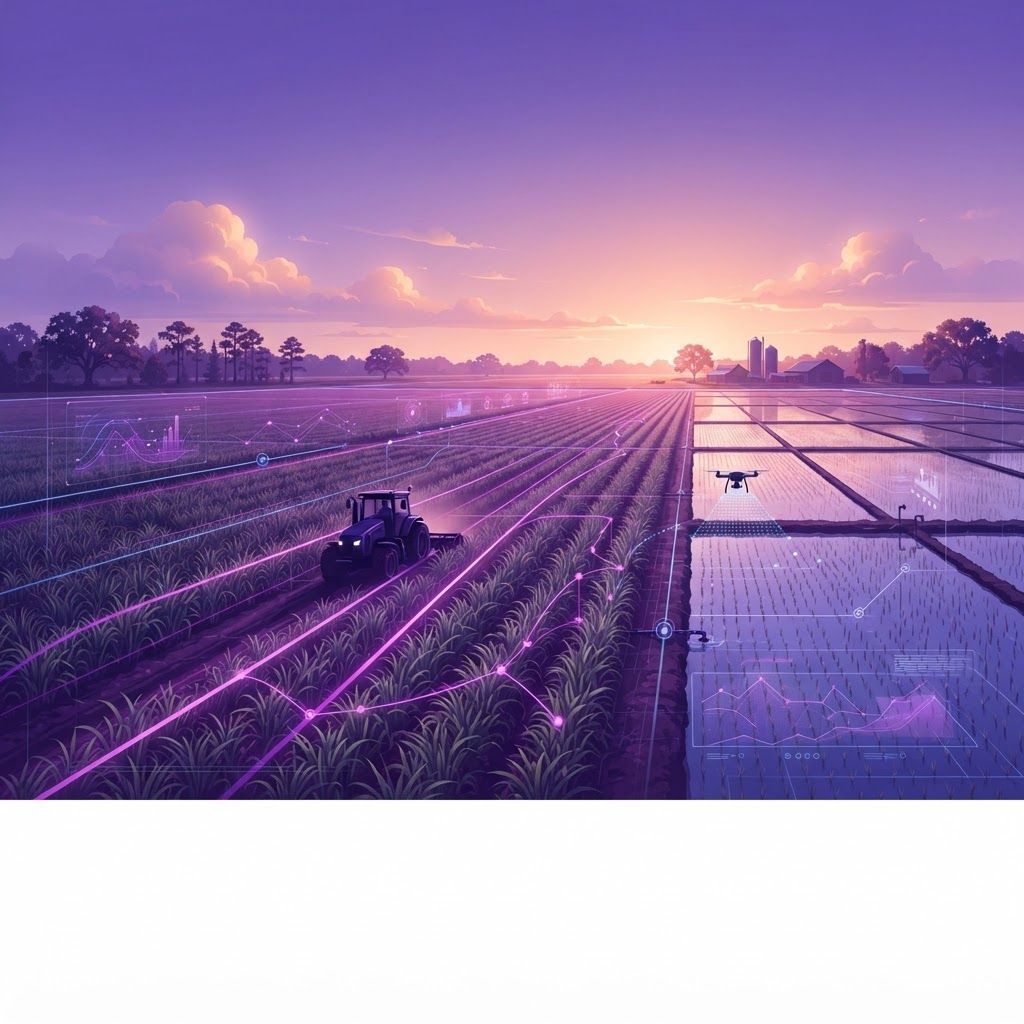
Precision agriculture has become standard rather than experimental. GPS guidance, automatic section control, variable rate application and yield mapping now operate on most commercial acreage in the region. Drone imagery and satellite based vegetation monitoring let agronomists identify stress before it is visible from the field edge. Soil health practices including cover cropping, reduced tillage and controlled traffic are expanding, driven both by agronomic benefit and by carbon market and supply chain sustainability programs. Water management is under increasing scrutiny given aquifer concerns, pushing adoption of efficient irrigation scheduling and surface water use. Labor scarcity continues to accelerate mechanization across every crop.
Challenges Ahead
Louisiana growers face real headwinds. Hurricane exposure can destroy a season's work in hours, and insurance costs have climbed accordingly. Input costs for fertilizer, fuel and crop protection have been volatile. Land conversion pressure near the expanding Baton Rouge metropolitan area removes farmland permanently. Succession planning is a genuine industry concern as the average farmer age rises. The operations positioned to thrive are those investing in technology, diversifying revenue and actively developing the next generation of management.
Final Thoughts
Farming around Baton Rouge is a sophisticated, capital intensive and technically demanding industry operating in one of the most challenging climates in American agriculture. The leading operations combine generational land knowledge with modern agronomy, precision technology and disciplined business management. For anyone evaluating agricultural partners, suppliers or investment in the region, look for operations that treat soil, water and workforce as long term assets rather than annual inputs.