
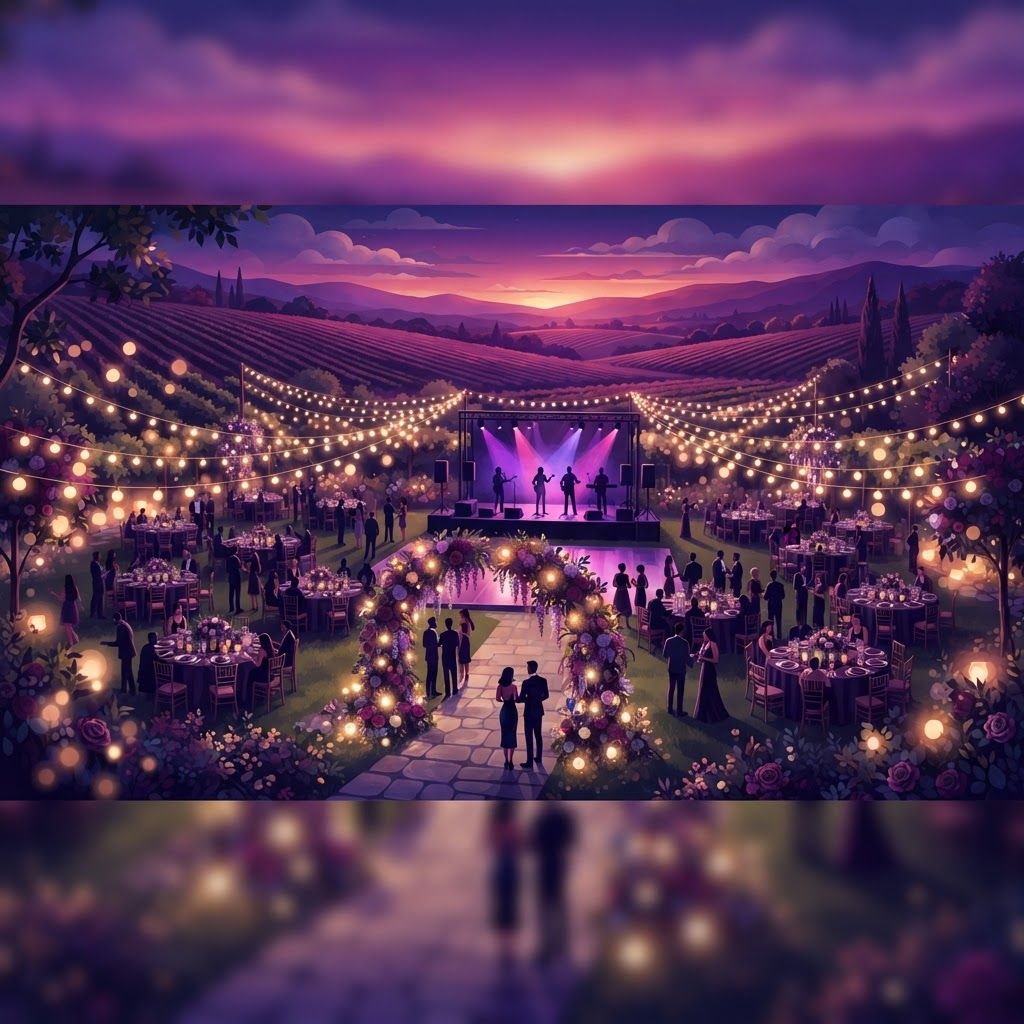
Santa Rosa occupies an enviable position in the events world. It sits within reach of hundreds of wineries, has genuine hotel capacity, offers dramatic outdoor settings and remains accessible from San Francisco. The result is an unusually competitive event management sector, where planners must combine logistical precision with an understanding of venues that range from polished ballrooms to working vineyard barns.
What Event Management Involves Locally
Planning an event in Sonoma County requires more than scheduling. Venue permitting, noise ordinances, parking and shuttle logistics, fire season contingency planning, and coordination with independently operated wineries all shape what is possible. Experienced local planners maintain relationships that make otherwise difficult arrangements straightforward.
How This List Was Assembled
Companies were evaluated on planning discipline, vendor networks, creative design capability, budget management, crisis handling and consistency of client outcomes across different event types.
1. Redwood Estate Events
Full-service planners specialising in vineyard and estate weddings, with detailed production schedules and strong relationships across tasting room venues. Their contingency planning for weather and air quality is notably thorough.
2. Sonoma Corporate Event Partners
Focused on conferences, incentive trips and executive retreats, combining meeting logistics with curated wine country experiences. Clear budget reporting and disciplined timeline management define their approach.
3. Laguna Wedding Design Studio
A design-led studio emphasising cohesive visual concepts, from floral architecture to lighting and tablescape composition. They work closely with a small network of trusted production partners.
4. North Bay Festival Productions
Producers of large public events including music festivals, food gatherings and community celebrations, handling permitting, safety planning, crowd management and vendor coordination at scale.
5. Gravenstein Nonprofit Event Group
Specialists in fundraising galas, donor events and auctions, with expertise in maximising net proceeds rather than simply staging impressive evenings.
6. Russian River Outdoor Experiences
Adventure and destination events set in outdoor environments, including riverside gatherings and ranch-based corporate programmes with substantial logistics support.
7. Bennett Valley Catering and Events
An integrated operation combining culinary production with event coordination, which simplifies communication and tends to produce stronger food service outcomes at large seated events.
8. Pacific Audio Visual Event Services
Technical production specialists handling sound, lighting, staging and hybrid streaming. As virtual attendance has become standard for corporate programmes, this capability has moved from optional to essential.
9. Coastal Micro Event Collective
Focused on intimate gatherings, elopements and small celebrations, offering a lighter planning structure suited to smaller budgets without sacrificing design quality.
10. Santa Rosa Venue Management Group
Operators and managers of multiple event spaces, providing venue-side coordination, in-house rentals and streamlined vendor access for planners and private clients.
Trends Shaping the Event Industry
Sustainability has become a genuine client requirement, influencing catering sourcing, waste diversion and decor reuse. Hybrid formats persist for corporate programmes, requiring reliable technical production. Guest experience expectations continue to rise, with clients seeking authentic local character rather than generic luxury. Finally, weather and wildfire contingency planning is now written into contracts as standard practice across the county.
How to Choose an Event Partner
Review a planner's experience with your specific event type and guest count rather than their overall portfolio. Ask how they handle vendor failure, weather disruption and budget overruns, because those answers reveal operational maturity. Clarify whether pricing is a flat fee, percentage or hybrid, and confirm who holds authority on site during the event itself.
Building a Realistic Event Budget
Most event budget failures come from the same few omissions. Service charges and gratuities, rental delivery and pickup fees, power distribution for outdoor sites, permit costs, insurance, overtime for late finishes and contingency for weather all sit outside the headline venue and catering figures. Experienced Santa Rosa planners typically build a contingency of ten to fifteen percent and structure budgets so that decorative elements, rather than infrastructure, absorb reductions if costs rise. Understanding where money genuinely goes also helps clients prioritise spending toward what guests actually notice, which is usually food, comfort and sound quality.
Venue Selection in Wine Country
Wine country venues carry constraints that first-time planners often discover late. Many wineries restrict amplified sound after a certain hour, limit guest counts under their use permits, require licensed caterers from an approved list and prohibit open flame during fire season. Rural roads may not support coach access, and parking frequently requires a shuttle plan. A planner who knows which properties accommodate which requirements saves clients from falling in love with a site that cannot legally host their event.
Timeline Management on Event Day
The production schedule is the single most important document a planner produces. It sequences vendor arrivals, load-in windows, sound checks, guest arrival, service timings and breakdown, assigning responsibility and contact details at each stage. On a well-run event, vendors know where to be without asking, and the client is never the person resolving a problem. When something does go wrong, and something usually does, a clear schedule allows recovery without visible disruption.
Contingency Planning for Weather and Air Quality
Northern California events now require planning for heat, rain and smoke. Practical measures include securing a covered alternative, holding a tenting option under a decision deadline, arranging shade and hydration for daytime summer events, and monitoring air quality forecasts in late summer. Contracts should specify who makes the call to move indoors and by when. Clients frequently resist these conversations during planning, but they are precisely what separates a managed event from an improvised one.
Conclusion
The event management companies serving Santa Rosa operate in a demanding market where the setting itself sets high expectations. The strongest firms combine creative vision with unglamorous operational rigour, and it is usually the second quality that determines whether an event runs smoothly from arrival to departure.