
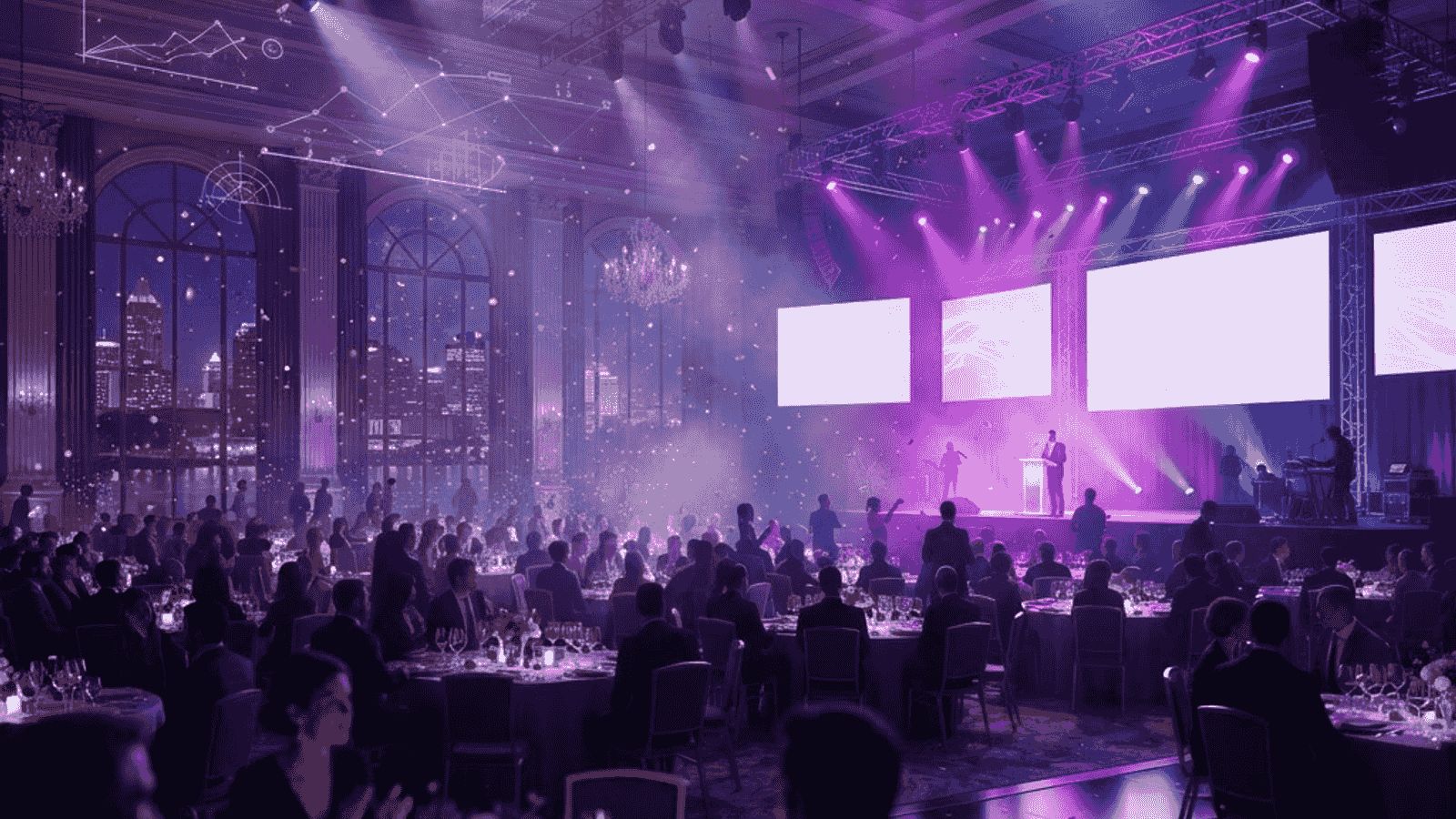
Cincinnati as an Event Destination
Cincinnati offers an unusually varied venue landscape for a mid-sized city. Restored industrial buildings in Over-the-Rhine, historic ballrooms downtown, riverfront spaces with skyline and bridge views, museum and cultural venues, and suburban country clubs all sit within a compact geography. That variety allows planners to match a venue genuinely to an event's character rather than working around a limited set of options.
The city also benefits from serious convention and hospitality infrastructure, including a downtown convention center, substantial hotel inventory, and an airport with reasonable connectivity. For regional and national meetings, Cincinnati competes effectively on cost against larger markets while offering walkable downtown amenities that attendees genuinely appreciate.
How to Brief an Event Planner Properly
The most common cause of disappointing events is a vague brief. Clients who describe what they want in terms of aesthetics without specifying objectives, constraints, and priorities force planners to guess, and guessing produces expensive corrections later. A strong brief states the event's purpose, the audience and their expectations, the total budget honestly, the non-negotiable elements, and the areas where flexibility exists.
Budget transparency deserves particular emphasis. Clients who withhold their real budget hoping for lower quotes end up reviewing proposals that cannot be executed, wasting everyone's time. A planner given an accurate figure will allocate it toward what matters most to you, and will tell you plainly when your expectations exceed your resources. That conversation is uncomfortable but far cheaper than discovering the gap three weeks before the event.
The Ten Leading Event Management Companies Serving Cincinnati
1. Queen City Event Group. A full-service planning firm handling corporate meetings, conferences, and large-scale social events. Their production capability, including staging, lighting, and audiovisual coordination, means fewer vendor handoffs and clearer accountability when something needs solving during load-in.
2. Riverfront Weddings and Celebrations. Specializing in weddings across the region's venue landscape, with deep familiarity in the logistical quirks of individual sites. Knowing which historic venue has a difficult loading approach or limited electrical capacity prevents problems that a less experienced planner discovers on the day.
3. Ohio Valley Conference Management. Focused on association and professional conferences, including registration, program logistics, and exhibitor coordination. Multi-day meetings involve operational complexity that social event experience does not prepare a planner for, and their systems handle attendee management at scale.
4. Over-the-Rhine Event Studio. A design-led firm working primarily in the district's industrial and restored spaces. Their strength is spatial and aesthetic concept development, translating a raw warehouse into a coherent environment rather than simply filling it with rented furniture.
5. Tri-State Corporate Experiences. Building incentive programs, client entertainment, and team events for regional businesses. Their emphasis on defining measurable objectives before designing activities distinguishes them from firms that treat corporate events as purely social occasions.
6. Cincinnati Festival Productions. Managing large public events including street festivals and outdoor gatherings. Public event work involves permitting, crowd management, safety planning, and municipal coordination that most planners never encounter, and their regulatory familiarity is genuinely specialized knowledge.
7. Great Miami Catering and Events. An integrated catering and event operation, which removes the coordination friction that arises when food service and event management are separate vendors. Menu development tied to event flow rather than treated independently improves guest experience noticeably.
8. Buckeye Audio Visual and Production. Technical production specialists covering sound, lighting, video, and hybrid streaming. As hybrid formats became standard, technical execution moved from support function to central concern, and their redundancy planning prevents the failures that ruin livestreamed sessions.
9. Clifton Nonprofit Event Partners. Focused on fundraising galas, donor events, and awareness campaigns for the region's substantial nonprofit sector. Fundraising events have specific mechanics around auction management, donor recognition, and revenue tracking that general event planning does not address.
10. Riverbend Destination Management. Serving out-of-town planners bringing groups to Cincinnati with venue sourcing, transportation, and local program development. Ground knowledge is exactly what a national planner lacks, and a competent destination management company prevents the errors that come from planning a city remotely.
Trends Reshaping Event Management
Hybrid and streaming formats have become permanent rather than a temporary accommodation. Events now routinely serve both in-person and remote audiences, which requires content designed for both rather than a camera pointed at a room. Planners who understand this distinction produce measurably better remote engagement.
Experience design has grown more sophisticated, with clients expecting interactive and memorable elements rather than passive programming. This has increased demand for planners with genuine creative capability rather than purely logistical competence, and it has raised the baseline expectation for what a well-executed event feels like.
Sustainability considerations now appear regularly in event briefs, covering waste reduction, local sourcing, and reduced single-use materials. Corporate clients with public environmental commitments increasingly require these practices, and planners who have developed genuine expertise rather than superficial gestures are winning that work.
Practical Guidance for Event Clients
Book early, particularly for popular venues during peak season, as the best spaces are committed far in advance. Define success criteria before discussing aesthetics, because a beautiful event that fails its purpose is still a failure.
Insist on a detailed production schedule and a clear contingency plan, especially for outdoor events in a climate with genuinely unpredictable weather. Understand your contract's cancellation and force majeure terms rather than discovering them under pressure. Build a contingency reserve of roughly ten percent, since late changes are normal rather than exceptional.
Finally, empower your planner to make decisions within agreed parameters. Events move fast on the day, and a planner who must seek approval for every adjustment cannot protect the outcome you hired them to deliver.