
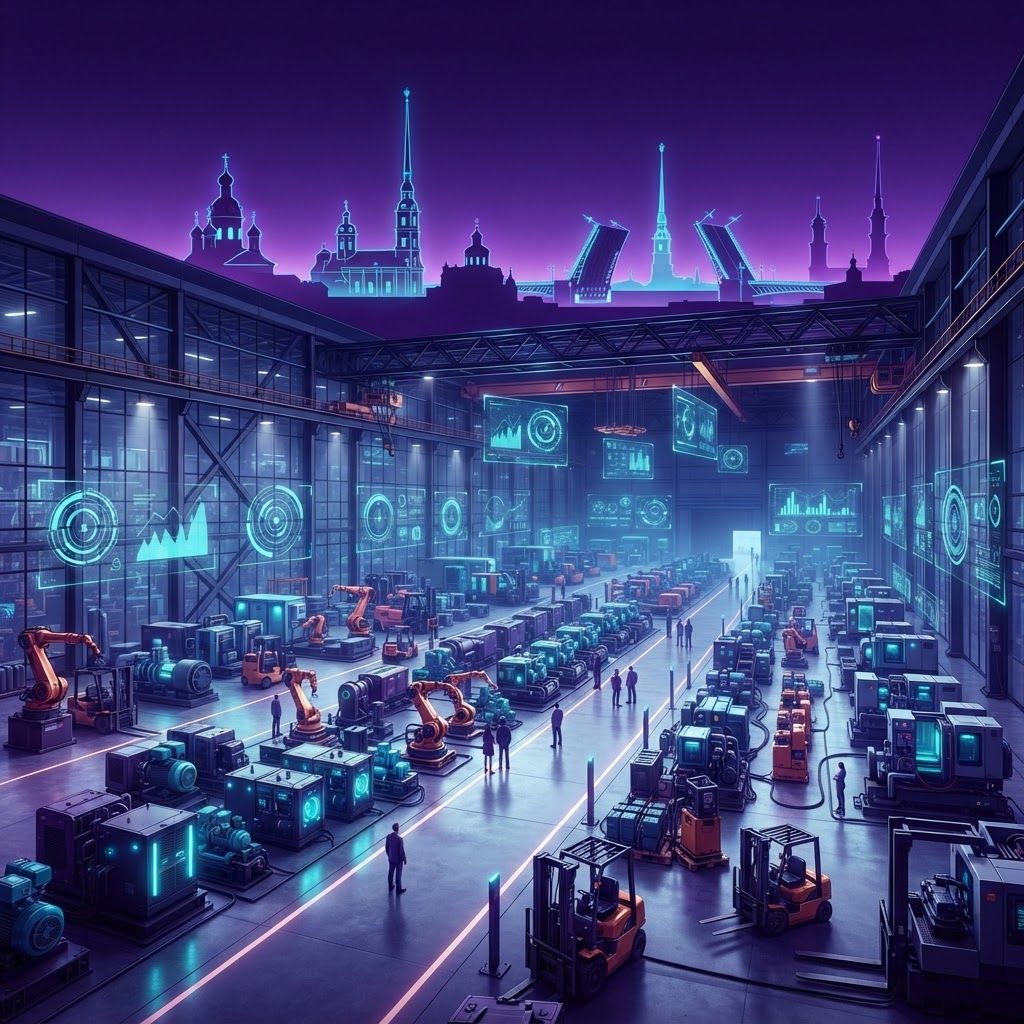
Equipping an Industrial Metropolis
Equipment wholesale sits at the intersection of engineering and commerce. Unlike consumable goods, equipment purchases are capital decisions evaluated over years, where installation quality, spare parts availability and service response matter far more than the initial invoice. St. Petersburg's economy generates constant demand for such purchases: manufacturing plants need machine tools and automation, its port and logistics sector needs handling equipment, its large hospitality industry needs commercial kitchens, its hospitals need medical technology, and its continuous construction activity needs plant and machinery.
The city's advantages as an equipment distribution hub are structural. Port access simplifies importing heavy machinery, its engineering heritage supplies technicians capable of commissioning and maintaining complex systems, and its position makes it a natural distribution point for the entire Northwest. The ten companies below illustrate the main equipment wholesale categories.
1. Baltic Industrial Machinery Supply
Distributors of machine tools, lathes, milling centres, presses and metalworking equipment serve the region's substantial manufacturing base. Their differentiators are application engineering that matches machine capability to a customer's parts mix, installation and commissioning, operator training and guaranteed spare parts availability over a machine's fifteen to twenty year life. Financing and trade-in arrangements are often decisive for smaller manufacturers.
2. Neva Compressor and Pneumatics
Compressed air is a utility in almost every factory, and its cost is dominated by electricity consumption rather than purchase price. Suppliers of compressors, dryers, filters and pneumatic components differentiate through energy efficiency analysis, leak detection audits, correct system sizing and service contracts that prevent unplanned downtime. A well-designed installation can reduce a plant's energy bill measurably, which makes technical competence genuinely valuable.
3. Petersburg Materials Handling Equipment
Forklifts, pallet trucks, reach trucks, conveyors and racking supply serve warehouses, ports and manufacturers. Distributors here differentiate through fleet rental options, on-site maintenance, battery and charging management for electric units, and warehouse layout consultancy. As logistics operations grow more automated, suppliers offering semi-automated solutions are gaining ground over pure equipment sellers.
4. Ladoga Construction Plant and Equipment
Construction equipment wholesale covers excavators, loaders, concrete equipment, generators, scaffolding and power tools. The critical differentiators are availability during the short intensive building season, rental options that let contractors avoid capital commitment, mobile service teams that repair machines on site, and rapid supply of wear parts such as buckets and teeth.
5. Gulf Catering and Refrigeration Equipment
The city's restaurant, hotel and institutional catering sector needs ovens, ranges, refrigeration, dishwashers, food preparation machinery and extraction systems. Suppliers differentiate through kitchen design services, installation coordinated with construction schedules, staff training and emergency service, because a failed refrigerator or oven halts service immediately. Energy efficiency and ventilation compliance are increasingly important selection factors.
6. Karelia Medical and Laboratory Equipment
Hospitals, clinics and laboratories require diagnostic imaging, sterilisation, surgical equipment, analysers and furniture, all under strict regulatory frameworks. Distributors here differentiate through registration and certification expertise, calibration and validation services, clinical training and guaranteed response times. Documentation capability is as important as the equipment itself in this segment.
7. Nevsky HVAC and Climate Systems
A climate with cold winters and increasingly warm summers drives demand for heating, ventilation, air conditioning and heat recovery equipment. Wholesalers differentiate through system design support, availability of refrigerants and components, commissioning services and energy modelling. Heat recovery ventilation has become particularly important as building energy standards tighten.
8. Ilmen Pumps, Valves and Process Equipment
Water utilities, chemical plants, food producers and district heating operators need pumps, valves, heat exchangers, tanks and instrumentation. Suppliers here compete on hydraulic selection expertise, material compatibility advice for aggressive media, seal and bearing spares availability and refurbishment services. Correct pump selection has a large effect on lifetime energy consumption, making engineering support a genuine differentiator.
9. Onega Packaging and Filling Machinery
Food producers, cosmetics manufacturers and pharmaceutical companies need filling, capping, labelling, sealing and end-of-line packaging equipment. Distributors differentiate through line integration capability, changeover flexibility for multiple product formats, validation support and consumable supply of films and adhesives. Because packaging lines determine plant throughput, reliability and quick service response dominate purchasing decisions.
10. Vyborg Equipment Rental and Leasing
Not all equipment should be bought. Rental and leasing specialists provide access to machinery for defined periods with maintenance included, which suits project work, seasonal peaks and businesses conserving capital. Their differentiators are fleet condition, delivery and collection logistics, breakdown replacement guarantees and flexible contract terms. This model has grown steadily as companies prioritise balance sheet efficiency.
Trends in Equipment Distribution
Servitisation is the defining trend. Buyers increasingly purchase outcomes rather than assets, through availability contracts, pay-per-use arrangements and full-service leasing. This shifts distributor economics from transaction margin to long-term service revenue and rewards those with strong technical field teams.
Connected equipment is becoming standard. Machines now report condition data, enabling predictive maintenance that replaces components before failure rather than after. Distributors able to interpret this data and act on it deliver measurable uptime improvements, though it requires software capability that traditional equipment sellers often lack.
Energy efficiency has moved to the centre of purchasing decisions as electricity costs rise. Variable speed drives, heat recovery and efficient motors now feature prominently in evaluations, and suppliers who can quantify savings win business. Local service capability has also grown more important as buyers prioritise fast spare parts access and domestic maintenance expertise. Finally, refurbishment and second-life equipment markets are expanding, offering credible options for buyers with constrained capital.
How to Choose an Equipment Wholesaler
Evaluate total cost of ownership, not purchase price. Energy consumption, consumables, spare parts pricing, maintenance intervals and expected life often outweigh the initial difference between two machines within the first two years of operation.
Scrutinise service capability rigorously. Ask how many field engineers the supplier employs locally, what their guaranteed response time is, and whether they hold critical spares in the city. Request references from customers running similar equipment and ask specifically about breakdown experiences rather than sales experiences.
Confirm installation and commissioning responsibility in writing, including who handles utilities connection, safety verification and operator training. Check documentation and certification, particularly for regulated equipment. Consider spare parts availability over the machine's whole life, since orphaned equipment with unobtainable parts becomes worthless. Finally, discuss financing options early, because leasing or staged payment may allow a technically better choice than an outright purchase budget permits.
Final Thoughts
Equipment wholesale in St. Petersburg is broad and technically capable, covering industrial machinery, handling systems, construction plant, catering, medical, climate, process and packaging equipment, plus rental alternatives. The port, the engineering talent pool and the city's diverse industrial base make it a strong place to source capital equipment. The ten suppliers profiled here demonstrate the range, and the decisive factor is almost always service capability rather than specification sheets.