
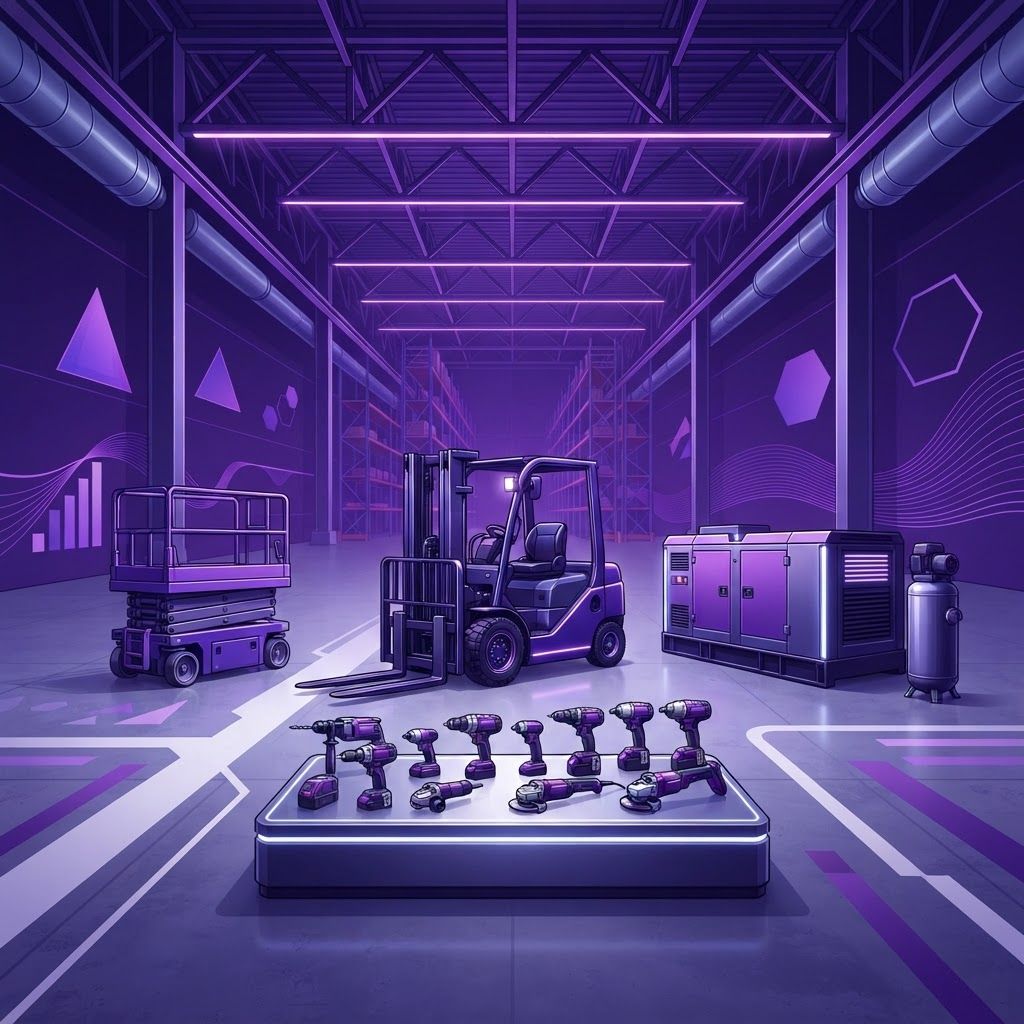
Equipment Supply as Business Infrastructure
Equipment wholesaling is a category that spans an enormous range: material handling, construction machinery, power generation, compressed air, restaurant equipment, medical devices and industrial tooling all live under the same broad heading. What unites them is that the purchase is rarely the end of the relationship. Equipment needs parts, service, operator training and eventually replacement, so the wholesaler you choose becomes a long-term operational dependency.
Rochester's equipment market reflects the region's economic mix. A manufacturing base spanning precision machining, food processing and packaging drives demand for material handling and compressed air. A construction sector working through a short season needs equipment available immediately. Healthcare and education institutions require capital equipment with reliable service coverage. Each of those needs has produced specialists worth knowing.
Trends in Equipment Distribution
Rental and rent-to-own have grown significantly. Rather than committing capital to machinery that may sit idle between projects, contractors increasingly rent, and many wholesalers now run parallel rental fleets. This also gives buyers a low-risk way to trial equipment before purchasing.
Electrification is progressing steadily, particularly in material handling and small construction equipment. Battery-electric forklifts, compact loaders and hand equipment reduce emissions, noise and indoor ventilation requirements, and total cost of ownership has become competitive with combustion alternatives in many applications.
Telematics and connected monitoring have become standard on larger equipment. Remote hour tracking, fault reporting and predictive maintenance alerts reduce unplanned downtime, and distributors increasingly bundle monitoring into service agreements.
Service capacity, however, is the real differentiator. Skilled equipment technicians are in short supply nationally, and wholesalers who have retained and trained a strong service department can promise response times that competitors cannot match. Buyers have noticed, and service coverage increasingly outweighs purchase price in decision-making.
The Top 10 Equipment Wholesalers in Rochester
1. Genesee Industrial Equipment — A broad industrial supplier covering material handling, shop equipment, hoists, conveyors and storage systems. Genesee Industrial Equipment is a common first call for manufacturers because it can outfit a substantial portion of a facility from a single source.
2. Flour City Material Handling — Forklifts, pallet jacks, reach trucks, racking and dock equipment, offered for both sale and rent. Flour City Material Handling maintains a large service fleet, which matters because a down forklift halts a warehouse immediately.
3. Lake Ontario Construction Equipment — Excavators, loaders, compaction equipment and attachments. Lake Ontario Construction Equipment understands the compressed Western New York building season and stages inventory so contractors are not waiting during peak months.
4. Monroe Power Systems — Generators, transfer switches, uninterruptible power supplies and standby power installations. Monroe Power Systems serves healthcare, data-dependent businesses and municipalities where an outage carries serious consequences.
5. Highland Compressed Air Solutions — Air compressors, dryers, filtration, piping and system audits. Highland Compressed Air Solutions often finds meaningful energy savings for manufacturers, since compressed air leaks are one of the most common hidden costs on a plant floor.
6. Erie Canal Restaurant Equipment — Commercial kitchen equipment including ranges, refrigeration, ventilation, dishwashing and smallwares. Erie Canal Restaurant Equipment provides kitchen design assistance and code-compliant ventilation planning for new build-outs.
7. Irondequoit Medical Equipment Supply — Examination tables, diagnostic devices, sterilisation equipment and clinical furnishings for practices and clinics. Irondequoit Medical Equipment Supply handles the compliance documentation and service scheduling that medical equipment requires.
8. Upstate Landscape & Turf Equipment — Commercial mowers, snow removal equipment, blowers and trimmers. Upstate Landscape & Turf Equipment serves the region's dual-season contractors who mow in summer and plough in winter and cannot afford downtime in either.
9. Ridgeway Packaging Machinery — Fillers, sealers, labellers, case packers and conveyors for food, beverage and consumer goods manufacturers. Ridgeway Packaging Machinery supports line integration, which is usually harder than the equipment purchase itself.
10. Rochester Used Equipment Exchange — Inspected and reconditioned pre-owned industrial equipment. Rochester Used Equipment Exchange provides an affordable entry point for growing businesses and a disposal channel for companies upgrading their fleets.
How to Choose an Equipment Wholesaler
Evaluate service before you evaluate price. Ask how many technicians the dealer employs, what its average response time is, whether it stocks common wear parts locally and whether loaner equipment is available during major repairs. On production-critical equipment, this is the entire decision.
Calculate total cost of ownership rather than purchase price. Energy consumption, consumables, scheduled maintenance, expected life and residual value frequently outweigh the initial difference between two machines. A distributor willing to work through that arithmetic with you is demonstrating good faith.
Consider rental as a trial mechanism. Renting a unit for a month reveals ergonomics, reliability and fit far better than a specification sheet, and many dealers will credit rental cost toward purchase.
Confirm parts availability and expected support life. Ask how long parts will be supported, whether the dealer stocks them regionally and what lead times look like for less common components.
Finally, ask about training and compliance. Operator certification for powered industrial trucks, lockout procedures and safety documentation are regulatory requirements, and dealers who provide training help you satisfy them properly.
The Outlook for Rochester Equipment Distribution
Manufacturing investment, infrastructure spending and continued automation adoption all point to sustained equipment demand in the Rochester region. Expect electrification to keep expanding in material handling and compact construction equipment, and expect service capacity to remain the industry's tightest constraint and clearest differentiator. Buyers should weight service coverage heavily, use rental to de-risk major purchases, and build relationships with dealers who treat support as the product rather than an afterthought.