
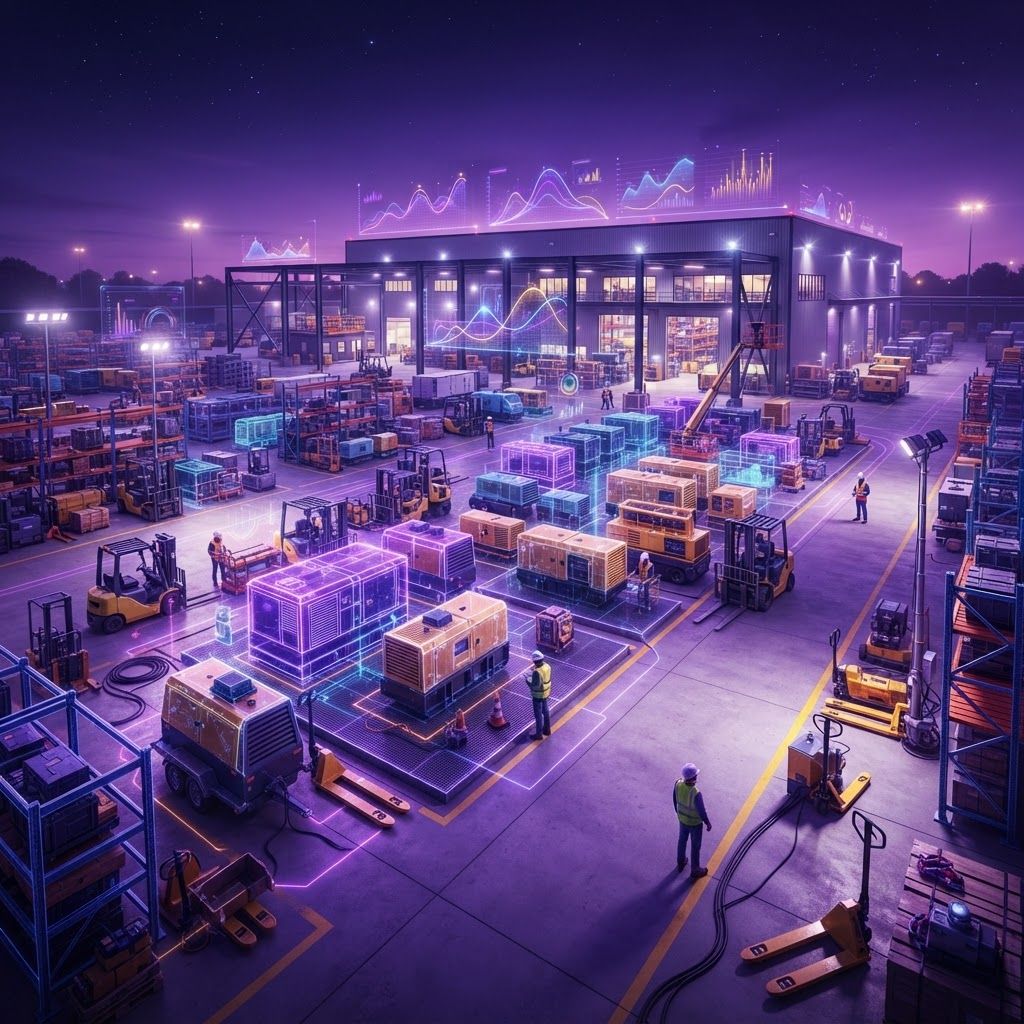
Huntsville's construction cranes and factory expansions have made equipment supply a genuinely strategic function across the region. Contractors building subdivisions and commercial shells, manufacturers outfitting new lines, warehouses adding material handling capacity, municipalities maintaining infrastructure, and facility teams keeping buildings running all buy or rent equipment continuously. The suppliers serving them range from full line construction equipment dealers with factory service departments to industrial supply distributors stocking tens of thousands of MRO items for next day delivery.
Understanding the Equipment Supply Market
The category is broad, so segmentation helps. Construction equipment dealers sell and service excavators, loaders, dozers, and compact machines, usually as authorized representatives for specific manufacturers. Rental yards provide the same equipment by the day, week, or month with maintenance included. Industrial and MRO distributors stock bearings, fasteners, power transmission, pneumatics, hydraulics, safety supplies, and cutting tools. Material handling dealers supply forklifts, racking, conveyors, dock equipment, and lifts. Machine tool distributors sell CNC machines, presses, and metalworking equipment with installation and training. Power and generator dealers handle generators, compressors, and temporary power. Agricultural and turf equipment dealers serve farms, landscapers, and grounds crews. Finally, used equipment dealers and auction houses move preowned machines.
The most common buying error is treating all of these as a price comparison when service response, parts availability, and uptime guarantees are what actually determine total cost.
Top 10 Best Equipment Wholesalers in Huntsville
1. Authorized Construction Equipment Dealers
Full line dealers representing major manufacturers sell new machines with warranty, stock parts locally, and run field service trucks. Their genuine value is uptime: a dealer with local parts inventory and technicians who can be on your site the same day is worth substantially more than a lower purchase price from a distant seller. Ask for documented service response times.
2. Equipment Rental Yards
National and regional rental companies serve North Alabama with earthmoving equipment, aerial lifts, compaction, generators, pumps, and small tools. Renting converts capital expense into project cost, eliminates maintenance and storage burden, and gives access to specialized machines used a few times a year. For any machine with utilization below roughly forty percent, rental usually wins.
3. Industrial Supply and MRO Distributors
Plant maintenance teams rely on distributors stocking bearings, belts, chain, fasteners, hydraulics, pneumatics, abrasives, cutting tools, and safety supplies with next day delivery. Vendor managed inventory and on site crib programs reduce both stockouts and carrying cost, and are worth negotiating once your spend justifies them.
4. Material Handling and Forklift Dealers
Warehouses and factories need forklifts, reach trucks, pallet jacks, racking, mezzanines, conveyors, and dock levelers, plus the service contracts that keep them running. Dealers offering fleet management, operator training, and planned maintenance prevent the cascade of problems that follows a single down truck in a busy dock.
5. Machine Tool and Fabrication Equipment Distributors
Machine shops and fabricators buy CNC mills and lathes, press brakes, lasers, saws, and welding equipment through distributors who provide application engineering, rigging and installation, programming support, and training. Given the capital involved, evaluate service capability and spindle or laser source parts availability before signing.
6. Generator, Compressor, and Power Equipment Dealers
Standby generators for data rooms and healthcare facilities, temporary power for jobsites and events, and compressed air systems for plants all come from specialized dealers. Compressed air is a large ongoing energy cost, so dealers who audit air systems for leaks and control strategy deliver savings well beyond the equipment sale.
7. Agricultural, Turf, and Landscape Equipment Dealers
Farms in the Tennessee Valley plus a large landscaping and grounds maintenance sector support dealers selling tractors, mowers, implements, and utility vehicles. Commercial landscapers should weigh parts availability and loaner programs heavily, since a down mower in peak season costs crews immediately.
8. Used Equipment Dealers and Auction Houses
Preowned machines and regional auctions offer significant savings for buyers who can evaluate condition or bring an inspector. Request maintenance records, hour meter verification, and where possible a third party inspection. Auctions reward preparation and punish enthusiasm.
9. Safety Equipment and PPE Distributors
Fall protection, respiratory protection, hearing and eye protection, gas detection, confined space equipment, and high visibility apparel are regulated categories where distributor expertise matters. Suppliers who provide fit testing, training, and inspection services help maintain OSHA compliance rather than merely selling gear.
10. Specialty Trade Equipment Suppliers
Plumbing, HVAC, electrical, and concrete trades each have dedicated equipment sources for pipe machines, recovery units, cable pullers, power trowels, and testing instruments. Trade specific suppliers usually understand the application better and stock the consumables that general dealers overlook.
Buy, Lease, or Rent: How to Decide
Run the utilization math honestly. Equipment used consistently across projects generally justifies purchase, where you build equity and control availability. Equipment used occasionally should be rented, since rental includes maintenance, transport options, and newer machines without capital commitment. Leasing sits in between and suits fleets that need predictable payments and regular refresh cycles, particularly for forklifts and light trucks.
Evaluate the service organization as seriously as the machine. Ask how many technicians the dealer has locally, what percentage of common parts they stock, average response time, and whether loaners are available during major repairs. Downtime cost on a critical machine dwarfs any purchase price difference within a single incident.
Model total cost of ownership rather than acquisition price. Include fuel or energy consumption, planned maintenance, wear parts, insurance, transport, operator training, and expected resale value. Then negotiate the full package: extended warranty, planned maintenance agreements, training, and parts discounts often move more than list price will. Finally, document safety training and inspection requirements up front, because compliance is cheaper to build in than to retrofit.
Conclusion
Huntsville's equipment market offers authorized dealer support, deep rental availability, industrial MRO distribution, and specialized trade sourcing within one metro. Decide between buying, leasing, and renting based on real utilization, weight local service capability heavily, and negotiate the service and parts package rather than fixating on purchase price. Uptime is the metric that pays.