
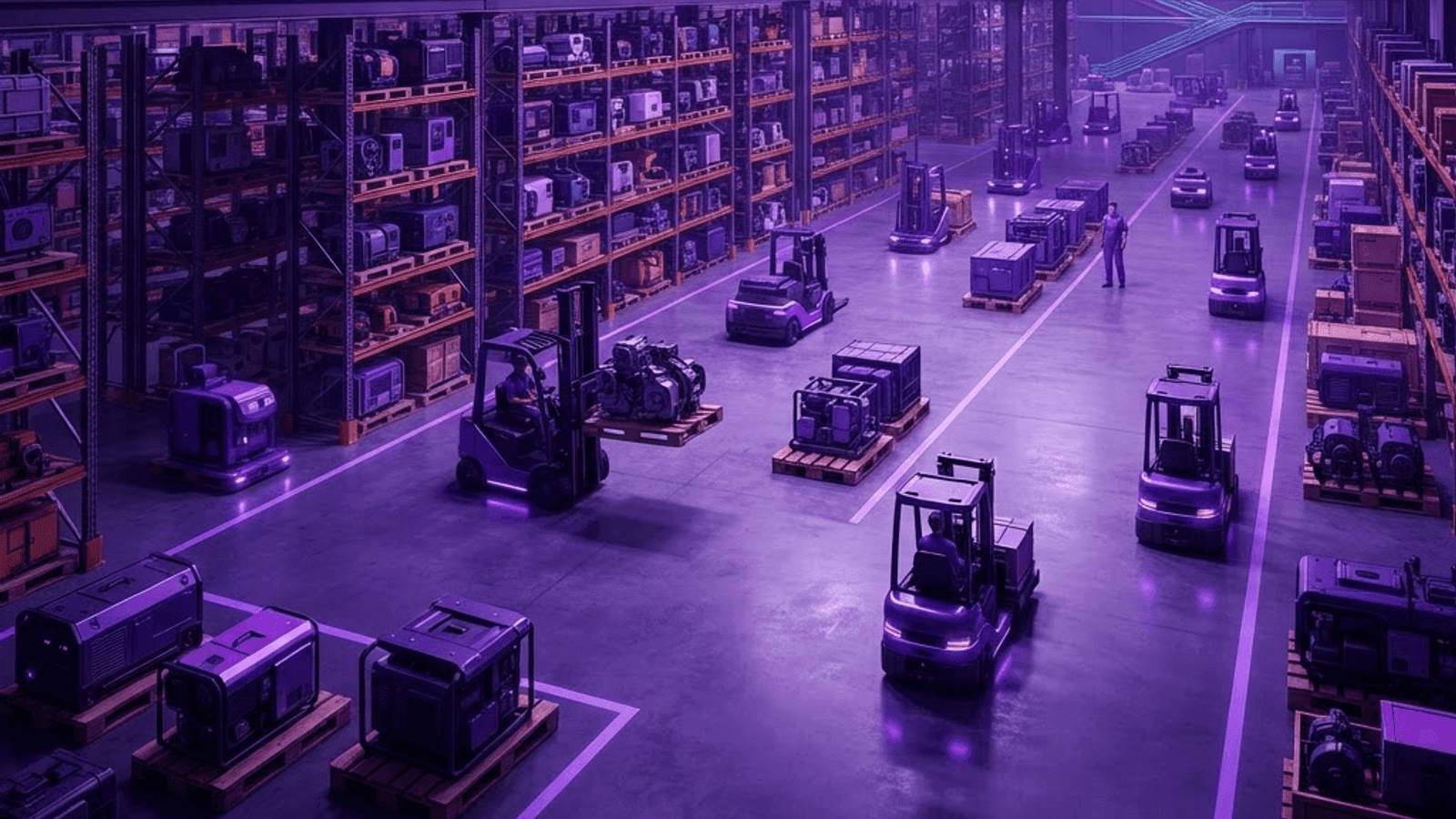
Equipping Alexandria's Businesses
Equipment wholesaling covers a remarkably broad territory. A contractor needs compactors and generators. A restaurant needs ovens, refrigeration and preparation equipment. A clinic needs examination and diagnostic devices. A factory needs handling equipment, tools and safety gear. Alexandria's equipment wholesalers serve all of these needs, importing, stocking, supplying and often maintaining the machinery that businesses depend on.
The city's position as a port and industrial centre supports the trade. Imported equipment arrives directly, local manufacturers supply certain categories competitively, and the concentration of industrial, hospitality and healthcare activity creates enough demand to sustain genuine specialists rather than only generalists.
What Separates a Good Equipment Wholesaler
After-sales capability is the defining factor and the one buyers most often underestimate. Equipment fails, requires servicing and eventually needs spare parts. A wholesaler who sells a machine but cannot service it or supply parts leaves the customer stranded, and the cost of that situation dwarfs any initial saving.
Technical advice comes second. Equipment selection involves matching capacity, duty cycle, power requirements and operating conditions to the actual application. A supplier who asks detailed questions before recommending a machine is protecting you from an expensive mismatch.
Warranty support and parts availability complete the assessment. Ask specifically how long spare parts remain available and whether service technicians are locally based.
Ten Leading Equipment Wholesalers in Alexandria
1. Delta Industrial Equipment supplies compressors, pumps, generators and workshop machinery to manufacturers and contractors, maintaining a service department and parts inventory that keeps installed equipment running.
2. Mediterranean Catering Equipment serves hotels, restaurants and institutional kitchens with cooking, refrigeration, preparation and warewashing equipment, offering kitchen layout planning alongside supply.
3. Alexandria Construction Plant wholesales and hires construction equipment including mixers, compactors, scaffolding and power tools, with hire options that suit contractors whose equipment needs fluctuate between projects.
4. Pharos Medical Equipment distributes diagnostic, examination and treatment equipment to clinics, laboratories and hospitals, handling installation, calibration and the documentation that regulated healthcare settings require.
5. Nile Material Handling supplies forklifts, pallet trucks, hoists and racking systems to warehouses and factories, combining equipment supply with layout advice that improves storage efficiency.
6. Horus Safety Equipment wholesales personal protective equipment, fall protection, fire safety products and gas detection instruments, supporting industrial customers with compliance guidance as well as supply.
7. Amun Agricultural Equipment serves Delta farms with tractors, implements, irrigation equipment and post-harvest machinery, backed by field service that keeps equipment operating through critical seasonal windows.
8. Coastal Marine Equipment supplies the maritime sector with deck equipment, navigation instruments, safety gear and chandlery for vessels calling at Alexandria's ports.
9. Ramses Laboratory Supply distributes analytical instruments, laboratory furniture and consumables to industrial, educational and research laboratories, including calibration services that maintain measurement validity.
10. Sidi Gaber Cleaning Equipment completes the list with commercial cleaning machinery, scrubbers, pressure washers and facility maintenance equipment for hospitality, healthcare and industrial clients.
Trends in Equipment Distribution
Energy efficiency has become a primary selection criterion rather than a secondary consideration. With energy costs a significant operating expense, the efficiency rating of a compressor, refrigeration unit or motor materially affects lifecycle cost, and good wholesalers now present that calculation openly.
Connected equipment is spreading. Machines that report runtime, faults and consumption enable planned maintenance and reduce unexpected failures. Wholesalers who understand these systems and can support them are gaining an advantage.
Flexible acquisition models have emerged, including hire, lease and service contracts that convert capital purchases into operating costs. For businesses managing cash carefully, this flexibility can be decisive.
Choosing an Equipment Wholesaler
Define the duty requirement honestly, including hours of operation, load, environment and expected life. Equipment specified for light duty and used heavily fails quickly, and the resulting downtime usually costs far more than the correct machine would have.
Evaluate the service proposition explicitly: technician availability, response times, parts stock and preventive maintenance contracts. Get these commitments in writing rather than relying on verbal assurance.
Compare total cost of ownership across energy consumption, consumables, maintenance and expected life rather than purchase price alone.
Finally, seek references from existing customers with similar applications, and ask them specifically about support after the sale. In Alexandria's equipment market, the differences between suppliers show up most clearly not at purchase but two years later, when something needs fixing.
Maintenance Planning From Day One
The most common and expensive mistake in equipment purchasing is treating maintenance as something to consider later. Machines that receive planned servicing last substantially longer, consume less energy and fail far less often than those maintained reactively. Establishing a service schedule at the point of purchase, and budgeting for it, converts unpredictable breakdown costs into a manageable operating expense.
Operator training is closely related. A high proportion of equipment failures originate in incorrect operation rather than mechanical defect, and a few hours of proper training at handover prevents years of avoidable damage. Good wholesalers include this as standard and will provide refresher sessions as staff change.
Documentation completes the picture. Manuals, parts lists, electrical schematics and service records should be collected and retained from the outset, because reconstructing them years later is difficult and expensive. Alexandria's better equipment suppliers provide all of this readily, and buyers who insist on it protect the value of their investment.